



Water Heater Down? Complete Fix & Upgrade Guide
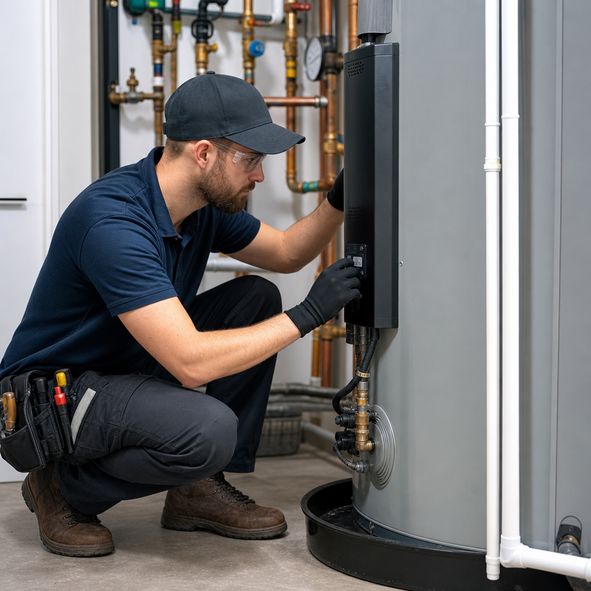
The Quiet Miracle We Only Notice When It Stops
It happens every single morning without fanfare. You twist a handle, and within seconds, steaming hot water cascades over you — a seamless, invisible luxury so deeply embedded in modern life that most Greater Vancouver homeowners never give it a second thought. Until the morning it stops. That first shocking blast of ice-cold water at 6:30 AM has a way of making you deeply, profoundly aware of just how much you depend on a single appliance humming quietly in your mechanical room. Your water heater is, without exaggeration, one of the hardest-working and most underappreciated systems in your entire home. It operates 24 hours a day, 365 days a year, maintaining precise temperatures so that your showers, dishwasher, laundry, and taps all perform on demand. When it fails, the disruption is immediate and total. This comprehensive guide — written by Red Seal Master Technicians serving the Greater Vancouver region — will walk you through the history of water heating technology, explain exactly what to do when your unit fails, compare modern system options available to BC homeowners, and help you make the smartest possible decision for your home and budget.
Ancient Roots and Early Engineering: Humanity’s Long Pursuit of Hot Water
The desire to access heated water on demand is not a modern invention — it is one of humanity’s oldest engineering ambitions. Ancient civilizations recognized that controlling thermal energy was fundamental to health, comfort, and social organization. The Romans, perhaps most famously, engineered the hypocaust system as early as 100 BCE — a sophisticated underfloor and wall-cavity heating network that circulated hot air generated by wood-burning furnaces beneath bathhouse floors and through hollow tile walls. The great Roman thermae, or public baths, could serve thousands of citizens daily, maintaining distinct pools at carefully graduated temperatures: the frigidarium (cold), tepidarium (warm), and caldarium (hot). These were not primitive arrangements — they represented genuine feats of thermodynamic engineering that required skilled slave labour and constant fuel management.
Simultaneously, ancient Greeks heated water in large bronze cauldrons over open fires, while civilizations in China and Japan developed sophisticated communal bathing cultures around natural geothermal hot springs, eventually constructing engineered channels to distribute thermally elevated water across distances. In medieval Europe, the monastery became the unlikely custodian of hot water technology, with monks constructing lead-pipe systems to carry heated water from central kitchens to various areas of their complexes. Each of these systems, separated by centuries and continents, shared one fundamental limitation: they required constant human attention, significant fuel expenditure, and produced hot water only in large, inefficient batches. The dream of a compact, automated, on-demand hot water system would have to wait for the Industrial Revolution.
The Industrial Breakthroughs That Changed Everything
The 19th century brought with it the metallurgical precision, gas infrastructure, and mechanical ingenuity necessary to finally crack the problem of domestic hot water. The first significant leap forward came in 1868, when London-based painter and inventor Benjamin Waddy Maughan patented a device he called the Geyser — a wall-mounted, instantaneous gas water heater that used jets of burning gas to heat cold water as it flowed through a series of pipes toward a tap. It was noisy, somewhat unpredictable, and notably lacked any formal flue or venting system, making it genuinely dangerous by modern standards. Nevertheless, it represented a paradigm shift: for the first time, hot water could be produced at the point of use, on demand, without pre-heating a large storage vessel. Maughan’s Geyser was the direct conceptual ancestor of every tankless water heater installed in a Vancouver home today.
The next transformational breakthrough came from an unlikely figure: a Norwegian mechanical engineer named Edwin Ruud, who emigrated to Pittsburgh, Pennsylvania in the late 1880s. In 1889, Ruud patented the first fully automatic, storage-tank gas water heater. His design incorporated a thermostatically controlled burner that would automatically ignite to reheat water whenever the tank temperature fell below a set point, then extinguish itself when the target temperature was reached. This closed-loop thermostatic control — revolutionary for its era — meant that a household could enjoy a continuous ready supply of hot water without any manual intervention. Ruud founded the Ruud Manufacturing Company, and his fundamental storage-tank design remains, with refinements, the dominant water heater architecture worldwide. When you look at the conventional gas or electric tank water heater in your basement today, you are looking at a direct descendant of Edwin Ruud’s 1889 patent.
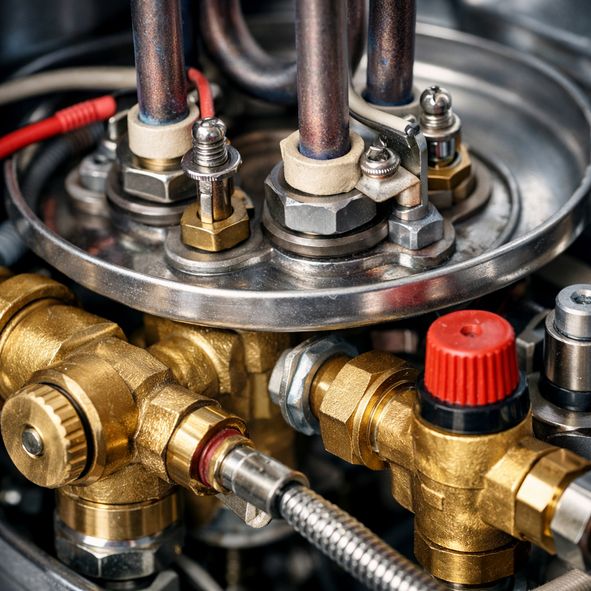
The 20th Century: Standardization, Electrification, and Mass Adoption
The first half of the 20th century saw water heater technology transition from a luxury of the affluent to a standard feature of middle-class homes across North America. The rapid expansion of municipal gas networks throughout the 1920s and 1930s made gas storage water heaters accessible and affordable for the first time. Concurrently, the rural electrification programs of the 1930s — particularly the New Deal initiatives in the United States and equivalent programs in Canada — brought electricity to previously isolated communities, enabling the mass deployment of electric resistance storage water heaters. These units, using immersed electric heating elements rather than gas burners, were simpler to install, required no flue or gas line, and were embraced enthusiastically in regions where electricity rates were low.
Post-World War II suburban expansion in Greater Vancouver and across British Columbia drove massive demand for standardized, affordable domestic water heating. The 40-US-gallon (151-litre) storage tank became the de facto North American household standard — a size engineered to meet the morning peak demand of an average family. Glass-lined steel tanks, improved anode rod technology to combat electrochemical corrosion, enhanced insulation jackets, and factory-calibrated thermostats all became standard features during this era. By the 1970s energy crisis, manufacturers began seriously confronting the fundamental inefficiency baked into the storage-tank paradigm: keeping 40 to 60 gallons of water perpetually heated — even at 2 AM when nobody needs it — wastes a substantial and measurable amount of energy through what engineers call standby heat loss.
The Modern Era: Tankless On-Demand Revolution and Smart Wi-Fi Diagnostics
The late 20th and early 21st centuries brought a genuine revolution to water heating technology, driven by advances in heat exchanger metallurgy, micro-controller electronics, and consumer demand for energy efficiency. The condensing tankless water heater — pioneered and refined primarily by Japanese manufacturers including Rinnai, Noritz, and Navien — fundamentally rethinks the water heating process. Rather than maintaining a standing reserve of hot water, a tankless unit uses a high-powered, modulating burner and a dense, finned copper or stainless-steel heat exchanger to heat cold water instantaneously as it flows through the unit. Modern condensing tankless units achieve thermal efficiencies of 94–98% AFUE (Annual Fuel Utilization Efficiency) by extracting heat from the exhaust gases that conventional units simply vent to atmosphere, condensing the water vapour in those gases and capturing its latent heat energy.
Contemporary premium units from brands such as Navien NPE-A2 series or Rinnai RUR series incorporate features that would have seemed like science fiction to Edwin Ruud: Wi-Fi connectivity and dedicated smartphone applications that allow homeowners to monitor real-time water temperatures, receive predictive maintenance alerts, track energy consumption data, and even diagnose error codes remotely before calling a technician. Built-in self-diagnostic systems display specific fault codes — for example, an E003 ignition failure code on a Navien unit immediately tells a Red Seal technician that the investigation should begin at the igniter, gas valve, or flame sensor rather than requiring broad diagnostic work. Recirculation pump integration enables near-instant hot water delivery at every tap in the home, eliminating the wasteful practice of running the tap for 30–90 seconds waiting for cold water to purge from the pipes — a particularly meaningful water-conservation feature in the context of Metro Vancouver’s drought-sensitive watershed management.
Heat Pump Water Heaters: The Peak Efficiency Paradigm for BC Homeowners
If tankless technology represented a significant efficiency leap over conventional storage tanks, Heat Pump Water Heaters (HPWHs) represent an even more dramatic advancement — and they are particularly well-suited to the climatic and energy landscape of British Columbia. Rather than generating heat through combustion or electrical resistance, an HPWH operates on the same refrigeration-cycle principle as your heat pump or air conditioner, but in reverse. It uses a compressor, refrigerant, and evaporator coil to extract ambient thermal energy from the surrounding air and transfer it, at elevated temperature, into the water tank. Because it is moving heat rather than generating it, an HPWH can deliver two to three times more thermal energy per kilowatt-hour of electricity consumed than a conventional electric resistance element — a performance metric expressed as a Coefficient of Performance (COP) of 2.0 to 4.0 depending on ambient air temperature.
For Greater Vancouver homeowners, this efficiency advantage is amplified by the fact that BC Hydro’s electricity grid is predominantly hydroelectric — among the cleanest electrical grids in North America. Running a HPWH on BC Hydro power results in a dramatically lower carbon footprint than operating a natural gas storage tank, aligning perfectly with the Province of British Columbia’s CleanBC Homes program objectives. Leading HPWH models available in Canada include the Rheem ProTerra, A.O. Smith Voltex, and Bradford White AeroTherm series, all offering integrated electric resistance backup elements for peak demand periods. The primary installation consideration in Metro Vancouver’s cool, damp coastal climate is ensuring the HPWH is located in a conditioned mechanical space with adequate air volume — the unit requires approximately 1,000 cubic feet of surrounding air volume to operate at peak efficiency — and that condensate drainage is properly managed, as the unit will dehumidify the surrounding air as it extracts heat.
Deep-Dive Comparison: Choosing the Right System for Your Vancouver Home
| Feature | Gas Storage Tank | Electric Storage Tank | Gas Condensing Tankless | Heat Pump Water Heater |
|---|---|---|---|---|
| Energy Efficiency Rating | 62–70% EF/UEF | 90–95% EF/UEF | 94–98% AFUE/UEF | 200–400% equivalent (COP 2.0–4.0) |
| Typical Lifespan | 8–12 years | 10–15 years | 15–25 years | 12–18 years |
| Primary Fuel Source | Natural Gas / Propane | Electricity (BC Hydro) | Natural Gas / Propane | Electricity (BC Hydro) |
| Standby Heat Loss | Moderate–High | Low–Moderate | Near Zero | Low (well-insulated tank) |
| Upfront Equipment Cost (CAD) | $600–$1,400 | $500–$1,100 | $1,800–$3,500 | $1,500–$3,000 |
| Typical Installation Cost (CAD) | $400–$800 | $300–$600 | $800–$1,800 | $600–$1,200 |
| CleanBC / BC Hydro Rebate Eligible | No | Partial | No | Yes — up to $1,000+ |
| Hot Water Supply | Limited by tank size | Limited by tank size | Unlimited (flow-dependent) | Limited by tank size + backup |
| Carbon Footprint (BC Grid) | High | Very Low | Moderate | Lowest Available |
| Maintenance Complexity | Low–Moderate | Low | Moderate | Moderate |
| Best Suited For | High-volume gas homes, budget replacements | Smaller homes, suite suites | Large families, unlimited demand | Energy-conscious BC homeowners |
Greater Vancouver Homeowner Buying and Maintenance Guide
Leveraging BC Hydro and CleanBC Incentive Programs
British Columbia homeowners are fortunate to have access to some of the most generous clean energy incentive programs in Canada. The provincial CleanBC Better Homes program, administered in partnership with BC Hydro and FortisBC, currently offers rebates of up to $1,000 for the installation of a qualifying Heat Pump Water Heater when replacing a natural gas or electric resistance storage tank. Additional federal incentives may be available through the Canada Greener Homes Grant program, depending on eligibility and program timing. BCRC Heating and Cooling’s technicians are thoroughly familiar with current rebate qualification requirements and can guide you through the application documentation process as part of your installation service — ensuring you capture every dollar of incentive you are entitled to.
Coastal Climate Durability Considerations
Greater Vancouver’s marine west coast climate — characterized by high humidity, salt-laden air in waterfront communities, and significant annual rainfall — imposes specific durability demands on water heating equipment. For tankless installations, it is critical that all exterior venting components (typically dual-pipe PVC or stainless-steel concentric vent systems) are properly sealed and slope-graded to prevent moisture ingress and condensate backflow. Stainless-steel heat exchangers, as found in premium Navien and Rinnai condensing tankless units, are significantly more resistant to the acidic condensate produced by high-efficiency combustion than copper alternatives. For storage tank installations, the damp mechanical room environment accelerates external corrosion on tank jackets and connections — annual visual inspection of all threaded fittings, the pressure relief valve discharge pipe, and the cold-water supply connection is strongly recommended.
The Critical Importance of Anode Rod Maintenance
Perhaps the single most neglected maintenance item on any storage-tank water heater — gas or electric — is the sacrificial anode rod. This magnesium or aluminum rod, threaded into the top of your tank, works through a process of intentional electrochemical corrosion: it corrodes preferentially, sacrificing itself to protect the steel tank lining from rust perforation. In Greater Vancouver’s moderately hard municipal water supply, a standard magnesium anode rod will typically be significantly depleted within 3 to 5 years. Once depleted, the rod can no longer protect the tank, and internal corrosion accelerates dramatically — often causing premature tank failure well before the unit’s rated service life. BCRC technicians recommend inspecting and replacing the anode rod every 3–4 years as standard practice. This single maintenance item, costing $50–$150 in parts and labour, can extend your tank’s functional life by 5 or more years.
Immediate Steps When Your Water Heater Fails
- Electric unit — no hot water: Check your electrical panel for a tripped double-pole breaker (typically 30A). Reset once. If it trips again immediately, do not reset — call a licensed technician as a repeated trip indicates a wiring fault or failed element drawing excessive current.
- Gas unit — pilot light out: Follow the manufacturer’s re-lighting procedure on the unit label precisely. If the pilot will not stay lit after three attempts, the thermocouple or thermopile is likely failed and requires replacement by a licensed gas fitter.
- Suspected gas leak: Do not attempt any diagnostics. Do not operate any electrical switches. Evacuate the premises immediately, leave the door open, move a safe distance away, and call FortisBC Emergency at 1-800-663-9911 before calling any service provider.
- Water pooling around the base of the tank: This typically indicates either a failed pressure relief valve, a leaking drain valve, or — most seriously — a corroded tank perforation. Turn off the cold-water supply isolation valve and the gas or electrical supply to the unit immediately, then call BCRC for emergency assessment.
- Lukewarm water from a tank unit: On gas units, check for a partially failed thermocouple producing a weak pilot flame. On electric units, the lower heating element has likely failed — a common and inexpensive repair.
- Error codes on a tankless unit: Note the exact alphanumeric code displayed. Consult your owner’s manual for the specific fault description, then call BCRC with that code ready — it will dramatically accelerate the diagnostic process.
Frequently Asked Questions
How long should a water heater last in Vancouver, and what shortens its lifespan?
A conventional gas storage water heater in Greater Vancouver should provide 10 to 15 years of reliable service under ideal conditions, while electric storage units often last 12–15 years, and quality condensing tankless units can reach 20+ years. However, several factors specific to Metro Vancouver can significantly shorten these timelines. Vancouver’s municipal water, while generally good quality, contains dissolved minerals and chloramines that accelerate anode rod depletion. Mechanical rooms in older Vancouver homes — particularly those in pre-1990 construction — are often poorly ventilated, creating humid conditions that corrode external components. The single most effective action a homeowner can take to maximize water heater lifespan is committing to annual professional maintenance inspections, including anode rod assessment, sediment flushing, pressure relief valve testing, and burner efficiency verification.
Is a tankless water heater actually worth the higher upfront cost for a Vancouver home?
For many Greater Vancouver households, the answer is a qualified yes — but the financial case depends heavily on your specific usage patterns and existing infrastructure. A condensing tankless unit will typically save a household of four $150 to $300 annually in natural gas costs compared to a conventional 40-gallon storage tank, primarily by eliminating standby heat loss. At that savings rate, the premium upfront cost of approximately $1,000–$1,500 over a conventional tank replacement pays back in 5 to 8 years — well within the unit’s 20+ year service life. Additional financial benefits include the elimination of tank replacement cycles (a conventional tank costing $1,200–$1,800 installed every 10–12 years versus one tankless investment lasting 20+ years) and significant space savings. For homes with existing 1/2-inch gas supply lines, however, it is important to note that many condensing tankless units require a minimum 3/4-inch gas supply line to deliver adequate BTU input — a gas line upgrade adding $300–$600 to the installation cost must be factored into any honest ROI calculation.
What are Heat Pump Water Heater rebates currently available to BC homeowners, and how do I qualify?
As of current program years, the CleanBC Better Homes program offers a rebate of up to $1,000 for the purchase and installation of a qualifying Heat Pump Water Heater (minimum Uniform Energy Factor of 2.0) when replacing a natural gas, propane, or electric resistance storage water heater in a BC residence. To qualify, the installation must be performed by a licensed contractor (BCRC Heating and Cooling meets this requirement), the unit must appear on the program’s approved product list, and the application must be submitted within 90 days of installation. BC Hydro customers may also be eligible for additional utility-specific rebates of $100–$300 depending on current program offerings. FortisBC customers replacing a gas unit with a HPWH may qualify for FortisBC’s fuel-switching incentive program. BCRC strongly recommends confirming current rebate amounts and eligibility criteria at the time of purchase, as program funding levels and product eligibility lists are updated regularly. Our team handles the paperwork on your behalf as a standard part of every HPWH installation project.
What maintenance tasks can a homeowner safely perform themselves, versus what requires a licensed technician?
There are several straightforward maintenance tasks that a reasonably competent homeowner can safely perform on their water heater. These include: visually inspecting all external pipe connections and the base of the tank for moisture or mineral staining (evidence of seeping joints); testing the temperature-pressure relief (TPR) valve annually by briefly lifting the test lever to confirm it discharges and reseats cleanly; and flushing sediment from the bottom of a storage tank by connecting a garden hose to the drain valve and briefly opening it once per year. However, any task involving the gas train, burner assembly, gas line connections, electrical wiring, thermocouple or thermopile replacement, flue and venting inspection, or anode rod replacement should be performed exclusively by a Red Seal certified technician or licensed gas fitter. In British Columbia, it is a regulatory requirement under the BC Safety Authority (BCSA) framework that gas appliance service work be performed by appropriately licensed personnel. Attempting unauthorized gas work not only creates serious safety risks but can void your homeowner’s insurance coverage and create legal liability complications in the event of a subsequent incident.
Trust Greater Vancouver’s Water Heating Experts
Your water heater is not a background appliance — it is a precision thermal system that directly affects your family’s comfort, your home’s energy efficiency, and your monthly operating costs every single day of the year. Whether you are facing an unexpected failure that needs immediate attention, planning a proactive upgrade to a high-efficiency condensing tankless unit, exploring the exceptional energy savings of a Heat Pump Water Heater, or simply want a thorough professional assessment of your current system’s condition and remaining service life, the Red Seal Master Technicians at BCRC Heating and Cooling have the certifications, the hands-on experience with Greater Vancouver’s specific infrastructure challenges, and the deep product knowledge to deliver solutions you can rely on for decades. For expert, certified water heater installation in Vancouver and throughout the Greater Vancouver region — including Burnaby, Richmond, Coquitlam, North Vancouver, and Surrey — contact the local professionals at BCRC Heating and Cooling today at (604) 781-7272. We are ready to restore your hot water, upgrade your efficiency, and help you capture every available BC rebate dollar.