



The Quiet Miracle Beneath Your Feet: Why Hot Water Is Greater Vancouver’s Most Underappreciated Comfort
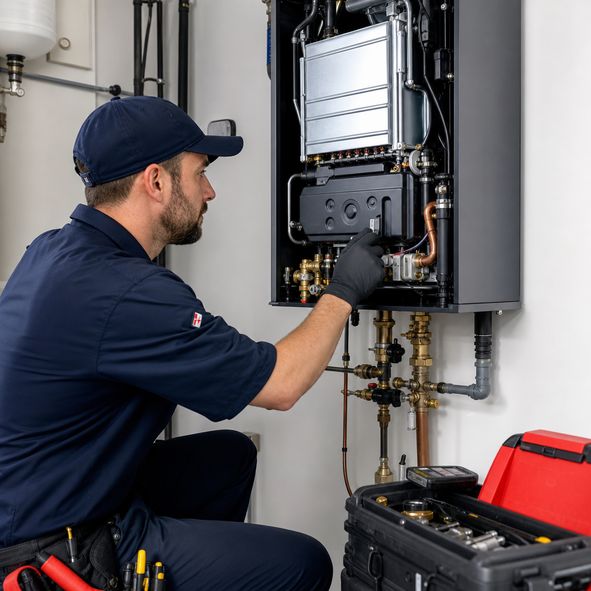
Think about your morning. The alarm sounds, you shuffle to the shower, and within seconds a cascade of perfectly heated water erases every trace of sleep. No thought required. No effort expended. It simply works — and it works because somewhere in your mechanical room, a sophisticated water heating system is performing a silent, continuous miracle. For New Westminster homeowners, that miracle is delivered reliably every single day, and yet most people never give it a second thought until the moment it fails. A cold shower at 6 a.m. on a damp Lower Mainland morning has a way of making you think very seriously about water heater services, very quickly. At BCRC Heating and Cooling, we believe you should never have to reach that point. Understanding your water heating system — its history, its technology, and its maintenance requirements — is the first step toward ensuring it never lets you down.
Ancient Roots and Early Engineering: Humanity’s Long Pursuit of Hot Water
The desire for heated water is as old as civilization itself. The ancient Romans engineered the hypocaust system as early as 100 BCE — a radiant underfloor heating network that circulated hot air through hollow tile floors and wall cavities in bathhouses known as thermae. These engineering marvels served hundreds of bathers simultaneously, representing the ancient world’s most sophisticated attempt at centralized thermal comfort. Meanwhile, ancient Greeks heated water in bronze vessels over open flames for ritualistic bathing, and civilizations across Asia developed clay-lined hearths specifically designed to hold and heat large volumes of water.
The fundamental challenge — heating water efficiently, storing it safely, and delivering it on demand — remained largely unsolved for nearly two thousand years. Wood and coal fires required constant attention, vessels corroded rapidly, and scalding injuries were common. It would take the Industrial Revolution and the ingenuity of two key inventors to transform hot water from a luxury into a household expectation.
The Industrial Breakthroughs That Changed Everything
In 1868, a London painter named Benjamin Waddy Maughan patented a device he called the “Geyser” — a gas-fired instantaneous water heater that used natural gas jets to heat water as it flowed through a series of pipes. It was revolutionary in concept but dangerously lacking in ventilation design; early models released combustion gases directly into the room. Despite its hazards, Maughan’s Geyser established the foundational principle of on-demand water heating — heating water only when needed rather than storing a pre-heated reserve.
The transformative leap came in 1889 when Norwegian-American mechanical engineer Edwin Ruud patented the first automatic, thermostatically controlled storage water heater in Pittsburgh. Ruud’s design incorporated a sealed steel tank, an automatic gas burner, a pressure relief valve, and a rudimentary thermostat — the direct ancestor of the conventional storage tank water heater still found in millions of North American homes today. His company, the Ruud Manufacturing Company, began mass production, and within two decades hot water had transitioned from an aristocratic indulgence to an attainable middle-class comfort. The architecture of water heating had been permanently established.
The 20th Century: Standardization, Electrification, and the Rise of the Modern Tank
The first half of the twentieth century brought rapid standardization as natural gas infrastructure expanded across North American cities and rural electrification programs reached previously isolated communities. By the 1940s and 1950s, the 40-to-60-gallon gas storage water heater had become the North American residential standard. Steel tank manufacturing improved dramatically, glass-lined tanks reduced corrosion, and magnesium anode rods — sacrificial metal rods designed to corrode in place of the tank itself — extended service life considerably.
Electric resistance water heaters became the dominant choice in regions without natural gas infrastructure, using immersion heating elements to warm stored water. Recovery rates were slower than gas models, but installation was simpler and the absence of combustion made them suitable for tightly sealed spaces. By the 1970s energy crisis, however, efficiency had become a pressing concern. The Energy Factor (EF) rating system — later replaced by the Uniform Energy Factor (UEF) — was introduced to give consumers a standardized measure of water heater efficiency, and manufacturers began investing heavily in insulation improvements, more precise thermostatic controls, and reduced standby heat loss technologies.
The Modern Era: Tankless On-Demand Technology and Smart Wi-Fi Diagnostics
The late 1990s and 2000s saw the widespread adoption of condensing tankless water heaters — units that heat water instantaneously as it passes through a heat exchanger, eliminating standby heat loss entirely. Modern high-efficiency condensing tankless units, such as those manufactured by Navien, Rinnai, and Noritz, achieve Uniform Energy Factors (UEF) of 0.90 to 0.96, representing a dramatic improvement over conventional storage tanks which typically range from 0.59 to 0.70 UEF.
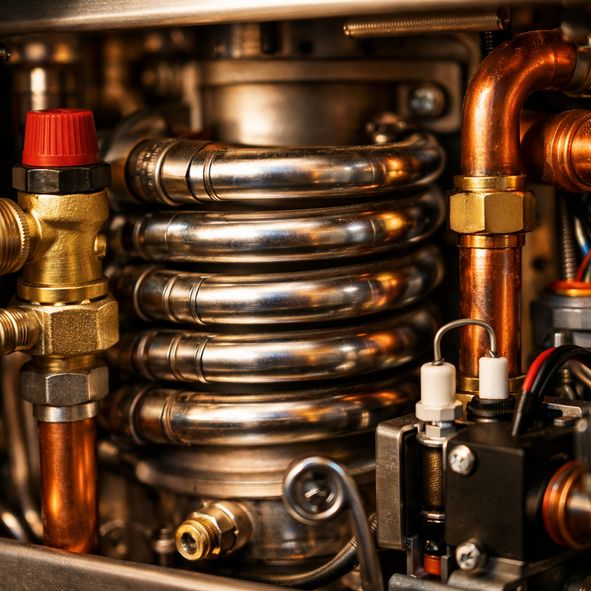
Today’s premium tankless systems incorporate stainless-steel heat exchangers, modulating gas valves that adjust BTU output precisely to demand, and built-in recirculation pumps that eliminate the frustrating wait for hot water at distant fixtures. Perhaps most significantly, leading manufacturers now integrate Wi-Fi enabled smart diagnostic systems that monitor flow rates, inlet and outlet temperatures, burner performance, and error codes in real time — transmitting alerts directly to a technician’s tablet before a minor fault escalates into a no-heat emergency. For New Westminster homeowners, this represents a paradigm shift: your water heater can now communicate its own maintenance needs before you ever notice a problem.
Heat Pump Water Heaters: The Peak Efficiency Paradigm for BC Homeowners
The most significant advancement in residential water heating technology in the past decade is unquestionably the Heat Pump Water Heater (HPWH). Rather than generating heat directly through electrical resistance or combustion, an HPWH extracts ambient thermal energy from the surrounding air and transfers it into the water tank using a refrigerant cycle — the same fundamental physics that make your refrigerator and air conditioner work, operating in reverse.
The efficiency implications are extraordinary. While a conventional electric resistance water heater converts one unit of electrical energy into one unit of heat (100% efficiency, or a Coefficient of Performance of 1.0), a heat pump water heater achieves a COP of 3.0 to 4.5 — meaning it delivers three to four and a half units of thermal energy for every unit of electricity consumed. This translates to operating costs 60 to 70 percent lower than standard electric tanks.
For British Columbia homeowners, HPWHs are particularly compelling for several reasons. BC Hydro’s electricity grid is predominantly hydroelectric and among the cleanest in North America, meaning electrification of water heating via HPWH carries a minimal carbon footprint. Additionally, CleanBC and BC Hydro currently offer rebates of up to $1,000 for the installation of qualifying heat pump water heaters, making the upfront cost premium far more manageable. The optimal installation environment for an HPWH is a space that maintains temperatures between 4°C and 32°C year-round — a condition easily met by most New Westminster mechanical rooms and garages. It is worth noting that HPWHs do produce a modest cooling and dehumidifying effect on the surrounding space as a byproduct of heat extraction, which can actually be beneficial in BC’s sometimes humid coastal environment.
Water Heater Technology Comparison Matrix
| Technology | Uniform Energy Factor (UEF) | Typical Lifespan | Fuel Source | Estimated Annual Operating Cost (BC) | Best Application |
|---|---|---|---|---|---|
| Gas Storage Tank | 0.59 – 0.70 | 10 – 15 years | Natural Gas | $250 – $380/year | High-volume households with existing gas service |
| Electric Storage Tank | 0.90 – 0.95 | 10 – 15 years | Electricity | $480 – $620/year | Homes without gas service, tight spaces |
| Gas Condensing Tankless | 0.90 – 0.96 | 20 – 25 years | Natural Gas | $160 – $240/year | Large families, high simultaneous demand, space-limited installs |
| Heat Pump Water Heater | 3.50 – 4.50 (COP) | 12 – 15 years | Electricity (ambient air) | $120 – $180/year | BC Hydro customers seeking maximum efficiency and CleanBC rebates |
Greater Vancouver Homeowner Buying and Maintenance Guide
Navigating BC Hydro and CleanBC Incentives
British Columbia’s aggressive clean energy transition has created a genuinely favourable financial environment for homeowners upgrading their water heating systems. The CleanBC Better Homes program offers rebates for qualifying heat pump water heaters, with amounts varying based on the unit’s UEF rating and tank size. BC Hydro customers may also access additional incentives through the utility’s own energy efficiency programs. BCRC’s certified technicians are fully current on all active incentive programs and will handle the rebate documentation process on your behalf — ensuring you receive every dollar of savings you’re entitled to without the administrative burden.
Coastal Climate Durability Considerations
New Westminster and the broader Greater Vancouver region presents specific environmental challenges for water heating equipment. The Lower Mainland’s coastal climate delivers persistent humidity, frequent temperature cycling between seasons, and in many cases, moderately hard water with elevated mineral content drawn from Metro Vancouver’s reservoir system. Scale buildup from dissolved minerals — primarily calcium carbonate — is the single most common cause of premature water heater failure in this region. Scale accumulates on heat exchanger surfaces and tank liners, reducing thermal transfer efficiency and dramatically shortening equipment lifespan. Annual descaling of tankless heat exchangers using a food-grade citric acid flush is a critical maintenance procedure that BCRC performs as part of every annual service visit.
Anode Rod Maintenance: The Single Most Important Preventive Measure
For storage tank water heaters — both gas and electric — the magnesium or aluminum anode rod is your tank’s primary defence against corrosion. This sacrificial metal rod, typically 0.75 to 1 inch in diameter and 36 to 48 inches long, is threaded into the top of the tank and undergoes galvanic corrosion in preference to the steel tank walls. When the anode rod is fully consumed, the tank itself becomes the sacrificial element — and corrosion proceeds rapidly, often resulting in catastrophic tank failure and water damage to your home. Industry standard practice recommends inspecting and replacing the anode rod every 3 to 5 years, or more frequently in areas with harder water. This single maintenance task can extend a tank water heater’s service life by 5 to 10 additional years, representing exceptional return on a minimal investment.
Warning Signs That Demand Immediate Service
- Rusty or discoloured water: Indicates advanced internal tank corrosion or a fully depleted anode rod — replacement is likely imminent.
- Rumbling or popping sounds: Caused by sediment accumulation on the tank floor, reducing efficiency and stressing the tank liner — requires immediate flushing.
- Inadequate hot water recovery: May indicate a failed heating element (electric), failing thermocouple or gas valve (gas), or undersized unit for current household demand.
- Moisture or pooling around the base: Can indicate a failing pressure relief valve, corroded drain valve, or early-stage tank failure — requires urgent professional assessment.
- Age exceeding 10 years: At this threshold, proactive replacement planning is strongly advisable regardless of current performance, as failure risk increases substantially.
Frequently Asked Questions: Water Heater Services in New Westminster
How do I know whether to repair or replace my water heater?
The industry-standard decision framework applies what technicians call the “50% Rule”: if the estimated repair cost exceeds 50% of the cost of a comparable new unit, and the existing equipment is more than half its expected lifespan (typically 7+ years for a 15-year tank), replacement is almost always the more economically sound decision. Additional factors include the unit’s efficiency rating relative to current standards, the availability of replacement parts, and whether the existing fuel type still represents the optimal choice given current energy pricing and available rebates. A BCRC technician will always provide you with a transparent, honest assessment of both options — including total cost of ownership projections over a 10-year horizon.
What size water heater does my New Westminster home actually need?
Sizing is determined by peak hour demand — the maximum volume of hot water your household requires during the busiest 60-minute period of the day. For storage tanks, the general guideline is 40 gallons for 1–2 occupants, 50 gallons for 3–4 occupants, and 60–80 gallons for households of 5 or more. For tankless systems, the critical specification is flow rate capacity in gallons per minute (GPM) combined with the required temperature rise. In Greater Vancouver, incoming cold water temperatures average 8°C to 12°C depending on season, meaning a unit must achieve a temperature rise of approximately 37°C to deliver water at the standard 49°C set point. A properly sized condensing tankless unit for a family of four typically requires a minimum flow rate capacity of 8–10 GPM at this temperature rise differential.
Are tankless water heaters worth the higher upfront cost in BC?
For most Greater Vancouver households with natural gas service and high hot water demand, the answer is a qualified yes. A premium condensing tankless unit carries an installed cost premium of approximately $1,500 to $2,500 over a comparable storage tank. However, the combination of 25–35% lower annual operating costs, a service life of 20–25 years versus 10–15 for a tank, and the elimination of standby heat loss typically produces a positive return on investment within 7 to 10 years. For electrically-heated homes, the heat pump water heater has largely superseded the tankless option as the highest-ROI choice, particularly with available CleanBC rebates reducing the payback period to as little as 4–6 years in many cases.
How often should a water heater be professionally serviced?
For gas storage tanks and gas tankless units, annual professional maintenance is the industry-recommended interval. A comprehensive service visit by a BCRC Red Seal technician includes: combustion analysis and burner adjustment, heat exchanger inspection and descaling (tankless), anode rod inspection and replacement as needed (storage tanks), pressure relief valve testing, sediment flushing, thermostat calibration, flue and venting inspection, and a full safety check of all gas connections and pressure settings. For heat pump water heaters, the air filter should be cleaned every 3 months by the homeowner, with a full professional inspection recommended every 2 years. Consistent maintenance is not merely a best practice — it is frequently a condition of manufacturer warranty compliance.
Trust New Westminster’s Water Heater Experts at BCRC Heating and Cooling
Your water heater is not a background appliance — it is a precision mechanical system that serves your family every single day, in every season, through every demand you place upon it. It deserves the same professional attention you would give any other major home system. Whether you are dealing with an urgent breakdown at the worst possible moment, planning a proactive upgrade to a high-efficiency heat pump water heater or condensing tankless system, navigating CleanBC rebate applications, or simply scheduling the annual maintenance that extends your equipment’s life by years, BCRC Heating and Cooling is the team New Westminster homeowners trust to get it right the first time. Our Red Seal certified technicians bring manufacturer-level technical expertise, complete diagnostic tooling, and an unwavering commitment to your comfort and safety to every single job. For dependable, certified water heater installation in Vancouver and throughout Greater Vancouver — including New Westminster, Burnaby, Surrey, and Coquitlam — call the local experts at BCRC Heating and Cooling today at (604) 781-7272. Hot water, handled right.