



Water Heater Services in Lions Bay | BCRC
The Quiet Miracle of Instant Hot Water in Lions Bay
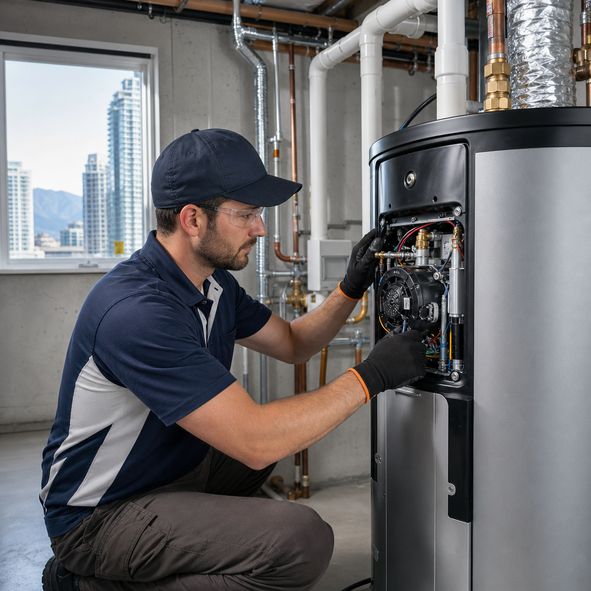
Turn a handle. Hot water flows. It is so seamless, so utterly reliable on a good day, that most Lions Bay homeowners never pause to appreciate the sophisticated engineering humming quietly in their mechanical room. But the moment that flow turns cold mid-shower, or a spreading puddle on the utility room floor announces a catastrophic tank failure, the full weight of dependency becomes impossible to ignore. Hot water is not a luxury — it is the invisible backbone of daily domestic life. From the morning shower ritual to sanitizing dishes, from therapeutic baths after a long Sea-to-Sky hike to radiant floor systems keeping a coastal home warm against Pacific storms, your water heater works tirelessly, 24 hours a day, 365 days a year. At BCRC Heating and Cooling, our Red Seal certified technicians understand this dependency intimately. This comprehensive guide explores the full history, cutting-edge technology, and practical ownership knowledge every Lions Bay homeowner deserves — because an informed homeowner makes smarter, safer, and more cost-effective decisions about one of the most critical appliances in their home.
Ancient Roots and Early Engineering: Humanity’s Long Quest for Hot Water
The desire to heat water on demand is as old as civilization itself. The Romans, whose engineering genius still astonishes modern architects, developed the hypocaust system as early as 100 BCE — an underfloor heating network that circulated hot gases from wood-fired furnaces beneath raised stone floors and through hollow wall tiles. While primarily a space-heating system, the same thermal principles were applied to communal bathing complexes, the thermae, where water was heated in large bronze cauldrons over open fires and channelled through lead and clay pipe networks to bathing pools maintained at graduated temperatures: the frigidarium, tepidarium, and caldarium. These were not crude arrangements — the Baths of Caracalla in Rome served over 1,600 bathers simultaneously, representing a feat of thermal engineering that would not be meaningfully surpassed for over 1,500 years.
Ancient Greeks heated water in vessels over open flames for ritualistic bathing. In feudal Japan, communal onsen (hot spring) culture drove sophisticated stone and timber channelling systems that directed geothermally heated water into bathing areas. Medieval European households relied on iron cauldrons suspended over hearth fires — a method unchanged in its fundamental physics from the stone-age cooking pit. The core problem remained consistent across all these cultures and centuries: heating water required constant fuel, constant attention, and produced no stored reserve. Every hot bath was a fresh project, an exercise in patience and labour.
Industrial Breakthroughs: From Maughan’s Geyser to Ruud’s Automated Tank
The modern water heater was born from two pivotal 19th-century inventions separated by an ocean and two decades. In 1868, London painter and part-time inventor Benjamin Waddy Maughan patented a device he called the Geyser — a wall-mounted gas appliance that heated cold water flowing through pipes exposed to burning jets of gas. Maughan’s device was groundbreaking in concept but dangerously flawed in execution: it had no flue system to exhaust combustion gases, making it a genuine carbon monoxide hazard. It was brilliantly innovative and lethally impractical in equal measure, yet it established the foundational on-demand heating principle that tankless water heaters still use today.
The true watershed moment arrived in 1889 when Norwegian-American mechanical engineer Edwin Ruud, working in Pittsburgh, Pennsylvania, patented the first automatic storage water heater. Ruud’s device combined a gas burner beneath an insulated cylindrical storage tank with a thermostatically controlled gas valve — a device that could heat water to a set temperature and maintain it without any human intervention. This automated storage principle was revolutionary. It meant a household could have a continuously available reserve of hot water without anyone tending a fire. Ruud founded the Ruud Manufacturing Company, which still operates today, and his fundamental design — an insulated tank, a heat source below, a thermostat, a cold-water inlet at the bottom, and a hot-water outlet at the top — remained essentially unchanged for nearly a century. The modern storage tank water heater in a Lions Bay home is, in its core architecture, Edwin Ruud’s 1889 invention refined with better materials and tighter controls.
20th-Century Standardization and Electrification
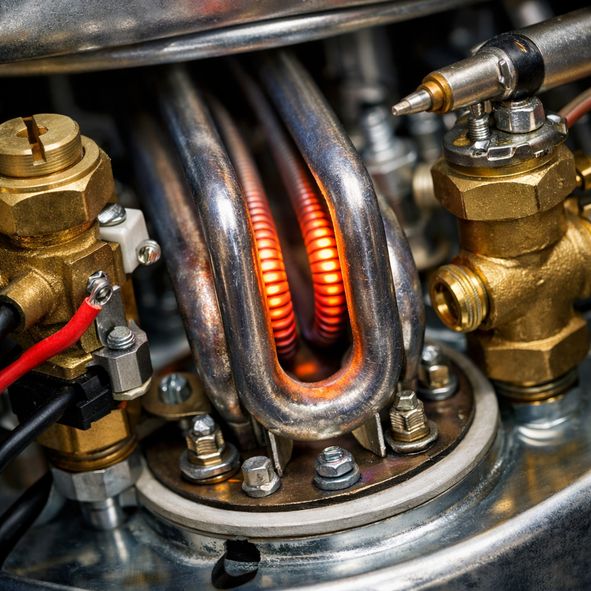
The first half of the 20th century saw water heater technology proliferate rapidly through North American and European homes, driven by urbanization, municipal gas distribution networks, and the electrification of residential infrastructure. By the 1920s and 1930s, both gas-fired and electric resistance storage tanks had become standard features in new residential construction across major Canadian and American cities. Manufacturers began competing on tank capacity, recovery rate, and insulation quality. The adoption of glass-lined steel tanks in the mid-20th century dramatically reduced internal corrosion, extending service life and improving water quality. The introduction of the magnesium sacrificial anode rod — a replaceable metal rod suspended inside the tank that corrodes preferentially to protect the steel tank liner — was a quiet engineering masterstroke that remains a critical maintenance item on every storage tank water heater to this day.
Post-World War II suburban expansion created enormous demand, and by the 1950s, electric water heaters were the dominant technology in regions without reliable natural gas infrastructure. Energy efficiency received little attention during the cheap-energy decades of the mid-20th century, but the 1973 OPEC oil embargo triggered an urgent industry-wide re-examination of thermal efficiency. Manufacturers introduced thicker foam insulation jackets, more efficient burner designs, and improved heat exchanger geometries. Government energy efficiency programs in Canada began mandating minimum Energy Factor (EF) ratings for water heaters sold domestically, laying the regulatory groundwork for the high-efficiency era that followed.
The Modern Era: Tankless On-Demand Revolution and Smart Wi-Fi Diagnostics
The tankless, or condensing on-demand, water heater represents the most significant paradigm shift in residential water heating since Edwin Ruud’s storage tank. Rather than maintaining a large volume of hot water continuously — a process that incurs what engineers call standby heat loss, the thermal energy constantly radiating through the tank walls into the surrounding air — a tankless unit fires its heat exchanger only when a hot water tap is opened. Cold water flows through a compact, high-efficiency heat exchanger, typically achieving outlet temperatures between 38°C and 60°C, and hot water is delivered instantaneously and endlessly for as long as the tap is open.
Modern condensing gas tankless units, such as those manufactured by Navien, Rinnai, and Noritz — all brands BCRC regularly installs and services in the Greater Vancouver region — achieve thermal efficiencies exceeding 96% AFUE (Annual Fuel Utilization Efficiency) by extracting heat from combustion exhaust gases that conventional atmospheric-vent units simply expel to the outside. These units use PVC venting rather than metal flue pipes because exhaust gases exit at temperatures low enough to be safely handled by plastic. Wi-Fi connectivity modules now allow homeowners to monitor outlet temperature, flow rate, error codes, and cumulative energy consumption from a smartphone application. Some advanced models integrate with smart home platforms including Google Home and Amazon Alexa, enabling voice-controlled temperature adjustment and predictive maintenance alerts based on operational data analytics. For Lions Bay homeowners managing remote or vacation properties along the Sea-to-Sky corridor, remote monitoring and frost-protection features provide genuine, tangible peace of mind.
Heat Pump Water Heaters: The Peak Efficiency Paradigm for BC Homeowners
The Heat Pump Water Heater (HPWH) is currently the most energy-efficient water heating technology available to residential consumers, and it is particularly well-suited to British Columbia’s mild coastal climate. Rather than generating heat directly through electrical resistance or gas combustion, a HPWH operates on the same refrigeration cycle as an air-source heat pump: it extracts ambient thermal energy from the surrounding air, concentrates it using a refrigerant compression cycle, and transfers that concentrated heat into the water tank. For every 1 kilowatt-hour of electrical energy consumed to run the compressor and fan, a modern HPWH delivers between 3 and 4 kilowatt-hours of heat energy to the water — a Coefficient of Performance (COP) of 3.0 to 4.0, compared to a COP of exactly 1.0 for a conventional electric resistance heater.
This extraordinary efficiency translates directly into lower utility bills. BC Hydro’s residential electricity rate structure makes HPWHs especially economical in British Columbia compared to natural gas-dependent provinces. CleanBC’s Homes Program currently offers substantial rebates for qualifying HPWH installations — homeowners replacing an electric resistance storage tank with a certified HPWH may be eligible for rebates that significantly offset the higher upfront equipment cost. HPWHs do have specific siting requirements: they need a minimum surrounding air volume (typically 28 to 56 cubic metres of unobstructed space) to operate efficiently, and they perform best in spaces where ambient air temperatures remain above 10°C year-round — a condition easily met in Lions Bay’s heated mechanical rooms. The units also dehumidify and cool the space they occupy as a byproduct of heat extraction, which can be a secondary benefit in warmer months. BCRC technicians are fully trained in HPWH installation, commissioning, and maintenance and can assess whether your Lions Bay home is an ideal candidate for this technology.
Deep-Dive Comparison: Choosing the Right Water Heater for Your Lions Bay Home
Selecting the optimal water heating system requires balancing upfront cost, operating efficiency, fuel availability, expected lifespan, and environmental impact. The table below provides a detailed technical comparison of the four primary residential water heating technologies available to Lions Bay homeowners.
| Specification | Gas Storage Tank | Electric Storage Tank | Gas Tankless (Condensing) | Heat Pump Water Heater |
|---|---|---|---|---|
| Thermal Efficiency (AFUE/EF/UEF) | 60% – 80% AFUE (conventional); up to 96% (power vent) | 0.90 – 0.95 UEF (resistance) | 92% – 96% AFUE (condensing) | 2.0 – 4.0+ COP (200% – 400% equivalent efficiency) |
| Typical Lifespan | 8 – 12 years | 10 – 15 years | 15 – 20 years | 12 – 15 years |
| Primary Fuel Source | Natural Gas / Propane | Electricity (BC Hydro) | Natural Gas / Propane | Electricity (BC Hydro) |
| Standby Heat Loss | Moderate to High | Low to Moderate | None (on-demand only) | Very Low (high insulation + efficient cycle) |
| Upfront Equipment Cost (CAD) | $800 – $1,500 | $600 – $1,200 | $1,500 – $3,500 | $1,800 – $3,500 |
| Annual Operating Cost (Approx. CAD, avg. BC household) | $280 – $420 | $380 – $520 | $200 – $320 | $120 – $200 |
| Available CleanBC / BC Hydro Rebates | None currently | None currently | Limited (high-efficiency models) | Up to $1,000 (qualifying models) |
| GHG Emissions (BC Grid) | Moderate (combustion) | Very Low (clean BC grid) | Low to Moderate (combustion) | Negligible (clean BC grid + high COP) |
| Hot Water Supply | Limited by tank capacity (40 – 80 USG typical) | Limited by tank capacity | Unlimited (flow-rate dependent) | Limited by tank (but high recovery efficiency) |
| Installation Complexity | Low to Moderate | Low | Moderate to High (gas, condensate, venting) | Moderate (electrical upgrade may be required) |
| Best Suited For | Homes with existing gas and moderate demand | Smaller households, lower capital budget | High-demand households, unlimited hot water priority | Electrically heated homes, maximum efficiency priority |
Greater Vancouver Homeowner Buying and Maintenance Guide
Lions Bay homeowners operate in a specific environmental and regulatory context that shapes every water heater purchasing and maintenance decision. Here is what every local homeowner should know before calling a technician or visiting a supply house.
BC Hydro and CleanBC Incentive Programs
British Columbia’s CleanBC Homes Program, administered through BC Hydro and FortisBC, provides direct incentive rebates for homeowners who upgrade from fossil-fuel or low-efficiency electric water heating to high-efficiency or electrified alternatives. As of the most recent program update, qualifying Heat Pump Water Heater installations can attract rebates of up to $1,000 for BC Hydro customers replacing an electric resistance tank. FortisBC offers separate rebates for high-efficiency condensing tankless gas water heaters replacing older atmospheric-vent units. BCRC’s team stays current with all active rebate programs and can process rebate paperwork on your behalf, ensuring you capture every dollar of incentive you are entitled to without the administrative burden.
Coastal Climate and Corrosion Durability
Lions Bay sits at the base of the Howe Sound fjord, exposed to marine-influenced air with elevated ambient humidity and occasional salt aerosol from tidal activity. This coastal environment accelerates external corrosion on water heater components, particularly on metal flue connectors, gas valve bodies, and external tank jackets. BCRC technicians routinely inspect for and treat early-stage corrosion during maintenance visits, and we recommend stainless-steel venting components and corrosion-resistant gas connector fittings for all new installations in coastal municipalities. Ensuring your mechanical room has adequate ventilation to prevent chronic high humidity around the water heater is a simple but effective protective measure.
Anode Rod Maintenance: The Single Most Neglected Service Item
The sacrificial magnesium or aluminum anode rod is a 25–50mm diameter metal rod suspended vertically inside your storage tank through the top fitting. Through a process of galvanic corrosion, this rod corrodes preferentially to the steel tank liner, essentially sacrificing itself to protect the tank. When the anode rod is fully consumed — a process that typically takes 3 to 5 years depending on water chemistry and usage volume — the tank wall itself begins to corrode, leading inevitably to pinhole leaks and eventual catastrophic failure. The Greater Vancouver region’s water supply, while excellent in quality, has a pH and mineral profile that can accelerate anode depletion in some areas. BCRC recommends anode rod inspection every 3 years as part of a comprehensive water heater maintenance visit. Replacing a depleted anode rod costs a fraction of a tank replacement and can double the operational lifespan of an otherwise healthy tank.
Signs Your Water Heater Needs Professional Attention
- Rusty or discoloured hot water: Indicates internal tank corrosion or a fully depleted anode rod — act immediately.
- Rumbling or popping sounds during heating: Sediment accumulation on the tank floor is insulating the burner, reducing efficiency and stressing the tank liner.
- Water temperature fluctuations: May indicate a failing thermostat, deteriorating heating element (electric), or gas valve malfunction.
- Visible moisture or pooling around the base: Could indicate a pressure relief valve discharge, a loose drain valve, or early tank wall failure.
- Age exceeding 10 years: Proactive replacement planning prevents the emergency scenario of waking up to a flooded mechanical room.
Frequently Asked Questions: Water Heater Services in Lions Bay
How do I know whether to repair or replace my existing water heater?
The industry standard guidance is the 50% Rule: if the estimated cost of a repair exceeds 50% of the replacement cost of the unit, and the unit is more than half of its expected lifespan, replacement is the economically rational choice. For example, a 9-year-old gas storage tank (expected lifespan of 10–12 years) requiring a $450 gas valve replacement when the unit itself costs $900 to replace new is a marginal repair at best. Additional factors include whether the unit is showing multiple simultaneous symptoms, whether the anode rod has been historically neglected (indicating accelerated internal corrosion), and whether upgrading to a higher-efficiency technology like a condensing tankless or HPWH would qualify for available rebates that offset the replacement cost. BCRC provides honest, transparent assessments with no pressure toward unnecessary replacement.
What size tankless water heater do I need for my Lions Bay home?
Tankless water heater sizing is determined by two variables: required flow rate (measured in litres per minute or gallons per minute) and required temperature rise (the difference between incoming cold water temperature and desired outlet temperature). In Lions Bay, groundwater temperatures typically range from 7°C to 10°C in winter. If your household requires 15 litres per minute simultaneously (a typical two-shower-simultaneous-use scenario) at a desired outlet temperature of 49°C, you need a unit capable of raising water temperature by approximately 39–42°C at that flow rate. This typically requires a condensing gas tankless unit in the 180,000–199,000 BTU/hr input range. BCRC performs a full household demand analysis before specifying any tankless unit, ensuring you receive a system properly sized for your family’s actual peak demand rather than an undersized unit that disappoints or an oversized unit that overburdens your gas service.
Are there specific permits required for water heater installation in Lions Bay, BC?
Yes. In British Columbia, water heater installations — whether replacement-in-kind or new installations — require a BC Safety Authority (BCSA) permit for gas appliances under the Gas Safety Act, and in many cases a building permit from the District or Municipality depending on the scope of work. Electric water heater replacements require an electrical permit issued through BC Safety Authority. Unpermitted water heater installations are a significant liability risk: they can void manufacturer warranties, create complications during home sale inspections, and in the event of an insurance claim related to a water heater failure, an unpermitted installation may provide grounds for a claim denial. BCRC handles all permit applications, inspections, and BCSA documentation as a standard component of every installation, ensuring your project is fully compliant and properly documented.
How often should a tankless water heater be serviced, and what does the service involve?
BCRC recommends annual professional maintenance for gas condensing tankless water heaters, particularly in areas with moderately hard water like much of Greater Vancouver. A comprehensive tankless service includes: descaling the heat exchanger using a food-grade white vinegar or citric acid flush to dissolve mineral scale deposits that reduce thermal transfer efficiency; inspecting and cleaning the inlet filter screen; testing the pressure relief valve for proper operation; inspecting the gas burner assembly for carbon deposits, flame pattern anomalies, and igniter electrode condition; verifying combustion analysis (CO2 percentage, CO parts-per-million) with a calibrated combustion analyzer; inspecting the condensate trap and drain line for blockages; and updating the unit’s firmware if applicable for Wi-Fi connected models. Skipping annual descaling on a tankless unit in a hard-water area can reduce heat exchanger efficiency by 20–30% within two to three years and dramatically shorten the component’s lifespan.
BCRC Heating and Cooling: Lions Bay’s Trusted Water Heater Specialists
From the Roman hypocaust to the Wi-Fi-connected condensing tankless unit, the human need for reliable, efficient hot water has driven over two millennia of increasingly sophisticated engineering. Today’s Lions Bay homeowner has access to water heating technology of extraordinary efficiency, longevity, and intelligence — but only when it is properly specified, correctly installed, and diligently maintained by qualified professionals who understand both the technology and the unique demands of coastal British Columbia living. At BCRC Heating and Cooling, our Red Seal certified master technicians bring factory training, BCSA compliance expertise, and a genuine commitment to transparent, honest service to every job we undertake in Lions Bay and across the Greater Vancouver region. Whether you need an emergency repair on a failing tank, a comprehensive efficiency upgrade to a condensing tankless system, a Heat Pump Water Heater installation to maximize your CleanBC rebate eligibility, or simply a thorough annual maintenance visit to protect your existing investment, BCRC is the team you can trust to do the work right the first time. For professional, certified water heater installation in Vancouver and throughout the Sea-to-Sky corridor including Lions Bay, contact the local experts at BCRC Heating and Cooling today at (604) 781-7272 — because your family deserves hot water that never lets them down.