



The Quiet Miracle Beneath Your Roof: Why Hot Water Is Delta’s Most Undervalued Comfort
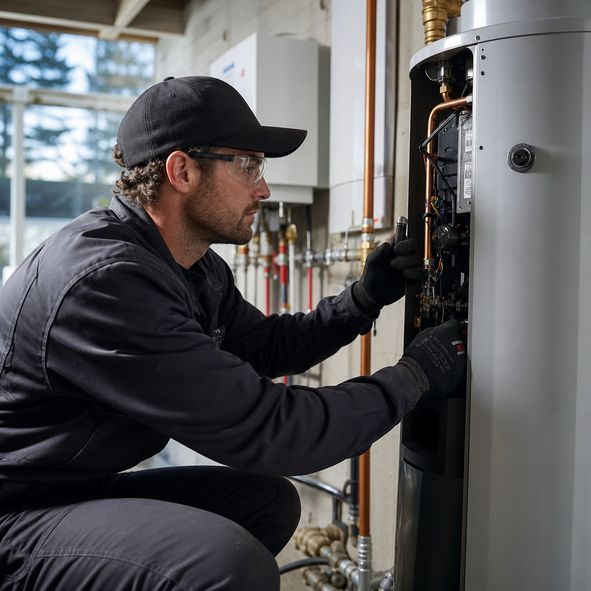
Think about your morning routine for a moment. The steaming shower that wakes you up, the dishwasher thundering through last night’s dinner plates, the washing machine spinning a fresh load of laundry — every single one of those moments depends on one humble, hardworking appliance humming away in your mechanical room. Your water heater is arguably the most used piece of equipment in your Delta home, yet it only gets noticed the second it fails. And in the Lower Mainland, where a cool, damp coastal climate makes a hot shower feel less like a luxury and more like a biological necessity, that failure can be genuinely miserable. At BCRC Heating and Cooling, we believe your water heater deserves proactive attention, expert installation, and informed ownership — not just an emergency call at 7 AM when the water runs ice cold. This guide is your definitive resource for understanding, maintaining, and upgrading your water heating system in Delta, BC.
Ancient Roots: Humanity’s Endless Pursuit of Hot Water
The desire for heated water is as old as civilization itself. The ancient Romans engineered breathtaking thermal infrastructure with their hypocaust systems — hollow floors and wall cavities through which heated air circulated from wood-burning furnaces, warming communal bathhouses (thermae) that served thousands of citizens daily. The Greeks had their own bathing culture, and archaeological evidence from Mohenjo-daro in the Indus Valley — dating back over 4,000 years — reveals sophisticated brick-lined bathing rooms connected to drainage systems, suggesting organized water heating practices existed long before Europe’s classical era. In ancient China, evidence of communal hot baths dates to the Qin Dynasty. What all of these civilizations shared was an intuitive understanding of a timeless truth: controlled hot water is not a luxury — it is a cornerstone of public health, hygiene, and human dignity.
The Industrial Breakthroughs That Changed Everything
For centuries, water heating remained a labour-intensive, fire-tending process — kettles over hearths, pots above wood stoves. That changed dramatically in the 19th century. In 1868, London-based painter and inventor Benjamin Waddy Maughan patented the first gas-fired instantaneous water heater, which he theatrically named the Geyser. Maughan’s device heated cold water as it flowed through pipes exposed to burning gas jets, delivering hot water on demand without a storage tank. It was revolutionary, though dangerously lacking in proper venting — an engineering flaw that would be refined by his successors.
The true turning point came in 1889, when Norwegian engineer Edwin Ruud emigrated to Pittsburgh, Pennsylvania, and invented the first automatic, storage-type gas water heater. Ruud’s design incorporated a thermostatically controlled gas burner beneath a copper storage tank, allowing water to be heated and held at a consistent temperature without constant human supervision. This innovation — a pilot light, a thermostat, a storage vessel — forms the fundamental blueprint of the conventional gas storage water heater that still heats millions of North American homes today, over 130 years later. Ruud’s company still bears his name and remains one of the continent’s most recognizable water heater brands.
The 20th Century: Standardization, Electrification, and Mass Adoption
The early 1900s saw municipal gas infrastructure expand rapidly across North American cities, and with it, water heater adoption exploded. Manufacturers standardized tank capacities — the familiar 40-gallon and 60-gallon formats — to suit the emerging middle-class suburban home. The post-World War II housing boom of the late 1940s and 1950s cemented the storage tank water heater as a household staple, with electric resistance models gaining traction as rural electrification programs brought power to communities far from gas mains.
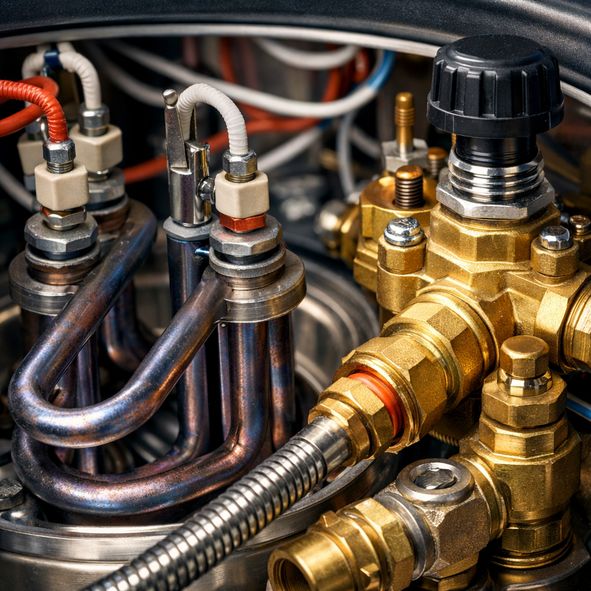
Key 20th-century engineering milestones included the widespread adoption of the sacrificial magnesium anode rod — a brilliant piece of electrochemical engineering that protects steel tank walls from corrosion by attracting oxidizing ions to itself, dissolving over time so the tank does not. The introduction of glass-lined tanks in the mid-century dramatically extended service life, and pressure-temperature (P&T) relief valves became a universal safety standard, preventing catastrophic over-pressurization. By 1980, virtually every residential dwelling in Canada had a water heater as standard equipment — a feat of infrastructure that would have astonished Roman engineers and medieval peasants alike.
The Modern Era: Tankless On-Demand Technology and Smart Wi-Fi Diagnostics
The late 20th and early 21st centuries brought a paradigm shift: the mainstream arrival of condensing tankless (on-demand) water heaters. Building on Maughan’s original Geyser concept but with modern precision, brands like Navien, Rinnai, Noritz, and Bosch now produce wall-mounted units that activate only when a hot water tap opens, heating water instantaneously through a heat exchanger at efficiencies reaching 96–98% AFUE (Annual Fuel Utilization Efficiency). Because there is no standing pilot light and no thermal standby losses from a storage tank, condensing tankless units deliver significant energy savings — typically 24–34% over conventional storage heaters for average households.
Today’s premium tankless units integrate Wi-Fi enabled diagnostics and smart home connectivity. Navien’s NaviLink system, for example, allows homeowners and technicians to remotely monitor error codes, adjust temperature setpoints, track energy consumption data, and receive predictive maintenance alerts — all from a smartphone. This shift from reactive repair to proactive remote diagnostics represents a fundamental change in how HVAC and plumbing professionals like those at BCRC Heating and Cooling manage system health, reducing costly emergency call-outs and extending equipment lifespan through data-driven maintenance scheduling.
Heat Pump Water Heaters: The Peak Efficiency Paradigm for BC Homeowners
If condensing tankless technology represents a leap forward, Heat Pump Water Heaters (HPWHs) represent an entirely different physics class. Rather than generating heat by burning fuel or converting electricity to resistance heat, an HPWH operates like a refrigerator in reverse — it extracts ambient heat energy from the surrounding air and transfers it to the water in the storage tank via a refrigerant cycle and a compact compressor. This thermodynamic process means that for every 1 kWh of electricity consumed, an HPWH can deliver 3 to 4 kWh of heat energy — expressed as a Coefficient of Performance (COP) of 3.0 to 4.0, or equivalently, an Uniform Energy Factor (UEF) of 3.0+.
For Delta and Greater Vancouver homeowners, HPWHs are particularly compelling for several reasons. British Columbia’s electricity grid is among the cleanest in the world, powered overwhelmingly by hydroelectric generation, which means electric resistance heating is already relatively low-carbon. An HPWH slashes electricity consumption by 60–70% compared to a conventional electric tank, dramatically reducing both your energy bill and your household carbon footprint. BC Hydro’s PowerSmart rebate program and the federal CleanBC Better Homes program currently offer substantial incentives for HPWH installation, making the upfront cost premium far more manageable. The ideal installation scenario for an HPWH is a basement or mechanical room with sufficient unconditioned air volume — the unit draws heat from the ambient space, which is typically available year-round in Delta’s mild coastal climate.
Water Heater Comparison Matrix: Which System Is Right for Your Delta Home?
| Category | Gas Storage Tank | Electric Storage Tank | Gas Tankless (Condensing) | Heat Pump Water Heater |
|---|---|---|---|---|
| Efficiency Rating | 60–70% EF / UEF ~0.67 | 90–95% EF / UEF ~0.92 | 94–98% AFUE / UEF ~0.96 | UEF 3.0–4.5 (COP 3–4) |
| Fuel Source | Natural Gas / Propane | Electricity (240V) | Natural Gas / Propane | Electricity (240V) |
| Average Lifespan | 8–12 years | 10–15 years | 15–20 years | 12–15 years |
| Hot Water Supply | Limited by tank size (40–80 gal) | Limited by tank size (40–80 gal) | Unlimited (flow-rate dependent) | Limited by tank size (50–80 gal); recovery slower in cold rooms |
| Installation Cost (CAD) | $1,200–$2,000 | $900–$1,600 | $2,500–$4,500 | $2,200–$4,000 |
| Annual Operating Cost (approx.) | $350–$550 | $500–$750 | $200–$380 | $150–$280 |
| CleanBC / BC Hydro Rebate Eligible | No | No | Partial (high-efficiency models) | Yes — up to $1,000+ |
| Space Requirements | Moderate (floor space + venting) | Moderate (floor space) | Minimal (wall-mounted) | Large (700+ cu ft ambient air) |
| Standby Heat Loss | High | Moderate | None | Minimal |
| Best Suited For | Existing gas homes, budget installs | Homes without gas service | High-demand households, unlimited flow | BC Hydro homes, max efficiency goals |
Greater Vancouver Homeowner Buying and Maintenance Guide
Navigating BC Rebates and Incentives
Delta homeowners have access to a layered system of financial incentives that can substantially offset the cost of upgrading to a high-efficiency water heater. The CleanBC Better Homes and Home Renovation Rebate Program offers rebates for qualifying heat pump water heaters installed by registered contractors. BC Hydro’s rebate programs complement these provincial incentives. Additionally, the Canada Greener Homes Grant (federal program) has historically offered up to $5,000 for eligible home energy upgrades including HPWHs, though program availability changes — always confirm current offerings with your BCRC technician or at the official CleanBC website. Stacking provincial and federal rebates can reduce your net out-of-pocket cost for an HPWH installation to a level comparable with a mid-range conventional tank replacement.
Coastal Climate Durability Considerations
Delta’s location in the Fraser River delta means homes experience the full range of Greater Vancouver’s maritime climate — moderate temperatures year-round, high relative humidity, and significant rainfall. This environment creates specific durability challenges for water heating equipment. Corrosion is the primary enemy of storage tank water heaters in coastal BC. The combination of slightly mineral-laden Fraser Valley water and humid mechanical rooms accelerates anode rod depletion. BCRC strongly recommends annual anode rod inspection and replacement every 3–5 years for gas and electric storage tanks — a simple maintenance step that can extend tank life by 5+ years. Condensing tankless units require annual descaling (flushing with white vinegar or a commercial descaler) to remove mineral deposits from the heat exchanger, particularly important in areas with moderate water hardness.
Key Maintenance Milestones for Delta Homeowners
- Annually: Flush tank sediment (open drain valve, flush 2–3 gallons), test P&T relief valve operation, inspect burner flame colour (should be blue with minimal yellow tips for gas units), clean tankless heat exchanger inlet filter screens.
- Every 3–5 Years: Inspect and replace sacrificial anode rod (magnesium or aluminum-zinc), descale tankless heat exchanger, inspect venting connections for corrosion or blockage.
- Every 8–12 Years: Begin planning proactive replacement of gas storage tanks before failure. Tankless units with annual maintenance may serve 15–20 years.
- Immediately: Contact BCRC if you notice rust-coloured hot water (anode rod failure or tank corrosion), rumbling or popping sounds (sediment buildup), water pooling near the base (tank failure), or error codes on your tankless unit’s display.
Frequently Asked Questions: Water Heater Services in Delta
Q1: How do I know if my water heater needs repair or full replacement?
Several key indicators help distinguish between a repairable issue and a system that has reached end-of-life. If your storage tank water heater is under 8 years old, most component failures — thermostats, heating elements, thermocouples, gas valves, or pilot assemblies — are economically worth repairing. However, if the tank itself is showing signs of active leaking from the base or body (not from fittings, which are repairable), or if it is over 10–12 years old and experiencing repeated failures, replacement is almost always the smarter financial decision. For tankless units, error codes indicating heat exchanger failure or persistent ignition issues on older units may also cross the repair-versus-replace threshold. A BCRC Red Seal technician will perform a full diagnostic assessment and provide you with an honest cost-benefit analysis — no upselling, no guesswork.
Q2: What is the most energy-efficient water heater available for a Delta home with BC Hydro electrical service?
For a home served by BC Hydro without natural gas service, a Heat Pump Water Heater (HPWH) is the unequivocal efficiency champion. With Uniform Energy Factors (UEF) of 3.0 to 4.5, HPWHs deliver 3 to 4 units of heat for every unit of electricity consumed — an efficiency impossible to match with gas combustion or electric resistance technology. For homes with natural gas, a condensing tankless gas water heater (96–98% AFUE) provides exceptional efficiency with unlimited hot water delivery, making it ideal for large families or high-demand applications. The best choice for your specific home depends on your fuel type, household size, mechanical room configuration, and budget — all factors that a BCRC site assessment will evaluate thoroughly.
Q3: Are there rebates available for upgrading my water heater in Delta, BC?
Yes — and they are genuinely significant. Delta homeowners are eligible for the CleanBC Better Homes Rebate Program, which offers rebates for ENERGY STAR certified heat pump water heaters installed by registered contractors. Rebates can reach $1,000 or more depending on the specific model’s UEF rating and current program tiers. BC Hydro also offers rebates through their PowerSmart program for qualifying efficient water heating upgrades. It is essential that your installation is performed by a licensed contractor registered with the program — BCRC Heating and Cooling meets all registration requirements and will handle the rebate application paperwork on your behalf, ensuring you receive every dollar you are entitled to without the administrative headache.
Q4: How long does a professional water heater installation take in Delta, and what does it involve?
A straightforward like-for-like replacement of a conventional gas or electric storage tank typically takes a BCRC certified technician 2 to 4 hours, including disconnection of the old unit, proper disposal (we handle this for you), installation of the new unit with all required connections, pressure testing, and commissioning. Tankless installations are more involved — typically 4 to 8 hours — due to gas line sizing verification, condensate drain installation, stainless steel venting runs, and electrical connections for the control board. Heat pump water heater installations similarly require 4–6 hours, including condensate management and electrical circuit verification. All BCRC installations comply with the BC Safety Authority permit requirements and British Columbia Plumbing Code, and we pull all necessary permits on your behalf, ensuring your installation is fully legal, insured, and eligible for rebates.
BCRC Heating and Cooling: Delta’s Trusted Water Heater Experts
From the Roman thermae to Edwin Ruud’s Pittsburgh workshop to the smart-connected, heat-pump-powered mechanical rooms of modern Delta homes, the story of hot water is ultimately a story of human ingenuity applied to a fundamental need. Today, that ingenuity is embodied in systems of remarkable efficiency, longevity, and intelligence — but only when they are properly specified, installed, and maintained by technicians who truly understand the technology. At BCRC Heating and Cooling, our Red Seal certified team brings that expertise to every job in Delta and across Greater Vancouver. Whether you need an emergency repair, a planned system upgrade, an annual maintenance visit, or expert guidance on navigating BC’s rebate programs, we are the local specialists who will give you straight answers, honest pricing, and workmanship backed by real credentials. Do not wait for a cold-water crisis to take action — for expert water heater installation in Vancouver and the surrounding Delta region, contact the local professionals at BCRC Heating and Cooling today at (604) 781-7272 and discover what it means to have hot water you can count on, every single day.