


Furnace Services in Anmore | BCRC Heating
Keeping Anmore Homes Warm: The Science and Art of Modern Furnace Service
Picture this: it is a raw, grey November evening in Anmore. Rain hammers the cedar-shake rooftops of the village’s executive estates, and the temperature outside is dropping fast toward zero. You reach for the thermostat, the furnace clicks on, and within minutes every room in your home fills with steady, enveloping warmth. That seamless, almost invisible miracle is the product of sophisticated combustion engineering, precise airflow dynamics, and — crucially — a well-maintained heating system backed by trained professionals who understand every component from the inducer motor to the modulating gas valve. At BCRC Heating and Cooling, we have built our reputation on being the team Anmore homeowners call when that miracle needs to keep happening, night after night, season after season.
Ancient Roots and the Engineering Legacy Behind Your Furnace
The desire to warm an enclosed living space is as old as human civilization itself. The ancient Romans engineered the hypocaust — an underfloor central heating system in which a wood-fired furnace, called a praefurnium, pushed hot combustion gases through hollow tile floors and wall cavities to radiate warmth throughout bathhouses and patrician villas. The engineering principles were remarkably sophisticated: controlled combustion, heat transfer through solid media, and distributed delivery of thermal energy — the same conceptual triad that underpins your high-efficiency gas furnace today.
Medieval Europe regressed to open hearths and rudimentary chimneys, losing much of Rome’s thermal ingenuity for over a thousand years. It was not until the 17th and 18th centuries that European engineers began experimenting with closed stoves and early warm-air furnaces. By the mid-1800s, cast-iron gravity furnaces — sometimes called octopus furnaces for their sprawling ductwork arms — were heating the homes of the industrializing middle class across North America. These basement behemoths burned coal or wood and relied purely on the buoyancy of heated air to circulate warmth through floor registers, with no blower motor and no thermostat. Efficiency was poor, temperature control was essentially nonexistent, and carbon monoxide risks were significant.
Industrial Breakthroughs: From Coal Monsters to High-Efficiency Condensing Units
The 20th century transformed residential heating at a breathtaking pace. The electrification of North America in the 1920s enabled the integration of blower motors into forced-air furnaces, replacing passive gravity convection with mechanically driven airflow and dramatically improving both heat distribution and system responsiveness. Natural gas pipelines expanded aggressively after World War II, displacing coal as the dominant fuel source and enabling cleaner, more controllable combustion. The introduction of the electronic pilot ignition in the 1980s eliminated the perpetually burning standing pilot light, recapturing a meaningful portion of the fuel that had previously been wasted 24 hours a day.
The true engineering watershed arrived with the development of the condensing furnace. Standard mid-efficiency furnaces expelled flue gases — still carrying significant thermal energy — directly out the flue vent. Condensing furnaces add a secondary heat exchanger that extracts so much additional heat from those exhaust gases that the vapour actually condenses into liquid water, which drains away harmlessly. The result is an Annual Fuel Utilization Efficiency (AFUE) rating of 95% to 98.5%, compared to 60–80% for older atmospheric units. For Anmore homeowners heating large, well-insulated homes on FortisBC natural gas, the difference in annual fuel costs between an aging 70% AFUE furnace and a modern 96% AFUE modulating unit can be measured in hundreds of dollars every heating season.
The 20th-Century Standardization and the Rise of Smart Controls
As furnace technology matured through the latter half of the 20th century, the industry moved decisively toward standardization in safety, efficiency, and installation codes. In British Columbia, residential gas furnace installations are governed by the BC Gas Safety Regulation under the Safety Standards Act, and all gas work must be performed by a licensed Gas Fitter — at BCRC, every technician holds the credentials required by the Technical Safety BC authority. The introduction of AFUE as a standardized metric in the 1970s gave consumers a meaningful, apples-to-apples comparison tool for the first time.
The 21st century layered digital intelligence onto these mechanical platforms. Modern variable-speed ECM (Electronically Commutated Motor) blowers adjust airflow in real time to match the thermal load of the home, reducing electricity consumption by up to 75% compared to single-speed PSC motors. Two-stage and fully modulating gas valves allow the burner to operate at partial capacity during mild weather, eliminating the efficiency-robbing on-off cycling that characterizes single-stage units. Wi-Fi-enabled smart thermostats — such as the Ecobee SmartThermostat or Honeywell T10 Pro — now communicate with these modulating furnaces over the home network, enabling occupancy-based scheduling, remote diagnostics, and integration with FortisBC’s Demand Response programs that can earn homeowners bill credits.
Modern Era: Variable-Speed Technology and Remote Diagnostics in Anmore
Today’s premium residential furnaces — Lennox SLP99V, Carrier Infinity 98, Trane XC95m — represent the apex of forced-air heating technology. Their variable-speed blowers, modulating burners, and communicating control boards do not merely heat a home; they continuously sense, adapt, and self-report. Fault codes are logged in the control board’s memory, allowing a skilled technician like those on the BCRC team to retrieve diagnostic history via a service tool or the furnace’s own LED indicator sequence, often pinpointing the root cause of a problem — a cracked heat exchanger, a failing inducer motor bearing, a fouled flame sensor — before a single panel is removed. This data-driven diagnostics approach means faster repairs, fewer return visits, and lower overall service costs for Anmore homeowners.
Anmore’s unique geography matters here. Nestled against the Buntzen Lake watershed with significant tree canopy, homes in Anmore face elevated airborne particulate loads from organic debris, which accelerates filter fouling and can restrict airflow to the point of tripping high-limit switches or causing premature heat exchanger fatigue. BCRC technicians factor this microclimate reality into every maintenance protocol we perform in the community.
Heat Pump Integration: The Peak Efficiency Paradigm for Anmore’s Climate
While natural gas furnaces remain the backbone of heating in Anmore, British Columbia’s aggressive CleanBC electrification goals are making dual-fuel heat pump systems an increasingly compelling option for homeowners in the community. A dual-fuel system pairs a high-efficiency air-source heat pump with an existing gas furnace in a smart hybrid configuration: the heat pump handles heating duties down to approximately -10°C to -15°C using electricity from BC Hydro’s predominantly hydroelectric grid — one of the lowest-carbon electricity supplies in North America — while the gas furnace automatically takes over as a backup during the coldest snaps. The result is a dramatic reduction in natural gas consumption and GHG emissions without sacrificing comfort or reliability during extreme cold events.
CleanBC’s Electrification Rebates — delivered through BC Hydro and FortisBC’s jointly administered incentive programs — currently offer up to $6,000 in combined rebates for qualifying heat pump installations when replacing a gas furnace as the primary heating source, with additional top-ups available for income-qualified households. BCRC Heating and Cooling is a registered Trade Ally contractor for both BC Hydro and FortisBC, meaning we can process rebate applications on behalf of Anmore homeowners directly, eliminating the administrative burden from the customer experience.
Furnace System Comparison: Choosing the Right Technology for Your Anmore Home
| Technology | Efficiency (AFUE / COP) | Typical Lifespan | Primary Fuel | Estimated Install Cost (CAD) | Best For |
|---|---|---|---|---|---|
| Standard Single-Stage Gas Furnace (80% AFUE) | 80% AFUE | 15–20 years | Natural Gas (FortisBC) | $3,500–$5,500 | Budget replacement, older duct systems |
| High-Efficiency Two-Stage Gas Furnace (96% AFUE) | 96% AFUE | 18–25 years | Natural Gas (FortisBC) | $5,000–$7,500 | Most Anmore single-family homes |
| Modulating Condensing Gas Furnace (98.5% AFUE) | Up to 98.5% AFUE | 20–25 years | Natural Gas (FortisBC) | $6,500–$10,000 | Large homes, maximum efficiency priority |
| Electric Furnace / Air Handler | 100% (resistance heat) | 20–25 years | BC Hydro Electricity | $2,500–$4,500 | Areas without gas service |
| Dual-Fuel Heat Pump + Gas Furnace Hybrid | COP 2.5–4.0 (heat pump mode) | 15–20 years (HP) / 20+ years (furnace) | Electricity + Natural Gas | $8,000–$14,000 (before rebates) | CleanBC electrification, long-term savings |
The Complete BCRC Furnace Service Menu for Anmore Residents
Furnace Installation in Anmore
A furnace installation is not simply swapping one box for another. It is a precisely engineered system design process. BCRC technicians begin every installation project with a Manual J Heat Load Calculation — the ACCA-standard methodology that accounts for your home’s square footage, ceiling height, insulation values, window area, orientation, and local design temperatures — to right-size the new furnace. An oversized furnace short-cycles, hammering heat exchangers with repeated thermal shock and delivering uncomfortable temperature swings. An undersized unit runs continuously on the coldest nights, struggling to maintain setpoint. Proper sizing is the single most impactful factor in long-term comfort, efficiency, and equipment longevity. We then design the duct system modifications, condensate drainage, gas line sizing, and venting configuration before a single bracket is fastened.
Furnace Repair in Anmore
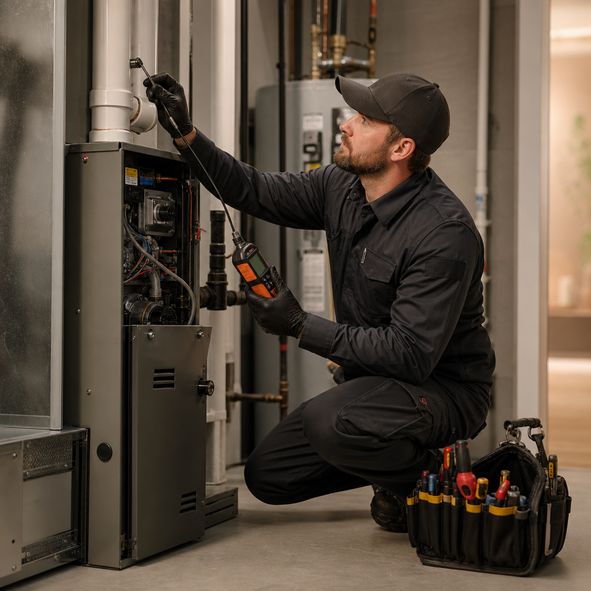
When your furnace fails on a cold Anmore night, speed and accuracy are everything. BCRC’s service vehicles are stocked with the most commonly required replacement components — ignitors, flame sensors, pressure switches, inducer motors, control boards, capacitors, and gas valves — for the leading residential furnace brands including Lennox, Carrier, Trane, Rheem, Daikin, and York. Our diagnostic protocol follows a systematic fault isolation process: we retrieve any stored error codes, verify gas pressure at the manifold and inlet, test the flame sensor microamp signal, check heat exchanger integrity with a combustion analyzer and visual inspection, and confirm proper airflow across the coil and through all supply registers before declaring the system restored to safe operation.
Furnace Maintenance in Anmore
Annual preventive maintenance is the single most cost-effective investment an Anmore homeowner can make in their heating system. A comprehensive BCRC furnace tune-up includes: burner combustion analysis and adjustment; heat exchanger visual and pressure-differential inspection for cracks; inducer motor amperage and bearing check; blower wheel cleaning and motor lubrication; flame sensor cleaning; condensate trap and drain line flushing; gas valve operation verification; thermostat calibration; filter replacement; and a full safety controls test including limit switch and pressure switch verification. This protocol typically takes 60–90 minutes and can extend equipment life by years while maintaining peak AFUE performance.
Furnace Troubleshooting and Diagnostics in Anmore
Not every furnace problem announces itself dramatically. Subtle performance degradation — a slight rise in gas bills, mild cold spots in distant rooms, a faint sulphurous odour at startup — often precedes a full breakdown by weeks or months. BCRC’s diagnostic service uses calibrated combustion analyzers, digital manometers, thermal imaging cameras, and electrical test equipment to identify developing issues before they escalate into emergency failures. We provide homeowners with a written diagnostic report and a prioritized repair recommendation — clearly separating safety-critical items from performance optimizations — so you can make an informed decision about your investment.
Furnace Replacement in Anmore
When repair costs exceed approximately 50% of a new system’s installed price, or when a furnace is approaching 20 years of age with recurring issues, replacement is typically the more economically rational choice. BCRC provides transparent, itemized replacement quotes with no hidden fees, and our team will walk you through available equipment tiers, efficiency ratings, warranty terms, and applicable FortisBC or CleanBC rebates so you can make a fully informed decision. We handle all Technical Safety BC permit applications and inspection coordination as part of every installation.
Greater Vancouver and Anmore Homeowner Maintenance Guide
Anmore homeowners benefit from several region-specific maintenance practices. First, filter management is critical: given the community’s forested setting, 1-inch disposable filters should be inspected monthly and replaced every 60–90 days during heating season, while higher-MERV pleated media filters (MERV 11–13) in 4-inch filter cabinets can extend service intervals to 6 months while delivering superior particulate capture. Second, condensate system maintenance is essential for high-efficiency furnaces: the acidic condensate (pH 3–4) produced by a 96% AFUE unit can grow biological fouling in the drain trap and neutralizer, restricting flow and triggering pressure switch lockouts — flush the system annually as part of your tune-up. Third, take advantage of FortisBC’s annual furnace tune-up rebate, which provides up to $50 back on qualifying maintenance services performed by a registered contractor like BCRC. Finally, if your Anmore home has a heat pump system supplementing the furnace, ensure the outdoor unit’s coil is kept clear of leaves and organic debris — a particular concern in the community’s heavily treed properties — to maintain heat transfer efficiency through the transitional shoulder seasons.
Frequently Asked Questions: Furnace Services in Anmore
How do I know if my furnace heat exchanger is cracked and why does it matter?
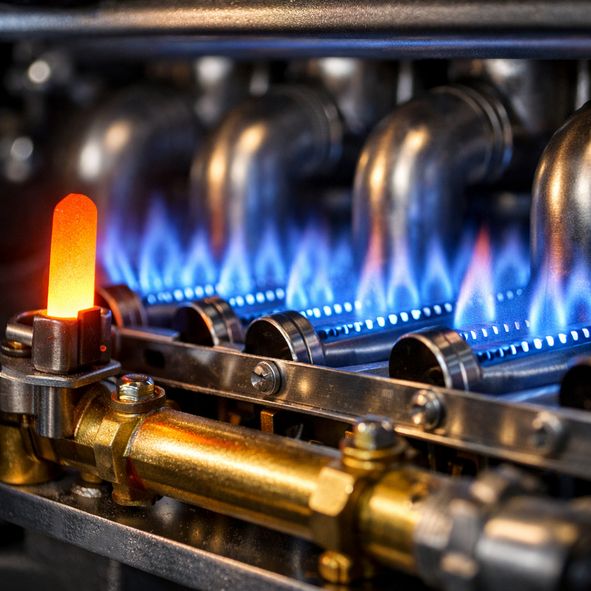
A cracked heat exchanger is one of the most serious safety issues a residential furnace can develop, because it creates a pathway for combustion gases — including carbon monoxide — to mix with the circulated air supply and enter your living space. Warning signs include: a yellow or flickering burner flame (should be a steady blue); soot deposits around the furnace cabinet; a persistent smell of aldehydes or exhaust near supply registers; physical symptoms like headaches or dizziness that resolve when you leave the home; and the CO detector activating. Visually confirming a heat exchanger crack requires removing the heat exchanger assembly — not a DIY task. BCRC technicians use a combination of combustion gas analysis (measuring CO levels in the supply airstream), differential pressure testing, and high-intensity visual inspection with flexible borescopes to definitively assess heat exchanger integrity. If a crack is confirmed, the furnace must be red-tagged and taken out of service immediately per BC gas safety regulations — operating a cracked heat exchanger furnace is both illegal and potentially fatal.
What AFUE rating should I specify for a new furnace in Anmore, and does it qualify for a FortisBC rebate?
For Anmore’s climate — Metro Vancouver’s Climate Zone 5 with heating degree days of approximately 2,800 HDD — we consistently recommend a minimum 96% AFUE two-stage or modulating condensing furnace. The incremental capital cost over an 80% AFUE unit is typically recovered through gas savings within 4–7 years, and the superior comfort delivered by modulating operation justifies the investment independently of the payback calculation. For FortisBC rebate eligibility under the Home Efficiency Rebate Plus (HER+) program, the installed furnace must achieve a minimum 96% AFUE rating and be installed by a registered contractor — BCRC qualifies on both counts. Current FortisBC rebates for high-efficiency furnace replacements are available up to $1,000 depending on the existing equipment being replaced and the efficiency tier of the new unit. BCRC processes all rebate documentation on your behalf.
My furnace is running but some rooms in my Anmore home are cold. What could cause this?
Uneven heating — sometimes called comfort complaints in HVAC diagnostics — has multiple potential root causes that require systematic investigation. The most common culprits include: duct leakage, where supply ductwork in unconditioned spaces like crawlspaces or garages leaks conditioned air before it reaches distant registers, costing a typical home 20–30% of heating output; undersized ductwork to specific zones that cannot deliver adequate CFM; closed or obstructed registers disrupting the designed airflow balance; a dirty or restrictive air filter starving the system of return air; a failing blower capacitor causing the blower motor to operate below its design RPM; or a fundamentally undersized furnace struggling with the actual heat load. BCRC performs air balancing assessments using digital airflow hoods and duct blaster pressure testing to identify the specific cause and prescribe the correct remedy — which may be as simple as a filter change or as involved as a duct sealing and rebalancing project.
How often should a furnace in Anmore be professionally serviced, and what does a BCRC tune-up actually include?
Every residential gas furnace in Anmore should receive a professional preventive maintenance service once per year, ideally in early fall before heating season demand peaks. For homes with dual-fuel heat pump systems, an additional shoulder-season checkup of the heat pump refrigerant circuit and coil condition in spring is also recommended. A complete BCRC Anmore furnace tune-up encompasses the following documented steps: combustion efficiency test and burner adjustment using a calibrated flue gas analyzer; heat exchanger integrity inspection; inducer motor and blower motor amperage draw measurement and bearing assessment; flame sensor microamp signal test and cleaning; hot surface ignitor resistance check; gas manifold pressure verification at the valve outlet; condensate drain trap clearing and neutralizer inspection on high-efficiency models; thermostat calibration and smart thermostat connectivity verification; air filter inspection and replacement; all electrical connections torque check; and a full operational safety controls test sequence. Every step is documented on a service checklist provided to the homeowner upon completion.
Your Anmore Heating System Deserves Red Seal Expertise — Contact BCRC Today
Your furnace is not simply an appliance. It is the thermal foundation of your Anmore home — protecting your family from British Columbia’s cold, preserving your property from moisture and freeze damage, and quietly delivering comfort through every grey winter morning and cold autumn evening. That foundation deserves the attention of technicians who have invested years in mastering the physics of combustion, the fluid dynamics of forced-air distribution, and the evolving landscape of high-efficiency and electrification technologies. At BCRC Heating and Cooling, our Red Seal Master Technicians bring precisely that expertise to every Anmore service call, whether it is an emergency repair at midnight, a meticulous annual tune-up, or a full system design and installation project. We are a registered FortisBC and BC Hydro Trade Ally contractor, we pull every required Technical Safety BC permit, and we stand behind our workmanship with industry-leading warranty terms. When your Anmore heating system needs professional care, do not settle for less than the region’s most trusted name in residential HVAC. For reliable, Red Seal certified furnace repair in Vancouver and the surrounding communities — including Anmore, Port Moody, Coquitlam, and across the Tri-Cities — contact the local experts at BCRC Heating and Cooling today at (604) 781-7272. Warmth, efficiency, and peace of mind are one call away.