



Air Conditioner Repair Vancouver | BCRC
Vancouver’s Heat Is No Joke — And Neither Is a Failing Air Conditioner
It starts subtly. The house feels a few degrees warmer than it should. The air conditioner runs longer cycles but never quite reaches the set temperature. Then, on the hottest afternoon of the year — when the thermometer outside your Burnaby or Coquitlam home is pushing 38°C — the unit shudders, gasps, and stops. What was once background comfort becomes an urgent emergency. If you’ve lived through one of Metro Vancouver’s increasingly intense heat waves, you already know this feeling intimately.
Greater Vancouver’s climate has changed. The catastrophic 2021 heat dome that pushed temperatures to historic records across the Lower Mainland served as a brutal wake-up call: air conditioning is no longer a luxury in British Columbia — it is a critical home safety system. And like every mechanical system, it demands expert attention when things go wrong. BCRC Heating and Cooling has been the trusted name for professional air conditioner repair across Vancouver and the surrounding region, delivering factory-trained, Red Seal certified diagnostics and repairs that restore your comfort fast and keep your system running efficiently for years to come.
Why Air Conditioners Fail: The Technical Reality
Understanding why your air conditioner breaks down is the first step toward preventing it. Most cooling system failures don’t happen without warning — they develop gradually through a combination of deferred maintenance, component wear, and operating stress. As Red Seal Master Technicians, the BCRC team diagnoses dozens of AC failures every season across Vancouver, Burnaby, Richmond, Surrey, North Vancouver, and beyond. Here are the most common root causes we encounter:
Refrigerant Leaks and Low Charge
Refrigerant is the lifeblood of your air conditioning system. It absorbs heat from your indoor air at the evaporator coil and releases it outside at the condenser. When refrigerant leaks — through micro-cracks in copper line sets, corroded Schrader valves, or failing flare fittings — the system loses its ability to transfer heat efficiently. Symptoms include warm air from supply registers, ice forming on the evaporator coil, and unusually long run times. Critically, low refrigerant is never simply “topped up” — the leak must be located, repaired, and pressure-tested before the correct charge is restored to manufacturer specifications. BCRC technicians use electronic leak detectors and nitrogen pressure testing to find even the smallest leaks before recharging with certified refrigerants including R-410A and the newer R-32 and R-454B found in modern high-efficiency systems.
Compressor Failure
The compressor is the heart of your cooling system — a high-pressure pump that circulates refrigerant through the entire refrigeration cycle. Compressor failure is one of the most serious and costly repairs in any AC system. It is often caused by prolonged operation with low refrigerant (which removes the oil lubrication that refrigerant carries), electrical surge damage, or simple end-of-life wear after 12 to 15 years of service. A failing compressor may produce hard-start symptoms, loud clanking or grinding noises, tripped breakers, or complete loss of cooling. BCRC technicians perform compressor amp draw testing, megohm insulation resistance testing, and valve efficiency checks to definitively determine whether a compressor can be repaired or requires replacement.
Dirty or Frozen Evaporator Coils
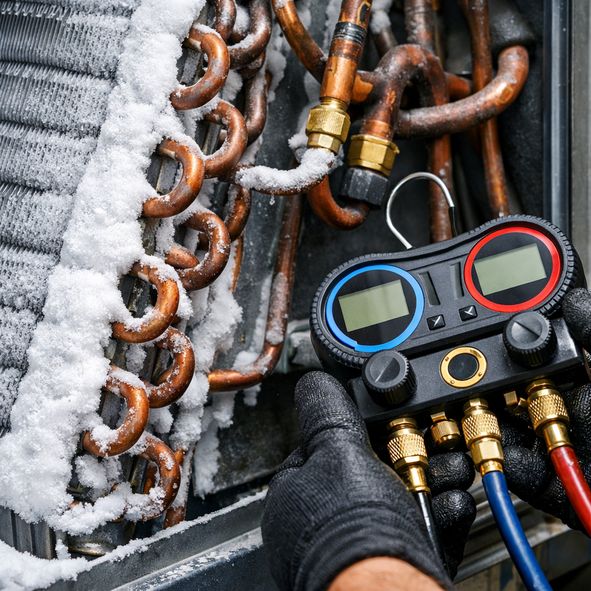
Your evaporator coil sits inside the air handler or furnace cabinet and operates at temperatures well below freezing during normal operation. When airflow across the coil is restricted — by a clogged filter, collapsed ductwork, or a faulty blower motor — the coil temperature drops below the frost point and ice begins to accumulate. A fully frozen evaporator coil blocks all airflow and can cause liquid refrigerant to flood back to the compressor, causing catastrophic damage. Beyond restricted airflow, coils can also become coated with dust, skin cells, and mold over years of operation, dramatically reducing heat transfer efficiency. BCRC technicians perform coil cleaning with biodegradable foaming agents and restore proper airflow to prevent recurring freeze-ups.
Capacitor and Contactor Failures
Electrical components are among the most common failure points in any air conditioning system, particularly in Metro Vancouver’s coastal climate where humidity accelerates corrosion. The start and run capacitors provide the electrical boost needed to start the compressor and fan motors, while the contactor is the high-voltage relay switch that connects the outdoor unit to power. Capacitors degrade over time — their microfarad rating drops, causing motors to strain and overheat. A failed capacitor often presents as a unit that hums but won’t start, or a condenser fan that isn’t spinning. BCRC technicians carry a full inventory of replacement capacitors and contactors for all major brands, allowing most electrical repairs to be completed in a single visit.
Clogged Condensate Drain Lines
As your evaporator coil removes humidity from your indoor air, it produces condensate — sometimes several litres of water per day during Vancouver’s humid summer months. This water drains through a PVC condensate line to a floor drain or outdoors. Over time, algae, mold, and mineral deposits accumulate inside the drain line and trap, eventually causing a blockage. When the drain line clogs, water backs up into the drip pan and can overflow, causing water damage to ceilings, walls, and flooring. Many modern systems have a float switch that shuts the system down when the pan fills — but older systems do not. BCRC technicians clear and flush condensate drain systems as part of every comprehensive maintenance visit.
The BCRC Air Conditioner Repair Process: What to Expect
When you call BCRC for air conditioner repair in Vancouver, you’re not getting a rushed service call with a technician who is guessing at solutions. Every repair follows a structured diagnostic protocol developed through decades of field experience across the Lower Mainland.
Step 1: Comprehensive System Inspection
Our technician arrives equipped with a full set of professional diagnostic instruments including digital manifold gauges, clamp meters, infrared thermometers, combustion analyzers, and electronic leak detectors. We begin with a complete visual inspection of the indoor air handler, the refrigerant line set, and the outdoor condenser unit — checking for obvious physical damage, corrosion, electrical burns, and signs of refrigerant oil staining that indicate a leak.
Step 2: Performance Measurement and Diagnosis
We measure supply and return air temperatures to calculate the actual delta-T (temperature differential) across the evaporator coil, verify refrigerant pressures and superheat/subcooling values against manufacturer specifications, test electrical components under load, and assess airflow delivery. This data-driven approach eliminates guesswork and ensures we identify the true root cause of the problem — not just the symptom.
Step 3: Transparent Upfront Pricing
Before any repair work begins, your BCRC technician will explain exactly what was found, what needs to be repaired, and provide a clear, written estimate with no hidden fees. We believe that informed customers make better decisions, and we never pressure you into repairs you don’t need.
Step 4: Expert Repair and Parts Replacement
BCRC service vehicles are stocked with a comprehensive inventory of OEM-equivalent parts for all major AC brands including Lennox, Carrier, Trane, York, Daikin, Mitsubishi, Fujitsu, Goodman, and more. Most repairs — including capacitor replacements, contactor swaps, refrigerant recharges, coil cleanings, and drain line clearances — are completed same-day.
Step 5: Post-Repair Testing and System Optimization
After every repair, we perform a full operational test cycle to verify that the system is performing within specification. We measure supply air temperatures, verify that the refrigerant pressures are correct, confirm that all electrical safeties are functioning, and ensure the thermostat and control board are communicating properly. We won’t leave until your system is cooling effectively and efficiently.
Preventive Maintenance: The Smartest Investment for Vancouver Homeowners
The vast majority of emergency AC breakdowns are preventable. An annual pre-season maintenance visit by a BCRC certified technician typically costs a fraction of what a single compressor repair or refrigerant recharge does — and it dramatically extends the life of your equipment. Our comprehensive AC maintenance service includes cleaning condenser and evaporator coils, checking and tightening all electrical connections, testing capacitors and contactors, lubricating motors and bearings, verifying refrigerant charge, flushing condensate drain lines, replacing or inspecting air filters, and calibrating thermostat operation. For Greater Vancouver homeowners, we recommend scheduling your annual AC maintenance in April or early May — before the summer heat arrives and service demand peaks.
Signs Your Air Conditioner Needs Professional Repair
Not every AC problem results in a complete breakdown. Watch for these warning signs that your system needs professional attention before a minor issue becomes a major repair:
- Warm or lukewarm air blowing from your supply registers despite the thermostat calling for cooling
- Unusually high electricity bills without a corresponding change in usage patterns
- Ice forming on the refrigerant lines or the indoor air handler cabinet
- Loud or unusual noises from either the indoor or outdoor unit including banging, clicking, hissing, or grinding
- Frequent short-cycling where the unit turns on and off rapidly without completing a full cooling cycle
- Excess humidity indoors — the air feels muggy and clammy even when the AC is running
- Water stains on the ceiling below your air handler or water pooling around the indoor unit
- Strange or musty odors coming from your supply vents
- The system is more than 10 years old and has not received regular professional maintenance
When to Repair vs. When to Replace Your AC System
One of the most important questions a homeowner faces is whether to repair an aging system or invest in a new, more efficient replacement. As experienced HVAC professionals, BCRC technicians will always give you an honest, unbiased recommendation. A useful industry guideline is the “5000 Rule”: multiply the age of the unit (in years) by the estimated repair cost. If the result exceeds $5,000, replacement is typically the more economical long-term decision. For example, a 12-year-old unit facing a $500 compressor repair scores 6,000 — suggesting replacement. Additional factors that favour replacement include a unit that uses the now-discontinued R-22 refrigerant (which can no longer be legally manufactured or imported in Canada), a SEER rating below 13, recurring repairs in the same season, and significant comfort complaints such as uneven cooling or persistent humidity problems. Modern high-efficiency central air conditioners carry SEER2 ratings of 16 to 22 or higher, dramatically reducing operating costs compared to older equipment.
BCRC Air Conditioner Repair Across Greater Vancouver
BCRC Heating and Cooling provides expert air conditioner repair services across the entire Metro Vancouver region and the Lower Mainland. Our certified technicians serve homeowners and businesses in Vancouver, Surrey, Burnaby, Richmond, North Vancouver, West Vancouver, Coquitlam, Port Coquitlam, Port Moody, New Westminster, Langley, Maple Ridge, Pitt Meadows, Abbotsford, White Rock, Delta, Tsawwassen, Anmore, Belcarra, Lions Bay, and Bowen Island. No matter where you are in the region, BCRC has a technician nearby ready to respond quickly to your cooling emergency.
Frequently Asked Questions About Air Conditioner Repair in Vancouver
How much does air conditioner repair typically cost in Vancouver?
The cost of air conditioner repair in Greater Vancouver varies significantly depending on the nature of the fault. Minor electrical repairs such as capacitor or contactor replacement typically range from $150 to $350 including parts and labour. Refrigerant leak repairs and recharges can range from $300 to $800 or more depending on the amount of refrigerant required and the complexity of the leak location. Coil cleaning and condensate drain clearing services are usually priced between $150 and $300. Major component replacements such as a compressor or fan motor can range from $600 to $1,800 depending on the unit size and brand. BCRC always provides a written estimate before any work begins so there are never any surprises on your invoice.
Why is my air conditioner running but not cooling my Vancouver home?
An AC system that runs continuously without cooling effectively is one of the most common calls we receive. The most likely causes include low refrigerant charge due to a leak, a dirty evaporator or condenser coil reducing heat transfer efficiency, a failing compressor with low pumping capacity, a clogged air filter severely restricting airflow, or a malfunctioning metering device such as a TXV (thermostatic expansion valve) that is not regulating refrigerant flow correctly. It can also be caused by an oversized or undersized system that was incorrectly matched to the home’s cooling load in the first place. A thorough diagnostic visit by a BCRC technician will identify the exact cause and provide a clear repair recommendation.
How often should I service my air conditioner in BC’s coastal climate?
For Greater Vancouver homeowners, we strongly recommend annual professional maintenance — ideally in April or May before cooling season begins. Metro Vancouver’s coastal climate presents specific challenges for AC equipment: elevated humidity accelerates corrosion on condenser coil fins and electrical components, salt air in waterfront communities can degrade copper refrigerant lines and aluminium coils, and the relatively mild winters mean some systems sit dormant for many months before being called into service suddenly during the first heat wave. Annual maintenance catches degraded capacitors, early refrigerant leaks, and biological growth in condensate systems before they cause failures. Homeowners should also replace or clean air filters every one to three months during the cooling season to maintain proper airflow.
My AC uses R-22 refrigerant. Can it still be repaired in Canada?
R-22 (Freon) has been fully phased out in Canada under the Montreal Protocol and can no longer be manufactured or imported. However, reclaimed and recycled R-22 may still legally be used to service existing equipment, though supplies are increasingly scarce and expensive — in some cases exceeding $100 per pound. If your system uses R-22 and develops a refrigerant leak, the economics of repair become challenging very quickly. In most cases, we recommend replacing an R-22 system rather than investing in an expensive recharge that may need to be repeated as the equipment continues to age and degrade. Modern R-410A and R-32 based systems are significantly more efficient, environmentally responsible, and cost-effective to maintain. BCRC can provide a detailed cost-benefit analysis to help you make the right decision for your home and budget.
Trust BCRC Heating and Cooling for Expert AC Repair Across Vancouver
Your air conditioning system is one of the most important comfort and safety systems in your Greater Vancouver home — and when it fails, you need a team you can trust to respond quickly, diagnose accurately, and repair it right the first time. BCRC Heating and Cooling brings decades of field experience, Red Seal certified technicians, a fully stocked service fleet, and an unwavering commitment to transparent, honest service to every job we take on. Whether you need emergency same-day repairs, a pre-season tune-up, or expert advice on whether to repair or replace an aging system, BCRC is the team that Metro Vancouver homeowners have relied on for generations. For reliable, Red Seal certified AC installation in Vancouver and professional air conditioner repair across the entire Lower Mainland, contact the local experts at BCRC Heating and Cooling today at (604) 781-7272 — because on the hottest day of the year, there is no substitute for experience you can trust.