



Furnace Maintenance in Coquitlam | BCRC
When the Cold Bites Coquitlam: Why Your Furnace Deserves More Than a Prayer
Picture this: it is 11 PM on a January night in Coquitlam. The Fraser Valley fog has settled over Burke Mountain, the temperature outside has plunged to near zero, and somewhere deep in your mechanical room, your furnace quietly performs what can only be described as a small, daily miracle — combusting natural gas with pinpoint precision, exchanging heat across a steel exchanger, and pushing warm, conditioned air through every room in your home within minutes. You barely notice it. That invisibility is exactly the problem.
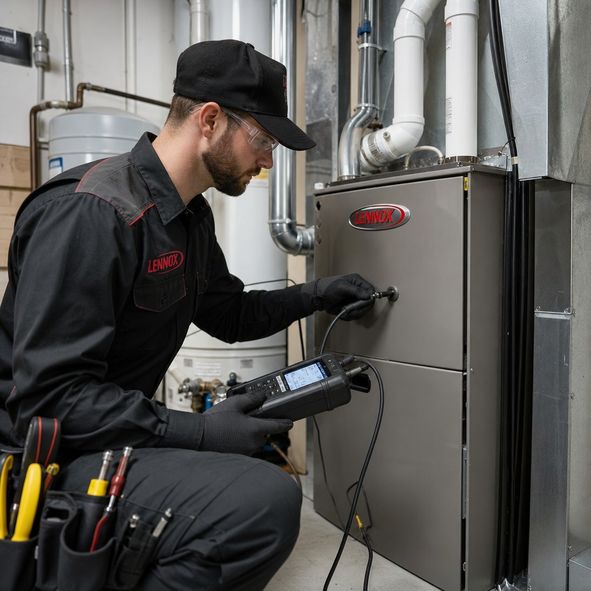
Most Coquitlam homeowners only think about their furnace when it stops working. By that point, a small, inexpensive maintenance oversight has often snowballed into a costly emergency repair — or worse, a complete system failure during the coldest stretch of winter. At BCRC Heating and Cooling, our Red Seal Master Technicians have seen this story play out hundreds of times across the Tri-Cities. The good news? It is entirely preventable. This comprehensive guide will walk you through the full history of forced-air heating, the technical science behind modern furnace operation, what a truly thorough maintenance visit looks like, and exactly why Coquitlam homeowners trust BCRC year after year.
Ancient Roots and Early Engineering: Humanity’s Long War Against the Cold
The human obsession with indoor warmth stretches back further than most people realize. Around 1000 BCE, the Koreans developed the ondol system — a brilliantly simple underfloor heating network that channelled combustion gases from a firebox through stone channels beneath clay floors, radiating gentle, even warmth from the ground up. Simultaneously, the Romans engineered the hypocaust, a sophisticated sub-floor plenum system that allowed hot air produced by wood-burning furnaces (called praefurnia) to circulate under raised tile floors and within hollow wall cavities. The Latin root itself — furnacium, meaning oven or kiln — gave us the modern word furnace. These early engineers understood a principle that remains central to HVAC science today: controlled combustion energy, efficiently distributed, is the key to habitable interior environments.
By the medieval period, large European manor houses employed central fireplaces with rudimentary flue systems. The Renaissance brought the first masonry stoves capable of storing and slowly radiating heat. But it was not until the Industrial Revolution that the concept of a dedicated, centralized heating appliance truly took hold in residential construction.
Industrial Breakthroughs: From Cast Iron Gravity Furnaces to High-Efficiency Condensing Units
The 19th century transformed domestic heating almost beyond recognition. In the 1830s and 1840s, American manufacturers began producing cast iron gravity warm-air furnaces — large, octopus-like appliances installed in home basements that burned coal or wood and relied purely on the natural convection of warm air rising through floor registers to heat upper floors. These systems were inefficient by any modern standard, but they represented a monumental leap: for the first time, a single centralized appliance could theoretically warm an entire multi-room dwelling.
The late 19th century brought critical refinements. The introduction of steel heat exchangers improved combustion efficiency and durability. By the early 20th century, natural gas was being piped into urban homes across North America, and gas-fired gravity furnaces rapidly displaced coal. The addition of electric blower motors in the 1920s and 1930s transformed gravity systems into forced-air furnaces — the direct ancestor of every furnace operating in Coquitlam today. With a blower forcing conditioned air through dedicated duct networks, heating became faster, more controllable, and dramatically more uniform throughout a home’s floor plan.
The 20th Century: Standardization, Safety Codes, and the Efficiency Arms Race
The post-World War II housing boom across Greater Vancouver and the rest of North America created an enormous demand for standardized, reliable residential heating equipment. By the 1950s and 1960s, manufacturers like Lennox, Carrier, and Trane had established the blueprint for the modern forced-air gas furnace: a sealed burner compartment, a primary heat exchanger, a flue venting system, and an air handler with a multi-speed blower. Safety became a paramount concern as natural gas infrastructure expanded, and regulatory bodies introduced mandatory requirements for flame rollout protection, limit switches, and draft hood designs.
The 1973 oil crisis proved to be the furnace industry’s most consequential turning point. As fuel prices spiked, engineers were forced to fundamentally rethink combustion efficiency. The result was the development of the condensing furnace — a design breakthrough that added a secondary heat exchanger capable of extracting latent heat energy from combustion flue gases that traditional furnaces simply vented outside. By condensing these exhaust gases and recovering their thermal energy, modern condensing furnaces achieve Annual Fuel Utilization Efficiency (AFUE) ratings of 95% to 98.5%, compared to roughly 60% for 1960s-era equipment. In British Columbia, where FortisBC natural gas prices directly impact household budgets, this efficiency differential translates to hundreds of dollars in annual savings.
The Modern Era: Variable-Speed Blowers, Smart Thermostats, and Wi-Fi Diagnostics
Today’s high-efficiency furnaces bear almost no resemblance — mechanically or electronically — to the gravity furnaces of a century ago. Contemporary units from manufacturers like Lennox (a brand BCRC proudly installs and services throughout the Tri-Cities) incorporate technologies that would have seemed like science fiction to mid-century HVAC engineers.
Variable-speed ECM (Electronically Commutated Motor) blowers can modulate airflow continuously across a broad range, running at lower speeds for longer periods rather than cycling on and off at full blast. This delivers more even temperature distribution, dramatically reduced energy consumption from the blower motor itself, and significantly improved indoor air quality through longer filter dwell times. Modulating gas valves allow the burner to fire at as little as 40% capacity under mild conditions, scaling up only when outdoor temperatures demand full output — a concept called turndown ratio that is central to modern comfort engineering.
Smart thermostats — compatible with platforms like Google Nest, Ecobee, and Lennox iComfort — now communicate directly with furnace control boards, providing homeowners and technicians with real-time operational data, error code diagnostics, and predictive maintenance alerts via smartphone applications. At BCRC, our technicians are factory-trained on these integrated systems and can remotely assist Coquitlam homeowners in interpreting diagnostic fault codes before dispatching a service call.
Heat Pump Integration: The Efficiency Paradigm Shift for BC Homeowners
No discussion of modern heating in Greater Vancouver would be complete without addressing heat pump technology — particularly in the context of BC’s CleanBC electrification mandate and the province’s remarkably mild coastal climate. Unlike furnaces, which generate heat through combustion, air-source heat pumps transfer existing heat energy from outdoor air into the home using a refrigerant cycle. Even at temperatures as low as -15°C, modern cold-climate heat pumps like the Lennox XC25 or Mitsubishi Zuba-Central can deliver heating efficiencies expressed as a Coefficient of Performance (COP) of 2.0 to 3.5 — meaning they produce 200% to 350% more heat energy than the electrical energy they consume.
In Coquitlam and the broader Tri-Cities area, where winter temperatures rarely sustain extreme cold for prolonged periods, a ducted heat pump paired with a natural gas furnace in a dual-fuel configuration represents arguably the most cost-effective and environmentally responsible heating solution available. The heat pump handles the moderate shoulder-season heating load with exceptional efficiency, while the gas furnace provides reliable backup during cold snaps. BCRC’s Red Seal technicians are certified to design, install, and maintain both standalone heat pump systems and these sophisticated dual-fuel configurations.
BCRC’s Comprehensive Furnace Maintenance Process: What Actually Happens During a Tune-Up
The word “maintenance” is used loosely in the HVAC industry. At BCRC, a furnace maintenance visit in Coquitlam is a structured, documented, technically rigorous process — not a 20-minute filter swap. Here is exactly what our Red Seal technicians perform during every comprehensive maintenance appointment:
- Combustion Analysis: Using calibrated combustion analyzers, we measure oxygen, carbon dioxide, carbon monoxide, and flue gas temperature to verify that your burner is operating within manufacturer specifications and BC Safety Authority guidelines. Incomplete combustion is the leading cause of carbon monoxide production in residential furnaces.
- Heat Exchanger Inspection: Every primary and secondary heat exchanger surface is visually inspected and pressure-tested where accessible. A cracked heat exchanger is a critical safety defect that allows combustion gases — including deadly carbon monoxide — to enter the living space air stream.
- Burner Cleaning and Adjustment: Burner ports are cleaned of oxidation and debris. Gas manifold pressure is verified with a calibrated manometer against the data plate specifications for your specific unit.
- Ignition System Testing: Hot surface ignitors are measured for electrical resistance; ignitor amperage draw is verified. Pilot assemblies on older systems are cleaned and flame sensor rods are lightly abraded and tested for microamp output.
- Blower Motor and Assembly Service: The blower wheel is removed, inspected for dirt accumulation (a heavily fouled blower wheel can reduce airflow by 30% or more), and cleaned. Motor amperage is measured and compared against nameplate ratings. Bearings on PSC motors are lubricated where applicable.
- Filter Assessment and Replacement: Filter condition, MERV rating, and sizing are evaluated. We advise homeowners on appropriate filtration for their specific duct system static pressure — an oversized MERV rating on an undersized duct system will starve the blower of airflow and cause heat exchanger overheating.
- Flue and Venting Inspection: PVC condensate drain lines on high-efficiency furnaces are flushed and tested. Flue connections are inspected for corrosion, separation, or blockage. For Category I mid-efficiency units, B-vent integrity is verified.
- Control Board and Safety Device Testing: Limit switches, pressure switches, rollout switches, and the main control board are functionally tested. Fault code history is retrieved and cleared after diagnosis.
- Thermostat Calibration: Thermostat setpoint differential and anticipator settings are verified. Smart thermostat scheduling is reviewed with the homeowner to maximize both comfort and energy efficiency.
- Condensate System Maintenance: On high-efficiency condensing furnaces, the condensate neutralizer (required in some municipalities to prevent acidic condensate from entering municipal drains) is inspected and the neutralizing media replaced if depleted.
Deep-Dive Comparison: Heating System Technologies for Coquitlam Homeowners
| Specification | Mid-Efficiency Gas Furnace (80% AFUE) | High-Efficiency Condensing Gas Furnace (96% AFUE) | Ducted Air-Source Heat Pump | Dual-Fuel Heat Pump + Gas Furnace |
|---|---|---|---|---|
| Efficiency Rating | 78–82% AFUE | 95–98.5% AFUE | COP 2.0–3.5 (200–350%) | COP 2.0–3.5 / 95%+ AFUE backup |
| Typical Lifespan | 15–20 years | 20–25 years | 15–20 years | 15–20 years (both components) |
| Primary Fuel | Natural Gas (FortisBC) | Natural Gas (FortisBC) | Electricity (BC Hydro) | Electricity + Natural Gas |
| Heating Capacity | 40,000–120,000 BTU/h | 40,000–120,000 BTU/h | 18,000–60,000 BTU/h typical | Full combined capacity |
| Cold Weather Performance | Excellent (combustion-based) | Excellent (combustion-based) | Reduced below -15°C | Excellent (gas backup activates) |
| CleanBC Rebate Eligible | No | Partial (high-efficiency upgrade) | Yes — up to $6,000+ | Yes — heat pump component |
| Annual Maintenance Cost (Est.) | $150–$200 | $150–$200 | $150–$250 | $200–$350 (two systems) |
| Carbon Footprint | High | Moderate | Very Low (BC hydro is 98% renewable) | Low |
| Best For | Budget replacement, existing ductwork | High gas use households, cold climates | Electrification mandate, mild climates | Maximum efficiency + cold reliability |
Greater Vancouver Homeowner Buying and Maintenance Guide
Coquitlam’s climate presents specific considerations that homeowners in drier inland BC communities simply do not face. The combination of high ambient humidity, significant temperature swings between seasons, and the corrosive potential of Pacific coastal air all influence the long-term durability and maintenance requirements of residential heating equipment.
Anode Rod Awareness (for Combination Systems): Homeowners with combination boiler-furnace systems or tankless combi units should understand that sacrificial anode rods protect internal tank components from electrochemical corrosion. In Coquitlam’s moderately hard municipal water supply, anode rods typically require inspection every 3–5 years and replacement every 6–8 years. Neglecting this maintenance item is one of the leading causes of premature heat exchanger failure in combination heating systems.
Condensate Neutralization in Coquitlam: High-efficiency condensing furnaces produce acidic condensate (typically pH 3.5–4.5) as a byproduct of flue gas condensation. Metro Vancouver’s municipal bylaws increasingly require the installation of condensate neutralizers — limestone chip cartridges that raise condensate pH to an acceptable level before it enters the sanitary drain. BCRC technicians verify neutralizer media condition during every annual maintenance visit.
CleanBC and BC Hydro Rebates: British Columbia’s CleanBC program currently offers some of the most generous heat pump and energy-efficiency incentives in Canada. As of 2024, Coquitlam homeowners replacing a fossil-fuel heating system with a qualifying cold-climate heat pump may access rebates of up to $6,000 through CleanBC, with additional BC Hydro incentives potentially available. Equipment must meet specific efficiency thresholds (typically HSPF2 ≥ 9.5 for heat pumps) and must be installed by a licensed HVAC contractor. BCRC’s team is fully versed in current rebate program requirements and will handle all application paperwork on your behalf.
Filter Replacement Schedule for Coquitlam Homes: Due to Coquitlam’s elevated pollen counts during spring and periodic wildfire smoke events in late summer, we recommend that homeowners with standard 1-inch filters inspect them monthly and replace them every 60–90 days during high-use seasons. Homes with pets or occupants with respiratory sensitivities should consider upgrading to a 4-inch or 5-inch media filter cabinet (MERV 11–13) for dramatically improved particle capture without the airflow penalty of a thin high-MERV filter.
Frequently Asked Questions: Furnace Maintenance in Coquitlam
How often should I schedule furnace maintenance in Coquitlam, and does timing matter?
Industry best practice and most manufacturer warranty requirements specify annual furnace maintenance. In Coquitlam, we strongly recommend scheduling your tune-up in September or early October — before the heating season begins in earnest. This timing ensures that any components showing wear (ignitors, flame sensors, pressure switches) are identified and replaced before they cause a no-heat call on the coldest night of the year. It also allows adequate scheduling availability; by November, HVAC service calendars across the Tri-Cities fill up rapidly with emergency calls, making proactive booking essential. Homes with combination heating and cooling equipment should consider a second inspection in spring to assess the cooling system before summer demand peaks.
What are the warning signs that my furnace in Coquitlam needs immediate professional attention?
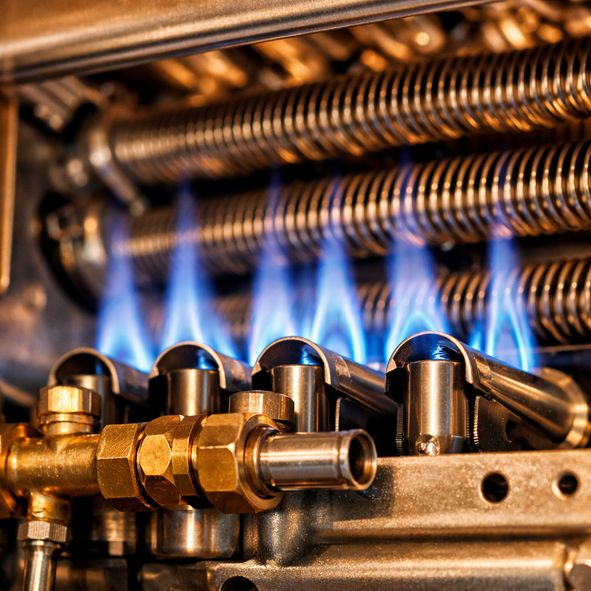
Several symptoms warrant an urgent call to a licensed HVAC contractor rather than waiting for a scheduled maintenance visit. Yellow or orange burner flames (the flame should be stable blue with a minor yellow tip) are a critical warning sign of incomplete combustion and potential carbon monoxide production. Unusual odours — particularly sulfur (rotten egg) or metallic burning smells — require immediate system shutdown and a call to FortisBC’s gas emergency line before contacting HVAC service. Repeated short-cycling (the furnace turning on and off in rapid succession without reaching setpoint temperature) typically indicates a heat exchanger overheat condition caused by restricted airflow, a failed limit switch, or a cracked exchanger. Visible soot around supply registers or on the furnace cabinet exterior is another red flag for combustion issues. Carbon monoxide detectors are mandatory in BC residential occupancies under the Fire Code — ensure yours are tested monthly and replaced every 7 years.
What is included in BCRC’s furnace maintenance visit, and how is it different from a basic filter change?
A filter change is one single task out of approximately 25 distinct technical procedures that BCRC’s Red Seal technicians perform during a comprehensive furnace maintenance appointment. Beyond filter replacement, our technicians conduct calibrated combustion analysis, heat exchanger integrity testing, burner cleaning and manifold pressure verification, ignition system resistance testing, blower motor amperage measurement, flue gas pathway inspection, condensate drain flushing, safety device functional testing, control board fault code retrieval, and a full thermostat calibration. Every finding is documented on a written service report provided to the homeowner. This systematic, documented approach is what separates a genuine tune-up from a cursory inspection — and it is the difference between catching a $45 flame sensor before it becomes a $600 emergency service call at midnight in February.
Does BCRC service all furnace brands in Coquitlam, or only Lennox?
BCRC’s Red Seal technicians are trained and equipped to service, repair, and maintain virtually all major residential furnace brands sold in the Greater Vancouver market, including Lennox, Carrier, Bryant, Trane, American Standard, Goodman, Amana, York, Rheem, Napoleon, and more. While BCRC is a proud authorized Lennox dealer — which means our technicians receive factory training and have direct access to Lennox technical support and OEM parts — our diagnostic expertise extends across all manufacturers. For homeowners considering a system replacement, we can provide a no-obligation comparative quote on new equipment options suited to your home’s specific load requirements, existing ductwork configuration, and long-term comfort and efficiency goals.
Trust BCRC Heating and Cooling: Coquitlam’s Red Seal Furnace Experts
Your furnace works quietly every day to keep your family comfortable, safe, and warm through every Coquitlam winter. It deserves more than neglect until failure. A properly maintained, high-efficiency gas furnace operating at peak combustion performance will consume less fuel, produce fewer emissions, circulate cleaner air, and reliably deliver warmth for 20 or more years. BCRC Heating and Cooling has built its reputation across the Tri-Cities and Greater Vancouver on exactly this kind of technically rigorous, transparency-first HVAC service. Our Red Seal Master Technicians bring factory-certified training, professional combustion analysis equipment, and genuine care for your home’s long-term heating health to every single appointment. Whether you need a comprehensive annual tune-up, an urgent repair diagnosis, or expert guidance on upgrading to a high-efficiency condensing system or dual-fuel heat pump configuration, BCRC is your trusted local partner. For professional, Red Seal certified furnace repair in Vancouver and throughout the Tri-Cities, contact the local experts at BCRC Heating and Cooling today at (604) 781-7272 — because a warm home is not a luxury, it is a standard, and we hold ourselves to it every time.