



Why Does My House Smell Weird When Heat Comes On?
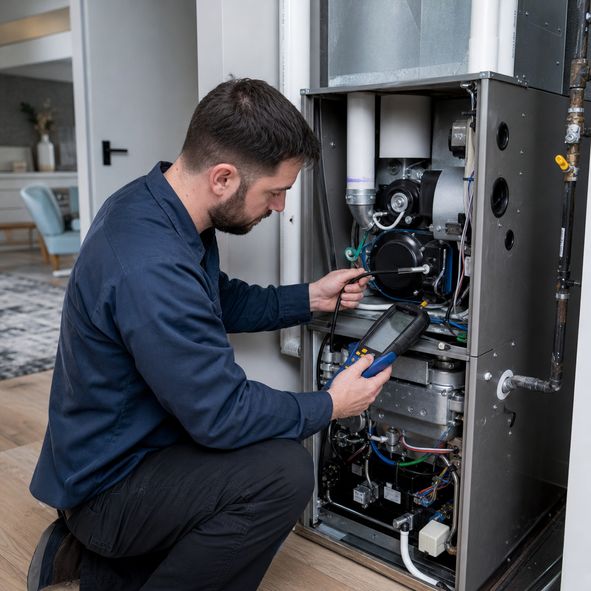
Why Does My House Smell Weird When the Heat Comes On?
If you have ever noticed your house smell weird when the heat comes on for the first time each season — or even mid-winter during one of Vancouver’s damp cold snaps — you are not alone. That strange odour rising from your vents can range from a harmless dust burn-off to a genuine Technical Safety BC emergency requiring immediate action. This guide breaks down every possible cause, what it means for your equipment, and exactly what a Red Seal HVAC technician would do about it.
Is a Burning Smell When the Furnace First Starts Normal?
Quick Answer: A brief dusty or burning smell during the first one or two heating cycles of the season is usually normal. Accumulated dust on the heat exchanger burns off within 15–30 minutes. If the odour persists beyond one heating cycle, it signals a mechanical or safety issue that needs professional diagnosis.
The Lower Mainland’s coastal climate means homes sit in moderate humidity all spring and summer. Dust, pet dander, and microscopic organic debris settle on the heat exchanger surfaces and burner assembly during the off-season. When a natural gas or propane furnace fires up and the heat exchanger reaches operating temperature — typically between 150°C and 200°C — that layer of organic material combusts instantly, producing a brief, acrid dusty odour. On a high-efficiency condensing furnace rated at 96% AFUE, the secondary heat exchanger is especially prone to this because it extracts so much latent heat from flue gases that condensate moisture holds dust particles tightly against the stainless steel surface. A quick pre-season inspection, burner cleaning, and blower wheel vacuuming by a licensed Gas Fitter B or higher eliminates this issue entirely.
What Does an Electrical Burning Smell from the Furnace Mean?
Quick Answer: An electrical burning smell — sharp, acrid, resembling melting plastic or singed wire — indicates overheating motor windings, a failing capacitor, a seized blower motor bearing, or a wiring fault. This is not a situation to monitor and wait. Shut down the system and call a certified technician immediately.
Modern variable-speed ECM (Electronically Commutated Motor) blower motors found in two-stage and modulating furnaces run at precisely calculated RPMs to match the Manual J load calculation for your home. When a bearing begins to fail or a capacitor degrades, the motor draws excessive amperage, overheats its windings, and produces a distinct electrical smell. Single-stage PSC motors — still common in older Lower Mainland homes — are even more vulnerable to capacitor failure. Left unaddressed, an overheating motor can compromise the control board, escalating what would have been a straightforward motor replacement into a significantly more complex repair. Under Technical Safety BC regulations, any wiring fault within gas appliance electrical systems must be corrected by a qualified technician before the unit is returned to service.
Why Does My Heat Smell Like Rotten Eggs or Sulphur?
Quick Answer: A rotten egg or sulphur smell when your heat comes on is the most serious scenario on this list. Natural gas suppliers add mercaptan odorant specifically so you can detect leaks. Evacuate your home immediately, leave the door open, do not operate any electrical switches, and call FortisBC’s emergency line and 911 from outside.
This odour has nothing to do with your furnace’s mechanical condition — it means gas is escaping somewhere in the supply line, at the gas valve, at a flex connector, or at the burner manifold. After emergency responders clear the property and confirm it is safe to re-enter, a Red Seal Gas Fitter must perform a full pressure test on the appliance gas train, inspect the heat exchanger for cracks, and verify burner orifice integrity before relighting. A cracked heat exchanger — particularly in older single-stage furnaces that cycle aggressively due to improper oversizing — can allow combustion gases including carbon monoxide to mix with circulating air. This is precisely why proper Manual J load calculations matter: an oversized furnace short-cycles, creating thermal stress that accelerates heat exchanger fatigue.
What Causes a Musty or Mouldy Smell from the Vents?
Quick Answer: A musty or mouldy smell from heating vents in a Vancouver or Burnaby home almost always points to microbial growth in the ductwork, on the evaporator coil (if you have central AC), or inside the air handler. The Lower Mainland’s persistent humidity creates ideal conditions for mould colonisation inside duct systems.
Flex duct runs in unconditioned crawlspaces, common in many Coquitlam and Surrey split-level homes, are especially prone to condensation and microbial growth. When the furnace blower moves warm air through cold duct sections, moisture condenses on interior duct walls. Combined with organic debris in the airstream, this creates a breeding environment for mould and bacteria. The fix involves a professional duct cleaning to NADCA standards, UV germicidal light installation in the air handler if a coil is involved, and sealing duct leaks with mastic sealant or UL-listed foil tape. A fresh MERV-13 or higher pleated filter installed correctly in the return air cabinet also reduces the organic load entering the system. For homes with heat pump systems, ensuring the HSPF2-rated air handler coil drains properly prevents the standing water that feeds microbial colonies.
Could the Smell Be Coming from the Heat Exchanger Cracking?
Quick Answer: Yes. A sweet, slightly chemical, or formaldehyde-like smell — sometimes described as a faint sickly sweetness — can indicate a cracked heat exchanger allowing combustion byproducts including carbon monoxide to enter your living space. This is a carbon monoxide risk and requires immediate professional inspection.
Heat exchanger integrity is non-negotiable under Technical Safety BC’s gas appliance safety standards. A qualified technician uses a combustion analyser, CO detector, and pressurised smoke test to identify micro-cracks invisible to the naked eye. Furnaces over 15 years old operating in Richmond or Delta — where salt-laden coastal air accelerates metal fatigue — are at elevated risk. A furnace with a confirmed cracked heat exchanger must be decommissioned. This is the moment to evaluate whether a high-efficiency replacement furnace (96% AFUE, variable-speed modulating) or a cold-climate heat pump system sized properly to your home’s heating load provides the most reliable long-term solution for your household’s comfort and air quality.
Furnace Odour Diagnostic Summary Table
| Smell Type | Likely Cause | Urgency Level | Recommended Action | System Impact |
|---|---|---|---|---|
| Dusty / Burning Dust | Seasonal dust burn-off on heat exchanger | Low — monitor for 30 min | Pre-season cleaning; replace filter | Normal if brief; inspect if recurring |
| Electrical / Melting Plastic | Failing blower motor, capacitor, or wiring fault | High — shut down system | Motor and electrical inspection by certified tech | Control board and motor at risk |
| Rotten Eggs / Sulphur | Natural gas leak (mercaptan odorant) | Emergency — evacuate immediately | Call 911 and FortisBC from outside | Full gas train pressure test required |
| Musty / Mouldy | Microbial growth in ducts or on coil | Moderate — address within days | Duct cleaning, UV light, filter upgrade | Air quality and blower efficiency affected |
| Sweet / Chemical / Faint Formaldehyde | Cracked heat exchanger — CO risk | High — decommission unit | Full heat exchanger inspection; consider replacement | Carbon monoxide infiltration risk |
| Oil / Smoky | Excess oil on new components or burner misalignment | Moderate — inspect promptly | Burner adjustment and combustion analysis | Efficiency loss; soot accumulation risk |
Frequently Asked Questions
How often should I replace my furnace filter to prevent odour problems in a Vancouver home?
In the Lower Mainland, where coastal air carries higher particulate and humidity loads than inland BC climates, a MERV-8 to MERV-13 pleated filter should be inspected every 30 days and replaced every 60–90 days during active heating season. Homes with pets, smokers, or occupants with respiratory sensitivities should lean toward the 60-day replacement cycle. A clogged filter forces the blower to work harder, raising motor temperatures and creating the electrical burning smell many homeowners attribute to other causes. It also allows particulate buildup on the heat exchanger, perpetuating that seasonal dusty odour year after year.
Can a two-stage or variable-speed furnace reduce strange smells compared to a single-stage unit?
Absolutely. Single-stage furnaces operate at 100% firing rate every cycle, creating aggressive thermal expansion and contraction in the heat exchanger — the primary mechanism behind heat exchanger cracking over time. A two-stage furnace runs at approximately 65% capacity on mild days and 100% only on the coldest days, dramatically reducing thermal cycling stress. A variable-speed modulating furnace goes further, adjusting firing rate in small increments to match the actual Manual J calculated heating load of your specific home in Burnaby or Surrey. Fewer extreme temperature swings mean longer heat exchanger life, more consistent airflow through ducts, and far less dust disturbance — all of which directly reduce odour frequency and severity.
My carbon monoxide detector went off when the furnace started. What should I do?
Treat every CO alarm activation as a genuine emergency without exception. Immediately evacuate all occupants and pets, leaving doors open as you exit. Do not stop to investigate, do not operate light switches, and do not re-enter the property. Call 911 from outside. Emergency responders will ventilate the home and confirm safe CO levels before re-entry is permitted. After clearance, a Red Seal Gas Fitter must inspect the heat exchanger, flue venting system, and all combustion air pathways before the appliance is restarted. Technical Safety BC requires that any appliance confirmed to be producing dangerous CO levels be tagged out of service until a licensed contractor performs corrective repairs and issues the appropriate documentation.
Does a heat pump system eliminate furnace odour problems entirely?
A cold-climate heat pump — properly sized using Manual J load calculations for your specific home’s envelope, insulation values, and window area — eliminates combustion-related odours entirely because there is no burner, heat exchanger, or gas train involved in heating. The HSPF2 efficiency rating measures heating season performance, and modern variable-speed inverter-driven heat pumps maintain consistent low-velocity airflow that dramatically reduces dust disturbance in ductwork. That said, a heat pump system with a dirty air handler coil, poor drainage, or mould-laden ducts will still produce musty odours. The duct system and air handler must be clean and properly sealed regardless of the heating technology. In Coquitlam and Richmond, where many homes retain gas furnaces as backup heat sources in dual-fuel configurations, maintaining both systems to Technical Safety BC standards ensures reliable, odour-free comfort throughout BC’s heating season.
The Bottom Line: Strange Heating Smells Are Diagnostic Signals, Not Minor Annoyances
Every unusual odour your heating system produces is a data point. Dusty smells signal maintenance neglect. Electrical smells warn of imminent mechanical failure. Rotten egg smells are emergencies requiring immediate evacuation. Musty smells reveal air quality problems affecting your family’s health. And sweet chemical smells could mean carbon monoxide is silently entering your living space. The Lower Mainland’s combination of coastal humidity, damp cold snaps from October through March, and densely occupied homes makes proactive furnace and air handler maintenance non-negotiable — not a suggestion. Whether you are dealing with an ageing single-stage furnace in a Burnaby rancher, a ducted heat pump system in a new Surrey townhome, or a boiler-heated heritage home in Vancouver’s west side, the diagnostic approach and Technical Safety BC compliance requirements are the same: get a licensed Red Seal technician on-site before a minor odour becomes a major failure. For trusted, Red Seal certified furnace repair in Vancouver and throughout the Lower Mainland, contact the local experts at BCRC Heating and Cooling today at (604) 781-7272 — because your family’s comfort and safety are worth a single phone call.