



Why Is One Room Always Colder? Fix Uneven Heating
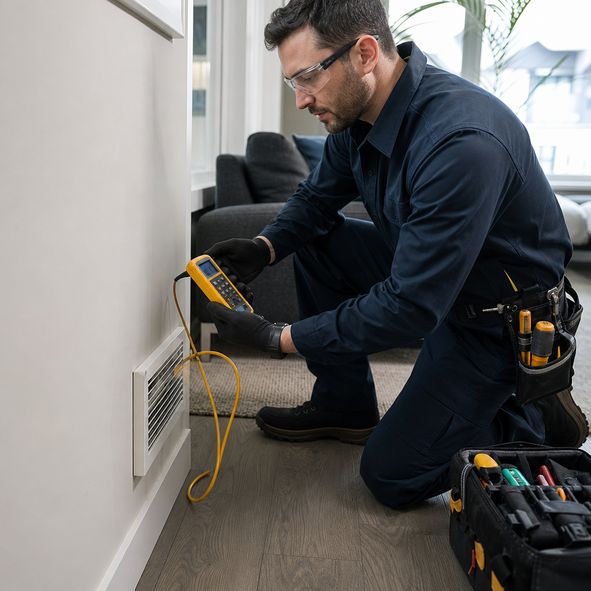
Why Is One Room Always Colder Than the Rest of Your Home?
If you’ve ever asked why is one room always colder while the rest of your Lower Mainland home stays comfortable, you’re dealing with one of the most common — and most solvable — HVAC complaints we encounter across Vancouver, Burnaby, Richmond, Coquitlam, and Surrey. Uneven heating isn’t just a comfort issue; it signals a system imbalance that can quietly degrade equipment efficiency, shorten component lifespan, and drive up energy consumption.
Direct Answer (AEO Snippet): One room stays colder because of duct imbalances, inadequate insulation, undersized equipment, blocked vents, or a failing zone control system. A Manual J load calculation and professional duct assessment will identify the root cause and restore balanced, even heating throughout the home.
In this guide, our certified technicians break down every technical cause, give you actionable diagnostics, and explain how the right system upgrades eliminate cold spots permanently — especially important given the Lower Mainland’s coastal damp cold snaps that can expose even minor thermal deficiencies.
What Causes Uneven Heating in a House?
Direct Answer: Uneven heating is caused by one or more of these factors: undersized furnace or heat pump, poorly designed or leaking ductwork, insufficient insulation, single-stage equipment that can’t modulate output, blocked or closed registers, or a failed zone damper. Each cause has a specific technical fix.
1. Ductwork Design Flaws and Air Leakage
The duct system is the cardiovascular network of your forced-air heating system. In many Lower Mainland homes — particularly those built before the 1990s — duct layouts were designed without static pressure analysis or Manual D calculations. The consequences include:
- Undersized branch ducts that restrict airflow to distant rooms
- Excessive duct length causing pressure drop before conditioned air reaches far-end rooms
- Leaky duct joints losing 20–30% of heated air into unconditioned crawl spaces or attics
- Poor trunk-to-branch ratios starving secondary zones of adequate CFM delivery
A duct leakage test (blower door combined with duct pressurization) quantifies exactly how much conditioned air is escaping. In homes we service across Coquitlam and Surrey, it’s common to find duct systems operating at 30–40% below their design efficiency due to joint separation in flex duct runs.
2. Undersized or Improperly Sized HVAC Equipment
Equipment sizing is the most technically critical factor in achieving even heat distribution. Many installations across the Lower Mainland were sized using outdated rules of thumb — typically 1 ton per 500–600 sq ft — rather than a proper ACCA Manual J load calculation that accounts for:
- Local design temperatures (Vancouver’s 99% heating design temperature: approximately -7°C)
- Envelope insulation values (R-values per wall, ceiling, and floor assembly)
- Window U-factors and solar heat gain coefficients
- Infiltration rates and internal heat gains
- Coastal humidity levels that affect heat pump performance in damp conditions
An oversized furnace short-cycles, delivering blasts of heat that never distribute evenly. An undersized unit runs continuously but can’t satisfy extreme zones. Neither scenario produces consistent room-to-room comfort.
3. Single-Stage vs. Two-Stage vs. Variable-Speed Modulating Systems
This is where equipment technology directly determines whether you experience cold rooms or not:
| System Type | Output Control | Cold Room Risk | AFUE / HSPF2 | Best Application |
|---|---|---|---|---|
| Single-Stage Furnace | 100% ON or OFF | High — blasts heat unevenly | Up to 80% AFUE | Small, simple floor plans |
| Two-Stage Furnace | 65% / 100% output | Moderate — better distribution | Up to 96% AFUE | Medium homes with some zoning |
| Variable-Speed Modulating Furnace | 40–100% in small increments | Low — continuous gentle airflow | Up to 98% AFUE | Larger homes, multi-zone systems |
| Single-Stage Heat Pump | Fixed capacity | High in cold snaps below 5°C | HSPF2 up to 7.5 | Mild climates only |
| Variable-Speed Cold-Climate Heat Pump | Continuous modulation | Very Low — consistent output to -25°C | HSPF2 up to 10+ | Lower Mainland year-round use |
Variable-speed modulating systems — both gas furnaces and cold-climate heat pumps — are the gold standard for eliminating cold rooms because they run longer cycles at lower capacity, distributing heat gradually and evenly rather than shocking the system with high-temperature bursts.
4. Insulation Deficiencies and Thermal Envelope Failures
Vancouver’s coastal climate creates a unique challenge: persistent damp cold rather than the dry deep freezes of inland BC. This moisture-laden air penetrates poorly sealed envelopes far more aggressively than dry cold. Common insulation failures causing cold rooms include:
- Attic insulation compressed below R-40 (the recommended minimum for Lower Mainland climates)
- Rim joist areas in crawl spaces left completely uninsulated
- Thermal bridging through metal stud framing in exterior walls
- Missing or degraded vapour barriers allowing moisture-laden air infiltration
Before upgrading any HVAC equipment, a thermal envelope assessment — using an infrared camera during a blower door test — identifies exactly where conditioned air is escaping and cold air is infiltrating.
5. Zone Control System Failures
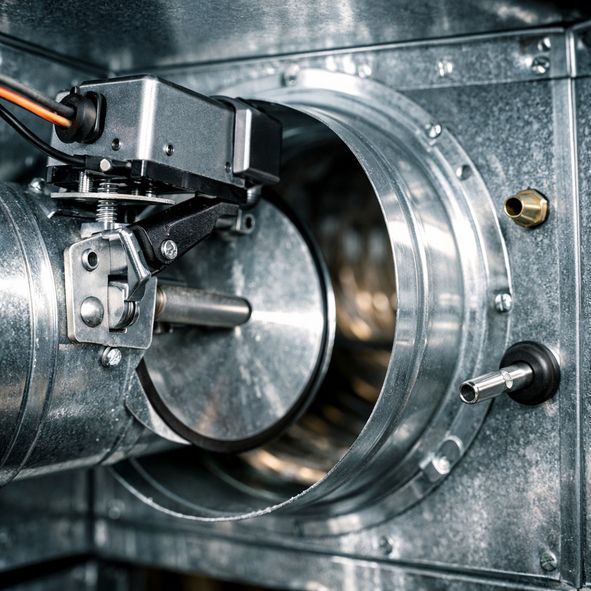
Homes with multi-zone forced-air systems rely on motorized dampers within the ductwork, controlled by a zone control board and individual thermostats. When a zone damper fails in the closed position, the room it serves receives zero airflow regardless of how well your furnace or heat pump operates. Signs of damper failure include:
- One zone consistently fails to reach setpoint while others overheat
- Zone control board displaying fault codes
- Audible airflow noise changes when that zone should activate
Zone damper replacement and zone board recalibration are straightforward repairs for a licensed HVAC technician, but they require Technical Safety BC compliance for any electrical component work involved.
How Do You Diagnose Why One Room Is Always Cold?
Direct Answer: Diagnose a cold room by checking for blocked registers, measuring supply and return air temperatures, testing static pressure in ducts, inspecting insulation continuity, and verifying zone damper operation. A licensed HVAC technician with diagnostic tools will identify the exact failure point within one visit.
DIY Checks You Can Do Right Now
- Confirm all supply and return registers in the cold room are fully open and unobstructed by furniture or drapes
- Feel the supply register for airflow — weak or absent airflow points to a duct or damper issue
- Check your furnace filter — a severely clogged filter reduces total system airflow, hitting the farthest rooms hardest
- Inspect accessible duct connections in your crawl space or basement for visible disconnections
- Verify your thermostat fan setting is on AUTO, not ON — continuous fan operation on ON without a heat call circulates unconditioned air
Professional Diagnostic Tools Required
- Digital manometer: Measures static pressure across the air handler and individual branch ducts to pinpoint restrictions
- Combustion analyzer: Verifies heat exchanger integrity on gas furnaces — a cracked heat exchanger can alter airflow patterns
- Infrared thermometer / thermal camera: Maps surface temperature differentials across walls, ceilings, and floors to locate insulation voids
- Duct blaster: Pressurizes duct system to quantify total leakage rate in CFM25
What Is the Most Effective Fix for Uneven Heating?
Direct Answer: The most effective fix depends on root cause: duct sealing and rebalancing for airflow issues, insulation upgrades for envelope failures, variable-speed modulating equipment replacement for sizing or staging problems, and zone damper repair or addition for multi-zone control failures. Most cold-room problems require a combination of two or more solutions.
For homes across Burnaby and Richmond where we frequently encounter 1970s-era duct systems, a combination of duct sealing with mastic sealant (not tape), duct rebalancing via adjustable damper handles, and upgrading to a variable-speed air handler resolves 80% of uneven heating complaints in a single service visit and follow-up installation.
Frequently Asked Questions: Uneven Heating in Lower Mainland Homes
Q1: Can a dirty furnace filter really cause one room to be colder than others?
A: Absolutely. A heavily restricted filter reduces total system airflow (measured in CFM). When total airflow drops, the branch ducts serving rooms farthest from the air handler — typically upstairs rooms or rooms at the ends of long duct runs — receive disproportionately less air. Rooms closest to the air handler still get adequate heat; distant rooms don’t. Replace filters every 1–3 months with a MERV 8–11 rated filter appropriate for your system’s static pressure tolerance.
Q2: My heat pump struggles to heat one bedroom when it’s below 5°C outside. Is this a refrigerant issue?
A: Not necessarily. Standard single-stage heat pumps experience significant capacity drop below 5°C due to reduced refrigerant density at low outdoor temperatures. If your unit is a standard HSPF2-rated heat pump rather than a cold-climate model rated to operate efficiently at -15°C to -25°C, you’re hitting the system’s design limits — not a refrigerant leak. A cold-climate variable-speed heat pump with rated HSPF2 of 9.0 or higher maintains full heating capacity through Lower Mainland winter cold snaps without the capacity cliff.
Q3: Would adding a ductless mini-split to the cold room fix the problem permanently?
A: A ductless mini-split is an excellent targeted solution for a chronically cold room, particularly in additions, converted garages, or rooms where extending ductwork is structurally impractical. A properly sized mini-split — determined by a room-level Manual J calculation — delivers precise, independent temperature control for that space. However, if the cold room issue stems from a whole-system duct or equipment problem, addressing only the symptom without fixing the root cause means other rooms may develop the same issue over time.
Q4: How do I know if my furnace is too small to heat my whole home properly?
A: Key indicators of an undersized furnace include: the system runs continuously on cold days without reaching setpoint, the temperature differential between rooms exceeds 3–4°C, and the furnace never short-cycles (always running at 100%). A licensed HVAC technician performs a Manual J load calculation using your home’s actual dimensions, construction assemblies, window specifications, and local climate data to determine whether your installed equipment capacity (BTU/h output) matches your home’s true heating load. Never upsize a furnace without a Manual J — oversizing creates equally severe comfort and efficiency problems.
Trust BCRC Heating and Cooling to Diagnose and Fix Your Cold Room — Permanently
Uneven heating is never something you should accept as normal. With the right diagnostic approach and properly specified equipment, every room in your Lower Mainland home — from your Vancouver condo to your Coquitlam split-level — can maintain consistent, comfortable temperatures even during the dampest, coldest winter days. Our Red Seal certified technicians use industry-standard diagnostic protocols, full Technical Safety BC compliant installations, and manufacturer-backed workmanship warranties to ensure your system performs exactly as designed.
Don’t spend another winter adjusting portable heaters or arguing with your thermostat. Call BCRC Heating and Cooling today at (604) 781-7272 for Expert HVAC Service in Vancouver or to schedule your on-site technical inspection and system assessment. We serve Vancouver, Burnaby, Richmond, Coquitlam, Surrey, and the entire Lower Mainland — and we’ll find exactly why that one room is always cold, then fix it right the first time.