



Water Heater Services in Pitt Meadows
The Quiet Miracle Beneath Your Roof
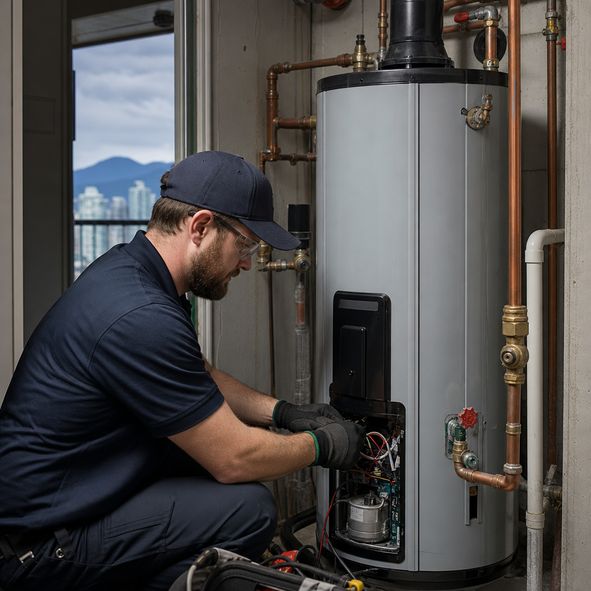
Turn a handle and hot water appears. It is so effortless, so instantaneous, that most Pitt Meadows homeowners never pause to consider the sophisticated engineering responsible for that everyday miracle. Yet the moment that stream runs cold mid-shower, or a spreading puddle signals a failing tank, the full weight of the water heater’s role becomes unmistakable. Hot water is not a luxury — it is a cornerstone of modern domestic life, underpinning hygiene, food safety, comfort, and the smooth rhythm of a household. At BCRC Heating and Cooling, our Red Seal certified technicians have made it their professional mission to ensure that Pitt Meadows families never have to feel that cold-water shock. Understanding where this technology came from, how it has evolved, and what options exist today empowers you to make smarter decisions for your home and your budget.
Ancient Roots and Early Engineering: Humanity’s Long Pursuit of Hot Water
The desire to control heated water is as old as civilization itself. The Romans were perhaps the most ambitious early engineers of thermal comfort. Their hypocaust system — derived from the Latin hypocaustum, meaning ‘heated from below’ — circulated hot air beneath raised mosaic floors and through hollow walls in public bathhouses and wealthy villas. The caldarium, tepidarium, and frigidarium of a Roman thermae were sophisticated gradient-temperature environments that required continuous management of furnace-fed heat exchangers. While these systems heated spaces rather than storing domestic water in a modern sense, they demonstrated an extraordinary grasp of heat transfer principles that would not be meaningfully surpassed for over a millennium.
Meanwhile, ancient Greeks and Minoans constructed terracotta clay boilers fed by wood fires beneath communal bathing facilities. In feudal Japan, the ofuro tradition involved carefully tended wood-fired baths, with the iron cauldron placed directly over a fire pit. Across medieval Europe, water was heated in cauldrons suspended over open hearths — a labour-intensive process that consumed enormous quantities of firewood and demanded constant supervision. The concept of a dedicated, self-contained appliance for heating household water remained centuries away, waiting for the Industrial Revolution to supply both the metallurgical sophistication and the energy infrastructure to make it possible.
The Industrial Breakthroughs That Changed Everything
The first true gas-fired water heater arrived in 1868, invented by London painter and decorator Benjamin Waddy Maughan. His device, cheekily named the Geyser after Iceland’s famous erupting hot springs, passed cold water through pipes heated by burning gas jets. The result was an instantaneous flow of hot water — the conceptual ancestor of every modern tankless unit. Maughan’s Geyser was notoriously dangerous; it lacked a flue and vented combustion gases directly into the room. Nevertheless, it proved that on-demand hot water was mechanically achievable, and it ignited a wave of competitive innovation across Europe.
The transformative leap forward came in 1889, when Norwegian-American mechanical engineer Edwin Ruud patented the first automatic, storage-tank gas water heater in Pittsburgh, Pennsylvania. Ruud’s genius lay in combining a thermostatically controlled gas burner with an insulated cylindrical storage vessel. Cold water entered the bottom of the tank, was heated by the burner below, rose by natural convection, and was drawn from the top as hot water on demand. A pressure-relief valve provided a critical safety mechanism. The Ruud Manufacturing Company grew rapidly, and within two decades the storage water heater had become the dominant residential appliance across North America — a design philosophy so sound that its fundamental architecture remains largely unchanged over 130 years later.
The 20th Century: Standardization, Electrification, and Mass Adoption
The early twentieth century brought two parallel revolutions: the rapid expansion of municipal natural gas distribution networks and the electrification of residential neighbourhoods. By the 1920s and 1930s, both gas and electric storage water heaters were commercially available, and manufacturers competed fiercely on tank capacity, insulation quality, and burner efficiency. The introduction of the magnesium sacrificial anode rod was a watershed moment — this inexpensive zinc or magnesium rod, suspended inside the tank, corrodes preferentially in place of the steel shell, dramatically extending the operational lifespan of the unit from a few years to a decade or more.
Post-World War II suburban expansion in British Columbia and across Canada drove unprecedented demand for reliable domestic hot water systems. The National Building Code of Canada began codifying installation standards, flue requirements, and pressure-relief specifications, ensuring a baseline of safety across the country. By the 1970s, the energy crises prompted manufacturers to invest seriously in insulation technology and burner efficiency, laying the groundwork for the high-efficiency era that would follow. Glass-lined steel tanks became the industry standard, and pilot light ignition systems gave way to piezoelectric and electronic spark ignition, eliminating the energy waste of a continuously burning standing pilot.
The Modern Era: Tankless On-Demand Revolution and Smart Wi-Fi Diagnostics
The late 1990s and 2000s saw the North American market finally embrace what Maughan had conceptualized in 1868: the condensing tankless water heater. Modern gas-fired condensing tankless units from manufacturers like Navien, Rinnai, and Noritz achieve Energy Factor (EF) ratings of 0.90 to 0.98 by extracting heat from combustion exhaust gases in a secondary heat exchanger — gases that a conventional unit simply vents to atmosphere. The result is near-total fuel combustion efficiency, an endless supply of hot water sized precisely to demand, and a wall-mounted footprint that liberates valuable mechanical room space.
Today’s premium units integrate Wi-Fi enabled smart diagnostics. Homeowners can monitor real-time inlet and outlet water temperatures, flow rates, error codes, and cumulative energy consumption from a smartphone app. Some systems — including select Navien and Bradford White models — can self-diagnose fault conditions and push notifications to both the homeowner and their registered HVAC contractor before a minor issue escalates into an emergency call. For Pitt Meadows families with investment properties or vacation homes, this remote monitoring capability is invaluable. BCRC technicians are trained on these platforms and can often pre-diagnose a service call before even arriving on site, reducing labour time and repair costs for our clients.
Heat Pump Water Heaters: The Peak Efficiency Paradigm for BC Homeowners
For electrically heated homes in British Columbia — a province powered by clean, affordable BC Hydro hydroelectricity — the Heat Pump Water Heater (HPWH) represents the single most impactful efficiency upgrade available. Rather than generating heat by resistively converting electricity into thermal energy (a process that is, at best, 100% efficient), a HPWH uses a refrigerant cycle to move heat from the surrounding air into the water tank. This thermodynamic principle yields a Coefficient of Performance (COP) of 2.5 to 4.0, meaning for every 1 kWh of electricity consumed, the unit delivers 2.5 to 4 kWh of thermal energy to your water supply.
In practical terms, a HPWH can reduce water heating electricity consumption by 60 to 70 percent compared to a standard electric resistance tank. For a typical Greater Vancouver family spending $600–$900 annually on electric water heating, this translates to savings of $360–$630 per year. BC Hydro’s Energy Saving Rebate program and the federal CleanBC Better Homes initiative currently offer combined rebates of up to $1,000 or more for qualifying HPWH installations, dramatically shortening the payback period. BCRC’s team handles the full rebate application process on behalf of our Pitt Meadows clients, ensuring no eligible dollar is left unclaimed. Installation considerations include ensuring adequate surrounding air volume (typically a minimum of 700–1,000 cubic feet of conditioned space) and accounting for the modest cooling and dehumidifying effect the unit has on its immediate environment — often a welcome bonus in a mechanical room or basement during warmer months.
Deep-Dive Comparison: Choosing the Right Water Heater for Your Pitt Meadows Home
| Category | Gas Storage Tank | Electric Storage Tank | Gas Tankless (Condensing) | Heat Pump Water Heater |
|---|---|---|---|---|
| Energy Efficiency (EF/UEF) | 0.59 – 0.70 | 0.90 – 0.95 | 0.90 – 0.98 | 2.5 – 4.0 COP |
| Fuel Source | Natural Gas / Propane | Electricity (BC Hydro) | Natural Gas / Propane | Electricity (BC Hydro) |
| Typical Lifespan | 8 – 12 years | 10 – 15 years | 15 – 20 years | 12 – 15 years |
| Installed Cost (CAD) | $1,200 – $2,000 | $900 – $1,600 | $2,800 – $4,500 | $2,000 – $3,500 (before rebates) |
| Annual Operating Cost (est.) | $280 – $420 | $550 – $900 | $180 – $300 | $150 – $280 |
| Available CleanBC / BC Hydro Rebates | None | None | Partial (select models) | Up to $1,000+ |
| Hot Water Supply | Limited by tank size | Limited by tank size | Unlimited (flow-dependent) | Limited by tank size (recovery buffered) |
| Space Requirements | Moderate (floor space) | Moderate (floor space) | Minimal (wall-mounted) | Large (700–1,000 ft³ airspace) |
| Maintenance Complexity | Low – moderate | Low | Moderate – high | Moderate |
| Best Suited For | Gas-connected homes, moderate budgets | All-electric homes, simple setup | High-demand families on gas | All-electric homes with rebate eligibility |
Greater Vancouver Homeowner Buying and Maintenance Guide
Pitt Meadows sits within the Fraser River lowlands, bordered by Alouette and Pitt Rivers. This coastal-influenced climate — characterized by high annual rainfall, humidity levels routinely above 80%, and mild but damp winters — has specific implications for water heater selection, installation, and long-term maintenance that differ meaningfully from drier inland markets.
Anode Rod Maintenance: The Single Most Overlooked Service Task
The sacrificial magnesium or aluminum-zinc anode rod is the primary corrosion defence mechanism in any storage water heater. In Greater Vancouver’s moderately soft municipal water (typical hardness of 30–60 mg/L CaCO₃), anode rods deplete at a moderate rate. BCRC recommends inspection every 3–4 years and replacement when the core wire is exposed or the rod diameter has reduced below 50% of original. Neglecting this single maintenance item is the leading cause of premature tank failure. A replacement anode rod costs $30–$80 in parts; a new tank costs ten to twenty times that.
Sediment Flushing and Tank Maintenance
Even with relatively soft Fraser Valley water, mineral sediment gradually accumulates at the base of storage tanks, insulating the burner or heating element and reducing efficiency. BCRC recommends an annual partial tank flush — attaching a garden hose to the drain valve and purging 10–15 litres of sediment-laden water — as part of a comprehensive HVAC maintenance visit. For tankless units, annual descaling of the heat exchanger using a food-grade vinegar or citric acid solution is essential to maintaining rated efficiency and preventing premature heat exchanger failure.
Leveraging BC Hydro and CleanBC Rebates
British Columbia offers some of the most generous clean energy incentive programs in Canada. The CleanBC Better Homes Energy Savings Program provides rebates for qualifying HPWH installations, and BC Hydro’s Residential Conservation Rebate program layers additional incentives on top. Rebate amounts and eligibility criteria are updated periodically; BCRC stays current with all program requirements and can confirm your eligibility at the time of your free in-home assessment. We submit all required documentation on your behalf, making the rebate process entirely seamless.
Coastal Humidity and Flue Considerations
High ambient humidity accelerates external corrosion on gas flue piping and vent connections. BCRC technicians inspect all vent connections, draft hoods, and Category III or Category IV stainless steel vent piping for signs of condensate-related deterioration at every service visit. Properly sealed and pitched flue systems are non-negotiable for safe, code-compliant operation in the Lower Mainland’s wet climate.
Frequently Asked Questions: Water Heater Services in Pitt Meadows
Q1: How do I know if my water heater needs repair or full replacement?
Several indicators point clearly toward replacement over repair. If your storage tank water heater is over 10–12 years old and exhibiting symptoms — inconsistent water temperature, rumbling or popping sounds during heating cycles (indicating heavy sediment accumulation), visible rust-coloured water at the hot taps, or active leaking from the tank body — replacement is almost always the more economical long-term decision. A leak originating from the tank shell itself is never repairable; the corrosion is internal and progressive. Conversely, issues such as a failed thermocouple, faulty thermostat, failed heating element, or defective pressure-relief valve on a unit under 8 years old are typically cost-effective repairs. BCRC provides honest, transparent assessments with no pressure toward unnecessary replacements.
Q2: What size tankless water heater do I need for a typical Pitt Meadows home?
Tankless water heater sizing is determined by peak simultaneous flow demand (measured in litres per minute, or LPM) and the required temperature rise from incoming cold water to the desired delivery temperature. In Pitt Meadows, groundwater temperature ranges from approximately 8°C in winter to 14°C in summer. To deliver 49°C (120°F) water — the recommended safe delivery temperature per BC Plumbing Code — a temperature rise of 35–41°C is required. A typical family of four running two showers simultaneously (approximately 15–18 LPM combined) with a dishwasher (approximately 6 LPM) requires a unit rated for at least 21–24 LPM at a 40°C rise. BCRC performs a formal load calculation during every pre-installation assessment to ensure correct unit sizing.
Q3: Are Heat Pump Water Heaters suitable for Pitt Meadows homes in winter?
Yes, with proper installation planning. HPWH units operate optimally in ambient air temperatures between 10°C and 40°C. When installed in a conditioned or semi-conditioned mechanical room — typical of most Pitt Meadows residential builds — the ambient temperature rarely falls below the operational threshold. Many modern HPWH units, including the Rheem ProTerra and AO Smith Voltex series, incorporate backup electric resistance elements that automatically engage when ambient temperatures drop, ensuring consistent hot water delivery year-round. The slight dehumidifying and cooling effect on the surrounding space is generally a neutral-to-positive benefit in BC’s humid coastal environment. BCRC assesses your mechanical room dimensions and thermal conditions before recommending a HPWH installation.
Q4: What permits and inspections are required for water heater installation in Pitt Meadows?
In the City of Pitt Meadows, water heater installations and replacements require a plumbing permit issued by the City’s Building Department under the BC Plumbing Code. For gas-fired appliances, a gas permit issued through Technical Safety BC (formerly BC Safety Authority) is mandatory, and all gas work must be performed by a licensed gas contractor holding a valid BC Gas Fitter certificate. Final inspections by a Safety Officer from Technical Safety BC are required before the appliance is commissioned. BCRC is fully licensed for both gas and plumbing work throughout Greater Vancouver and handles all permit applications, inspections, and final sign-offs as a standard part of every installation. Homeowners who attempt unpermitted installations risk voiding manufacturer warranties, violating home insurance policies, and facing significant liability during property transactions.
Trust Pitt Meadows’ Water Heater Experts at BCRC Heating and Cooling
From the Roman hypocaust to Edwin Ruud’s revolutionary storage tank, from the first condensing tankless breakthrough to today’s AI-assisted smart diagnostics and ultra-efficient heat pump technology, the science of domestic hot water has been in continuous, remarkable evolution. What has not changed is the fundamental importance of having a reliable, efficient, correctly sized, and properly maintained system at the heart of your home. At BCRC Heating and Cooling, our Red Seal certified technicians bring deep technical expertise, honest advice, and a genuine commitment to Pitt Meadows homeowners and the broader Greater Vancouver community. Whether you need urgent same-day repair, a comprehensive system replacement with rebate optimization, or a thorough annual maintenance visit to extend your unit’s lifespan, BCRC is ready to deliver the gold standard of service. For dependable, Red Seal certified water heater installation in Vancouver and throughout the Greater Vancouver region including Pitt Meadows, call the trusted local experts at BCRC Heating and Cooling today at (604) 781-7272 — because every household deserves the quiet miracle of perfect hot water, every single day.