



The Quiet Miracle Beneath Your Feet: Why Hot Water Is Port Moody’s Most Underrated Comfort
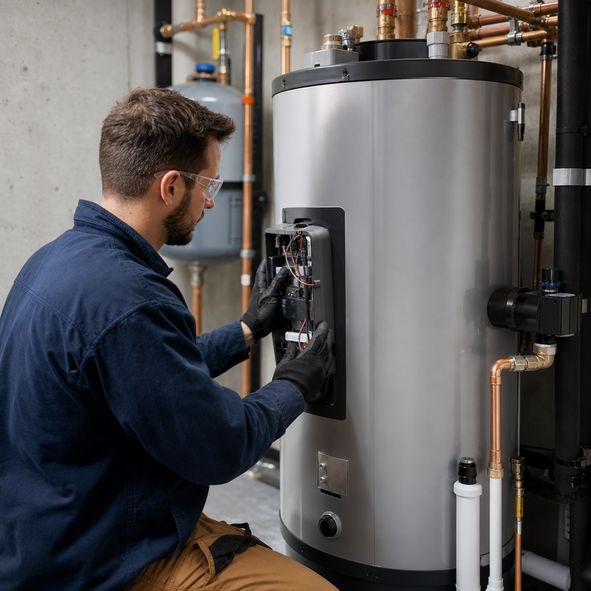
Think about your morning routine for a moment. You step into the shower, turn the handle, and within seconds a steady stream of perfectly heated water cascades over you. You fill the kettle, rinse the dishes, and run the dishwasher — all without a second thought. That effortless abundance of hot water, delivered reliably day after day in homes across Port Moody, Inlet Centre, Pleasantside, and Heritage Mountain, is nothing short of a quiet engineering miracle. It is only when that miracle fails — when the water runs ice cold at 6:45 a.m. on a February morning — that most homeowners truly appreciate the complex, hardworking system humming away in their mechanical room. At BCRC Heating and Cooling, our Red Seal certified technicians understand water heating at a level most people never need to, and that deep expertise is precisely what protects your comfort, your energy bills, and your home’s plumbing infrastructure every single day.
Ancient Roots: How Humanity First Conquered Cold Water
The desire for heated water is as old as civilization itself. The Romans, whose engineering genius still inspires modern HVAC designers, constructed elaborate hypocaust systems beneath the floors and within the walls of their bathhouses (thermae). Furnaces burning wood or charcoal forced hot combustion gases through hollow floor tiles and terracotta flue pipes, radiating warmth both into the air and into the water basins above. Wealthy Roman households in Britannia — a province that endured a climate not entirely unlike Greater Vancouver’s — enjoyed the luxury of heated bathing rooms that would not look entirely out of place beside a modern radiant floor heating system. Meanwhile, ancient Greeks at Thermopylae and citizens of Han Dynasty China developed early versions of heated communal baths by routing water over naturally occurring geothermal hot springs. These ancient civilizations understood instinctively what modern thermodynamics would later confirm mathematically: controlled heat transfer is the cornerstone of human comfort.
Industrial Breakthroughs: Maughan’s Geyser and the Birth of the Modern Water Heater
For centuries, heating water meant boiling it over an open fire — a laborious, dangerous, and deeply inefficient process. The first true leap toward the modern water heater came in 1868, when London-based painter and inventor Benjamin Waddy Maughan patented a device he called the Geyser. Maughan’s contraption used gas jets to heat cold water flowing through pipes before delivering it directly to a bath. It was revolutionary, but dangerously primitive — it lacked any flue venting, making carbon monoxide poisoning a very real risk. Nevertheless, the Geyser established the foundational concept of instantaneous, on-demand water heating that would define the tankless water heater category more than a century later.
The transformative moment arrived in 1889, when Norwegian-American mechanical engineer Edwin Ruud patented the first automatic, storage-tank gas water heater in Pittsburgh. Ruud’s design incorporated a thermostatically controlled gas burner beneath a sealed storage tank — an architecture so logically sound that it remains the dominant configuration in millions of North American homes today, including countless residences throughout Port Moody and the broader Tri-Cities area. Ruud’s invention turned hot water from a luxury into a utility, and the company he founded still manufactures water heaters bearing his name.
The 20th Century: Standardization, Electrification, and the Tank in Every Home
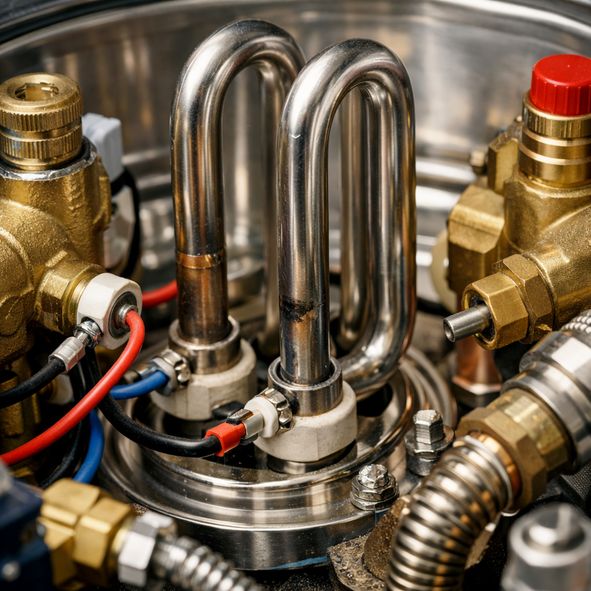
The first half of the twentieth century saw water heater technology evolve from a novelty appliance for the affluent into standard household infrastructure. The post-World War II suburban building boom — which shaped neighbourhoods across Metro Vancouver, including Port Moody’s early residential developments — cemented the 40-to-60-gallon gas or electric storage tank as the universal solution for domestic hot water. Electric resistance water heaters became particularly popular in regions with abundant hydroelectric power, and British Columbia’s vast hydroelectric grid made electric models an economically sensible choice for generations of BC homeowners. Utility companies standardized safety codes, the American National Standards Institute (ANSI) and Canadian Standards Association (CSA) established testing benchmarks, and the pressure-temperature relief valve became a mandatory safety component on every unit sold — a critical safeguard that prevents catastrophic tank rupture events that early, unregulated designs occasionally produced.
The Modern Era: Tankless On-Demand Technology and Smart Wi-Fi Diagnostics
By the late 1990s and accelerating through the 2000s, the limitations of traditional storage tank water heaters — standby heat loss, finite hot water capacity, and bulky footprints — drove a resurgence of interest in condensing tankless (on-demand) water heaters. Manufacturers like Navien, Rinnai, Noritz, and Bosch engineered high-powered modulating gas burners capable of heating water to precise set-point temperatures instantaneously as it flows through a compact heat exchanger. Modern condensing tankless units achieve Energy Factor (EF) ratings of 0.90 to 0.98, meaning they convert up to 98 cents of every dollar of natural gas into usable hot water heat — compared to roughly 60 to 65 cents for a conventional atmospheric-vent storage tank. For Port Moody households with multiple bathrooms, teenagers, or high simultaneous hot water demand, a properly sized tankless system eliminates the dreaded cold-water sandwich effect and provides virtually unlimited hot water.
The latest generation of water heaters has embraced smart connectivity. Wi-Fi enabled controllers on units like the Navien NPE-A2 series allow homeowners and BCRC technicians alike to monitor flow rates, inlet and outlet temperatures, error codes, and energy consumption data in real time through smartphone applications. This remote diagnostic capability means that in many cases, our technicians can identify a developing fault code — such as an E003 ignition failure or an E012 flame loss error — and arrive at your Port Moody home with the exact replacement part already in the service van, dramatically reducing diagnostic time and your inconvenience.
Heat Pump Water Heaters: The Peak Efficiency Paradigm for BC Homeowners
For electrically heated homes in British Columbia, the Heat Pump Water Heater (HPWH) represents the most significant efficiency revolution in domestic hot water technology since Edwin Ruud’s original patent. Rather than generating heat through electrical resistance — which is, by thermodynamic definition, 100% efficient at converting electricity to heat — a HPWH uses a refrigeration cycle to move heat from the surrounding air into the water tank. This process, governed by the same principles as your refrigerator running in reverse, allows a quality HPWH like the Rheem ProTerra or AO Smith Voltex to achieve a Uniform Energy Factor (UEF) of 3.5 to 4.0, meaning it delivers 350 to 400 watts of water heating energy for every 100 watts of electricity consumed.
In BC’s mild coastal climate — where Port Moody’s average basement or mechanical room temperature rarely drops below 10°C even in January — HPWHs operate at near-peak efficiency year-round. BC Hydro’s CleanBC Better Homes Program currently offers significant rebates for qualifying HPWH installations, making the higher upfront equipment cost considerably more accessible. BCRC’s technicians are fully versed in the rebate application process and will help you navigate eligibility requirements, ensuring you capture every available incentive. The trade-off to understand: HPWHs require adequate air volume in the installation space (typically a minimum of 1,000 cubic feet of unconditioned or semi-conditioned space), and they produce a modest cooling and dehumidifying effect on the surrounding area — which is actually a bonus in a damp Lower Mainland basement but requires consideration in a small, tight mechanical room.
Water Heater Technology Comparison: Choosing the Right System for Your Port Moody Home
| Category | Gas Storage Tank | Electric Storage Tank | Gas Condensing Tankless | Heat Pump Water Heater |
|---|---|---|---|---|
| Energy Efficiency (UEF/EF) | 0.58 – 0.70 | 0.90 – 0.95 | 0.90 – 0.98 | 3.50 – 4.00 |
| Typical Lifespan | 8 – 12 years | 10 – 15 years | 15 – 20 years | 12 – 15 years |
| Fuel Source | Natural Gas / Propane | Electricity (BC Hydro) | Natural Gas / Propane | Electricity (BC Hydro) |
| Approximate Equipment Cost | $600 – $1,200 | $500 – $1,000 | $1,200 – $2,500 | $1,400 – $2,800 |
| Installation Complexity | Low – Moderate | Low | High (venting, gas, condensate) | Moderate – High |
| Hot Water Capacity | Limited by tank size | Limited by tank size | Unlimited (flow-dependent) | Limited by tank size (recovery) |
| CleanBC / BC Hydro Rebate Eligible | No | No | Partial (high-efficiency models) | Yes – Up to $1,000+ |
| Standby Heat Loss | High | Moderate | None | Minimal |
| Best Suited For | High-demand homes on gas | Budget-conscious, low demand | Multi-bathroom, high demand | All-electric homes, BC climate |
The Greater Vancouver Homeowner’s Complete Buying and Maintenance Guide
Selecting and maintaining a water heater in Greater Vancouver’s specific coastal climate involves considerations that differ meaningfully from inland or prairie provinces. Here is what every Port Moody homeowner should know:
- Sizing matters more than most think: The standard rule of thumb — 10 gallons per person per day — is a starting point, not a final answer. Homes with jetted soaker tubs, steam showers, or in-floor radiant systems fed by the domestic hot water system require a detailed load calculation. BCRC performs free on-site assessments to ensure your replacement unit is correctly sized for actual demand, not just household headcount.
- Anode rod inspection is non-negotiable: Every steel-lined storage tank water heater relies on a sacrificial magnesium or aluminum-zinc anode rod to prevent internal tank corrosion. In Port Moody’s water supply — which, while treated, carries dissolved minerals that can accelerate anode depletion — this rod should be inspected every 2 to 3 years and replaced when depleted to less than half its original diameter. Neglecting anode rod maintenance is the single most common reason water heaters fail prematurely, often 3 to 5 years before they should.
- Annual tank flushing prevents sediment buildup: BC’s water supply, particularly in areas fed by Coquitlam Lake Watershed, is relatively soft but not sediment-free. Calcium carbonate and silica particles settle at the tank bottom over time, creating an insulating layer that forces burners and elements to work harder, increasing energy consumption and generating the characteristic rumbling or popping sounds that many homeowners mistake for a failing unit. BCRC’s annual maintenance visits include a full tank flush that dramatically extends equipment life.
- CleanBC Better Homes rebates: BC Hydro and the provincial CleanBC program currently offer rebates of up to $1,000 or more for qualifying heat pump water heater installations. FortisBC also provides incentives for high-efficiency natural gas tankless units. These programs change periodically, and BCRC stays current with every available incentive to maximize your savings at the point of installation.
- Seismic strapping is BC code: British Columbia’s location on the Cascadia Subduction Zone means all water heater installations must comply with seismic strapping requirements under the BC Plumbing Code. BCRC ensures every installation is code-compliant, protecting your investment and your household safety.
- Know your warning signs: Rust-coloured hot water indicates internal tank corrosion and imminent failure. A rotten egg smell suggests anode rod depletion and sulfur-reducing bacteria in the tank. Pooling water around the base means the tank shell has likely cracked — replace immediately. Inconsistent temperatures on a tankless unit often point to a failing flow sensor or modulating gas valve that our technicians can diagnose in a single visit.
Frequently Asked Questions: Water Heater Services in Port Moody
How do I know if I should repair or replace my water heater?
The industry benchmark is the 50% Rule: if the estimated repair cost exceeds 50% of the cost of a new unit, and your existing heater is more than 7 to 8 years old for a gas storage tank or more than 10 years old for an electric tank, replacement is almost always the smarter financial decision. Older units operating near or past their design lifespan become progressively less efficient and increasingly prone to cascading failures. BCRC provides honest, transparent assessments — we will tell you when a repair genuinely makes sense, and we will tell you when it does not. We carry no inventory incentive to push unnecessary replacements.
What is the best water heater for a home in Port Moody that is switching away from natural gas?
For Port Moody homeowners electrifying their homes — driven by CleanBC’s decarbonization goals or personal environmental values — the Heat Pump Water Heater (HPWH) is the unambiguous best choice. Its Uniform Energy Factor of 3.5 to 4.0 makes it two to three times more efficient than a standard electric resistance tank, translating to annual hot water heating cost savings of $200 to $400 depending on household size. BC Hydro’s time-of-use rate structures further reward HPWH owners who schedule their heating cycles during off-peak hours using the unit’s built-in programmable timer. Combined with available CleanBC rebates, the total cost of ownership over a 12-year lifespan is typically lower than any alternative electric option.
How long does a tankless water heater installation typically take in Port Moody?
A straightforward like-for-like tankless replacement on an existing gas line with compatible venting typically takes 4 to 6 hours for an experienced BCRC technician. More complex installations — particularly those involving new concentric PVC vent runs through exterior walls, gas line upgrades from half-inch to three-quarter-inch supply pipe to meet the higher BTU demand of a condensing tankless unit, or the addition of a dedicated condensate neutralizer for systems discharging acidic condensate into a septic system — may require a full day. BCRC provides detailed written quotes before any work begins so you understand exactly what is involved and what it will cost, with no surprise additions at invoice time.
What maintenance does a tankless water heater require, and how often?
Condensing tankless water heaters require annual maintenance to perform at their rated efficiency and achieve their full 15-to-20-year design lifespan. BCRC’s tankless tune-up service includes: descaling the heat exchanger using a food-grade white vinegar or citric acid flush solution (critical in areas with any hardness, as mineral scale on the heat exchanger fins dramatically reduces heat transfer efficiency); cleaning the inlet filter screen that traps debris from the household water supply; inspecting and testing the igniter, flame sensor, and modulating gas valve; verifying combustion air and exhaust vent integrity for carbon monoxide safety; and checking the pressure relief valve operation. Skipping annual descaling on a tankless unit in BC’s water supply conditions is the equivalent of skipping oil changes on your vehicle — the cumulative damage accelerates rapidly and silently.
Port Moody’s Most Trusted Water Heater Experts: Why BCRC Is the Right Call
From the Roman hypocausts of antiquity to the Wi-Fi-connected condensing tankless units installed in Port Moody’s newest Inlet District condominiums, the story of water heating is one of relentless human ingenuity applied to a fundamental comfort need. At BCRC Heating and Cooling, we bring that same spirit of expertise and precision to every service call, installation, and maintenance visit we perform in Port Moody and across Greater Vancouver. Our Red Seal certified technicians are trained on every technology in today’s market — gas storage tanks, electric resistance units, condensing tankless systems, and heat pump water heaters — and we service all major brands including Navien, Rinnai, Rheem, Bradford White, AO Smith, Noritz, and more. We navigate BC Hydro and CleanBC rebate programs on your behalf, ensure every installation meets BC Plumbing Code and seismic requirements, and back our work with industry-leading labour warranties. Whether you need an emergency same-day repair or a carefully planned efficiency upgrade, BCRC delivers the expertise, transparency, and genuine care that Port Moody homeowners have come to rely on. For certified, professional water heater installation in Vancouver and the surrounding Tri-Cities region, call the team that consistently delivers five-star results — BCRC Heating and Cooling at (604) 781-7272. Your next shower should be perfect. Let us make sure it is.