


Vancouver’s Heat Is No Longer a Surprise — Is Your AC Ready?
It used to be a running joke: Vancouver doesn’t need air conditioning. Then came the summer of 2021. The historic heat dome pushed temperatures past 40°C in the Lower Mainland, overwhelming emergency services and fundamentally changing how Greater Vancouver homeowners think about indoor climate control. That week wasn’t a fluke — Environment Canada’s climate data confirms that extreme heat events in coastal BC are becoming more frequent, more intense, and longer in duration. What was once a luxury is now a critical home system. The question is no longer whether you need air conditioning in Vancouver — it’s whether the system you have (or the one you’re about to buy) is sized correctly, installed properly, and maintained to perform when it matters most. At BCRC Heating and Cooling, we’ve built our entire air conditioning service division around one philosophy: Vancouver homeowners deserve Red Seal certified expertise, transparent pricing, and cooling solutions engineered for our unique coastal Pacific climate.
Understanding Vancouver’s Unique Cooling Climate
Before discussing equipment, it’s essential to understand why air conditioning in Greater Vancouver presents challenges that differ from drier inland markets like Calgary or Kelowna. Metro Vancouver operates within a humid oceanic climate (Köppen classification Cfb), characterized by mild, wet winters and increasingly warm, humid summers. This combination creates specific engineering demands that generic, one-size-fits-all cooling advice simply cannot address.
First, relative humidity during summer heat events frequently climbs above 70%, meaning an undersized or poorly calibrated air conditioning system won’t just fail to cool your home — it will also fail to dehumidify it, creating conditions ripe for mold growth, structural moisture damage, and significant respiratory discomfort. Second, Vancouver’s salt-laden marine air accelerates corrosion on outdoor condenser coils and refrigerant line fittings, making annual maintenance and proper material specification critical for long-term system durability. Third, BC Hydro’s tiered electricity rate structure and the Province’s CleanBC climate action framework create both financial incentives and technical considerations that should shape every purchasing decision. A properly selected and installed system in Vancouver can generate thousands of dollars in utility savings and rebate recovery over its operational lifespan.
BCRC’s Complete Air Conditioner Services in Vancouver
BCRC Heating and Cooling offers a fully integrated suite of air conditioning services designed to cover every stage of your system’s lifecycle — from the initial consultation and equipment selection through to emergency repair, seasonal tune-ups, and eventual end-of-life replacement. Here is a detailed breakdown of each core service category:
Air Conditioner Installation in Vancouver
A technically correct air conditioning installation is the single most important factor in long-term system performance, efficiency, and lifespan. Many homeowners discover years after the fact that a poorly installed system — one that was never properly commissioned, where refrigerant charge was estimated rather than measured, or where ductwork was never balanced — has been consuming 20–35% more electricity than it should while delivering inferior comfort. BCRC’s installation process begins with a Manual J load calculation, the ACCA-standard methodology for precisely determining the cooling load of your specific home based on square footage, insulation values, window orientation, occupancy, and local design temperatures. This eliminates the dangerous and costly practice of guessing at equipment size.
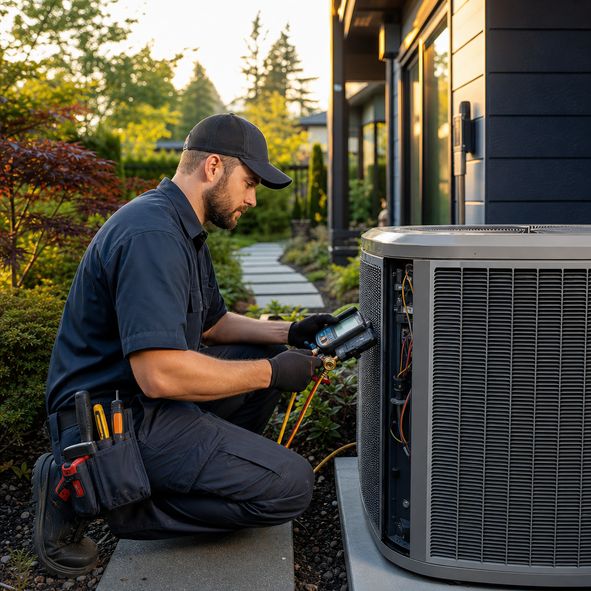
Our Red Seal certified technicians handle every aspect of the installation: electrical service upgrades if required, refrigerant line set installation and leak testing, condensate drain routing, thermostat integration, and full system commissioning with refrigerant charge verification using digital manifold gauges. We install systems from industry-leading manufacturers including Lennox, Daikin, and Mitsubishi Electric, and we work across all primary system types: central split systems paired with existing forced-air furnaces, ductless mini-split systems for homes without ductwork, and multi-zone configurations for larger or complex floor plans.
Air Conditioner Repair in Vancouver
When your air conditioning system stops performing — whether it’s producing warm air, short-cycling, making unusual noises, tripping breakers, or simply refusing to start — BCRC’s diagnostic team responds with the technical depth to identify root causes rather than just treating symptoms. Common repair scenarios our technicians handle daily across Vancouver include: refrigerant leak detection and repair using electronic leak detectors and UV dye, failed capacitor and contactor replacement on outdoor condenser units, evaporator and condenser coil cleaning and chemical treatment, blower motor and fan blade replacement, control board diagnostics and replacement, and thermostatic expansion valve (TXV) or electronic expansion valve (EEV) servicing.
We carry an extensive inventory of OEM-compatible parts on our service vehicles, allowing same-day resolution for the majority of common failures. For more complex component failures, we provide honest assessments of repair-versus-replace economics, so you can make an informed decision rather than feeling pressured into an unnecessary replacement or stranded with a failing system.
Air Conditioner Maintenance in Vancouver
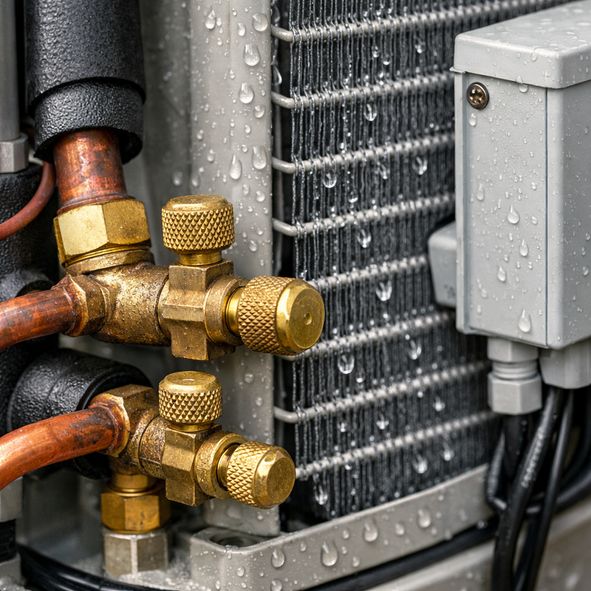
Preventive maintenance is the highest-return investment available to any Vancouver air conditioning system owner. Industry data consistently demonstrates that a properly maintained central air conditioning system operates at 15–25% higher efficiency than a neglected one, lasts 3–5 years longer, and experiences 70% fewer emergency breakdowns. BCRC’s annual maintenance visits follow a comprehensive checklist that includes: inspection and cleaning of evaporator and condenser coils, refrigerant pressure and superheat/subcooling verification, electrical component testing including capacitors, contactors, and disconnect blocks, condensate drain flushing and treatment, blower wheel cleaning, filter inspection and replacement, thermostat calibration, and a full operational test across all system modes. We also apply corrosion-inhibiting coatings to outdoor coil fins — a step that is particularly valuable in Vancouver’s marine environment and one that many service providers skip entirely.
Air Conditioner Tune-Up in Vancouver
Not every visit requires a full maintenance overhaul. BCRC’s precision tune-up service is designed for homeowners who want targeted performance optimization before the peak summer season arrives. Our technicians focus on the high-impact variables that most directly affect efficiency and reliability: refrigerant charge verification, electrical draw testing on the compressor and fan motors, and airflow measurement across the evaporator coil. If your system has been running but feeling sluggish, a tune-up frequently restores full rated capacity and can noticeably reduce your electricity consumption within the first billing cycle.
Air Conditioner Troubleshooting in Vancouver
Modern air conditioning systems — particularly those equipped with inverter-driven variable-speed compressors and communicating control systems — generate fault codes and exhibit subtle performance anomalies that require genuine technical expertise to interpret correctly. BCRC’s troubleshooting service goes beyond the basic visual inspection that many contractors offer. We use digital manifold gauge sets, clamp meters, thermal imaging cameras, and manufacturer-specific diagnostic software to map system performance against factory specifications, identify intermittent faults that only appear under specific operating conditions, and trace electrical gremlins through multi-stage control boards. This systematic, data-driven approach means we find the real problem the first time, rather than replacing parts on speculation.
Air Conditioner Replacement in Vancouver
When repair costs approach or exceed 50% of replacement value, or when an aging R-22 refrigerant system finally reaches the end of its serviceable life, a planned system replacement is the economically sound decision. BCRC’s replacement process begins with a comprehensive assessment of your existing infrastructure — ductwork condition and sizing, electrical service capacity, refrigerant line set condition and diameter, and condensate drainage — to determine what can be reused and what must be upgraded to support a modern high-efficiency system. We then present a range of equipment options at different efficiency tiers, explaining the real-world payback period for each investment level based on your actual usage patterns and local utility rates.
Air Conditioning System Types: Which Is Right for Your Vancouver Home?
| System Type | Efficiency (SEER2 Rating) | Best Application | Estimated Lifespan | CleanBC Rebate Eligible? |
|---|---|---|---|---|
| Central Split System (High-Efficiency) | 18–22 SEER2 | Homes with existing forced-air ductwork | 15–20 years | Yes (heat pump models) |
| Ductless Mini-Split (Single Zone) | 20–30+ SEER2 | Additions, suites, homes without ducts | 15–20 years | Yes |
| Multi-Zone Ductless System | 18–25 SEER2 | Whole-home zoned comfort, no ductwork | 15–20 years | Yes |
| Standard Central Split System | 14–17 SEER2 | Budget-conscious replacement with existing ducts | 12–16 years | No |
It is worth noting that heat pump technology — which provides both cooling in summer and highly efficient heating in winter — has become the dominant recommendation for new installations across Greater Vancouver. A cold-climate air-source heat pump rated for operation down to -25°C delivers heating at efficiencies two to three times higher than a natural gas furnace, dramatically reducing both carbon emissions and energy costs. The Province of BC and BC Hydro offer combined rebates of up to $6,000 or more for qualifying heat pump installations, making the economics increasingly compelling.
BC Hydro Rebates, CleanBC Incentives & Buying Smart in Greater Vancouver
Navigating the rebate landscape in British Columbia requires up-to-date knowledge, and it changes frequently. As of the current program year, BC Hydro’s Energy Star rebate program and the Province’s CleanBC Better Homes program offer stacked incentives for high-efficiency cooling and heating equipment that meet specific performance thresholds. Key considerations for Vancouver homeowners include:
- CleanBC Heat Pump Rebates: Qualifying cold-climate air-source heat pumps can attract rebates ranging from $1,000 to $6,000+ depending on the specific product, your heating fuel type being replaced, and whether you are upgrading from an electric baseboard or fossil fuel system.
- BC Hydro Rebate Program: High-efficiency central air conditioning systems with ENERGY STAR certification qualify for direct equipment rebates. Your BCRC technician will confirm current rebate amounts and handle the required documentation at the time of installation.
- Federal Greener Homes Grant: Subject to program availability, the Canada Greener Homes Grant has offered up to $5,000 for qualifying heat pump installations, often stackable with provincial programs.
- Equipment Sizing Documentation: Many rebate programs now require proof of a Manual J load calculation. BCRC provides this documentation as a standard part of every installation proposal, ensuring you qualify for the maximum available incentive.
When evaluating equipment for Vancouver’s coastal environment specifically, request information about coil coating options (Blygold or similar hydrophilic coating), stainless steel or galvanized cabinet hardware, and the manufacturer’s warranty terms as they apply to coastal proximity. These details separate equipment that will perform reliably for 18 years from equipment that begins showing corrosion failure within five.
Frequently Asked Questions: Air Conditioner Services in Vancouver
How often should I service my air conditioner in Vancouver?
The industry standard recommendation — and the one supported by virtually every manufacturer’s warranty terms — is annual professional maintenance. In Vancouver’s context, we recommend scheduling your tune-up or maintenance visit in April or early May, before temperatures climb and before our peak service demand window opens in June. This timing ensures your system is commissioned and operating at full efficiency before the first heat event of the season. Homeowners who also run their system’s heat pump mode through the winter should schedule a second inspection in the fall to verify heating-season performance and address any refrigerant or electrical issues that may have developed during the summer cooling season.
My air conditioner is blowing warm air. What are the most likely causes?
Warm air from an operating air conditioner is one of the most common service calls we receive, and the differential diagnosis spans a wide range of severity and cost. The most frequent causes, in rough order of likelihood, include: a tripped breaker on the outdoor condenser circuit (the indoor air handler continues to run while the outdoor unit is de-energized, circulating uncooled air), low refrigerant charge due to a leak in the refrigerant circuit, a failed run capacitor on the compressor or condenser fan motor, a failed compressor contactor, or a dirty evaporator coil with severely restricted airflow. A refrigerant leak is a particularly important diagnosis to pursue promptly — operating a system with low refrigerant charge causes the compressor to run hot and under-lubricated, accelerating wear and potentially causing premature compressor failure, which is the most expensive single component in the system. Do not simply add refrigerant without locating and repairing the leak source.
What is the difference between a traditional air conditioner and a heat pump, and which should I choose in Vancouver?
A traditional air conditioner is a one-directional refrigerant system: it moves heat from inside your home to the outdoors during cooling season, and that is all it does. A heat pump uses the same refrigerant cycle but adds a reversing valve that allows the system to operate in both directions — extracting heat from outdoor air and moving it indoors during heating season, and operating as a conventional air conditioner during summer. In Vancouver’s mild climate, a modern cold-climate heat pump rated for low ambient temperatures provides highly efficient space heating across the majority of heating hours in a typical year. With heating efficiencies (expressed as a Coefficient of Performance, or COP) ranging from 2.5 to 4.5 at temperatures commonly experienced in Metro Vancouver, a heat pump delivers two to four times more heating energy than the electricity it consumes. Combined with available rebates and BC’s relatively clean electrical grid, a heat pump is the environmentally and financially superior choice for the vast majority of Vancouver homeowners replacing or installing a new system.
How long should a central air conditioner last in Vancouver, and what affects its lifespan?
A properly installed, annually maintained central air conditioning system in a non-coastal location typically lasts 15–20 years. In Vancouver’s marine environment, several factors can accelerate or protect against premature aging. Corrosion of condenser coil aluminum fins and copper tubing from salt-laden air is the primary environmental threat — systems within several kilometres of the ocean are particularly vulnerable. Annual coil cleaning, the application of a protective coil coating, and ensuring adequate clearance around the outdoor unit for airflow are the primary maintenance interventions that extend operational lifespan. Refrigerant leak history is another critical factor: a system that has operated with a chronic low refrigerant condition, even if periodically topped up, will typically show compressor wear far earlier than a properly charged system. Finally, the quality of the original installation — specifically whether the refrigerant charge was accurately set, the electrical connections were properly torqued, and the system was correctly commissioned — has a profound impact on how long the compressor, the most expensive component, survives.
Why Greater Vancouver Homeowners Choose BCRC Heating and Cooling
BCRC Heating and Cooling has served the Greater Vancouver area with a consistent commitment to technical excellence, honest service, and genuine accountability. Every technician on our air conditioning team holds Red Seal certification — the highest trade qualification available in Canada — and maintains ongoing manufacturer training across the equipment lines we install and service. We are fully licensed, bonded, and insured, and we stand behind our installation work with clearly documented labour warranties. We do not use subcontractors for our core service work. When you schedule with BCRC, the technician who arrives at your door is a career HVAC professional employed directly by our company, trained to our standards, and accountable to our quality control process. We provide written, itemized estimates before any work begins, and we do not proceed without your explicit authorization. Our pricing is transparent — no hidden trip charges, no surprise fees for refrigerant handling, no pressure to purchase services or equipment you don’t need.
Whether your need is urgent — a system failure during a heat event — or planned, such as a pre-season tune-up or a carefully considered system replacement with rebate optimization, BCRC delivers the technical depth and professional integrity that Vancouver homeowners deserve. For reliable, Red Seal certified AC installation in Vancouver and across the Greater Vancouver region, contact the local experts at BCRC Heating and Cooling today at (604) 781-7272. Your comfort is our commitment — and we back that commitment with the credentials and track record to prove it.