



Choose the Right HVAC Contractor in Burnaby
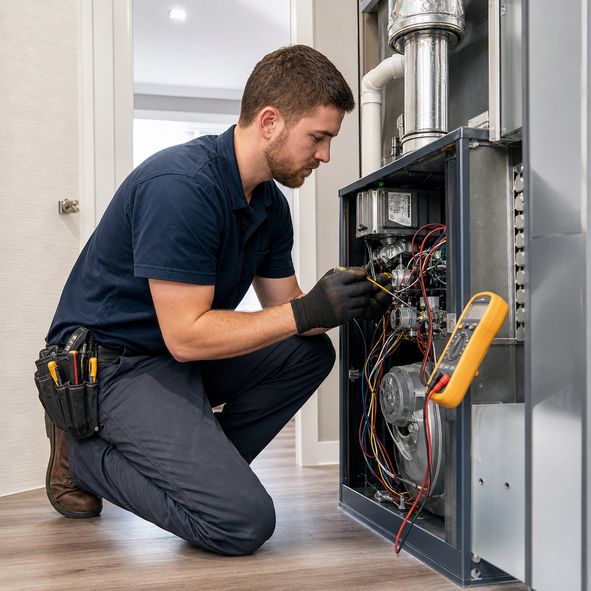
How to Choose the Right HVAC Contractor in Burnaby (and Red Flags to Avoid)
Choosing the right HVAC contractor in Burnaby is one of the most consequential decisions a homeowner in the Lower Mainland will make. Burnaby’s coastal humidity, damp cold snaps off the Pacific, and variable shoulder-season temperatures demand a contractor who understands local building science — not just someone who shows up with a van. Get this wrong and you risk improper sizing, voided equipment warranties, Technical Safety BC violations, and years of uncomfortable, inefficient operation.
Why Does Contractor Quality Matter So Much in Burnaby’s Climate?
Quick Answer: Burnaby’s coastal climate creates unique HVAC demands — persistent humidity, mild but penetrating cold, and poor-quality air events — that require a contractor with local load-calculation expertise, proper licensing, and hands-on experience with variable-speed and heat pump systems suited to BC’s wet winters.
The Lower Mainland sits in a humid oceanic climate zone where relative humidity routinely exceeds 80% from October through April. A contractor unfamiliar with this environment may under-specify dehumidification capacity, select equipment with HSPF2 ratings that underperform at low ambient temperatures, or fail to account for latent heat loads during Manual J calculations. The result: a system that short-cycles in summer, struggles to maintain setpoint in a January cold snap, and accelerates mould growth in ductwork. Local experience is not a bonus — it is a baseline requirement.
What Credentials Should a Burnaby HVAC Contractor Hold?
Quick Answer: At minimum, your contractor must hold a BC Gas Ticket (Class A or B for gas systems), a Refrigeration Mechanic certificate (or dual-certified gasfitter/refrigeration), and must pull Technical Safety BC permits for every installation. Red Seal certification signals the highest national trade standard.
In British Columbia, the regulatory framework is strict. Any contractor working on gas-fired heating equipment — furnaces, boilers, combination systems — must be licensed under Technical Safety BC’s Gas Safety program. Ask to see their gas contractor license number; it is publicly searchable on the Technical Safety BC registry. For refrigerant-handling work (central air conditioning, heat pumps, mini-splits), the technician must hold a valid Refrigeration Mechanic certificate under the Industry Training Authority of BC.
- Red Seal Gasfitter: Indicates inter-provincial exam competency in gas system design, combustion analysis, and safety compliance.
- Red Seal Refrigeration Mechanic: Demonstrates national-standard expertise in refrigerant circuits, compressor diagnostics, and system commissioning.
- Technical Safety BC Gas Contractor License: Mandatory to legally perform and permit gas appliance installations in Burnaby and across the Lower Mainland.
- TECA (Thermal Environmental Comfort Association) Membership: A strong signal the contractor participates in ongoing BC-specific technical education.
Any contractor who resists showing credentials, claims permits are unnecessary, or says they will handle the permit themselves without providing a permit number afterward is displaying a critical red flag. Unpermitted work creates liability for homeowners, voids manufacturer warranties, and can trigger remediation orders during property sales.
How Is Proper HVAC Sizing Determined for a Burnaby Home?
Quick Answer: Proper sizing requires a Manual J load calculation — a room-by-room analysis of insulation values, window area, orientation, infiltration rates, and local design temperatures. Burnaby’s ASHRAE 99% design heating temperature and latent load profile must be used. No legitimate contractor quotes equipment without performing this calculation first.
The single most common technical failure in residential HVAC installations across Burnaby and the Lower Mainland is oversizing. An oversized furnace or heat pump short-cycles — it satisfies the thermostat quickly but never runs long enough to dehumidify properly, creating clammy indoor conditions that are a health concern in already-humid coastal homes. Oversized cooling equipment is equally problematic: it chills air rapidly without removing the latent moisture load that makes Burnaby summers uncomfortable.
A legitimate contractor will measure your home’s conditioned square footage, inspect wall and attic insulation R-values, count and measure windows with their solar orientation, assess your home’s air-tightness class, and calculate heat loss/gain in BTUs per hour. The output of this Manual J exercise directly determines the correct equipment capacity in BTUs. Be deeply skeptical of any contractor who sizes equipment based solely on square footage rules of thumb — this approach ignores the specific thermal envelope of your home and the local climate data entirely.
What System Type Is Best for Lower Mainland Conditions?
Quick Answer: Variable-speed modulating systems — whether gas furnaces or cold-climate heat pumps — offer the best comfort, efficiency, and humidity control for Burnaby’s climate. Two-stage systems are a solid mid-tier choice. Single-stage systems are the least sophisticated and least suited to the region’s shoulder seasons.
| System Type | Efficiency Metric | Humidity Control | Comfort Level | Cold Climate Performance | Best Application |
|---|---|---|---|---|---|
| Single-Stage Gas Furnace | AFUE 80–95% | Basic | Moderate | Good (gas-fired) | Budget replacement, well-insulated homes |
| Two-Stage Gas Furnace | AFUE 95–96% | Improved | Good | Very Good | Most Burnaby detached homes |
| Variable-Speed Modulating Furnace | AFUE 97–98% | Excellent | Superior | Excellent | High-performance builds, humidity-sensitive homes |
| Single-Stage Central A/C | SEER2 14–16 | Moderate | Moderate | N/A | Low-use cooling climates |
| Cold-Climate Heat Pump (Variable-Speed) | HSPF2 9–10+ | Excellent | Superior | Rated to –25°C | Whole-home electrification, year-round comfort |
| Ductless Mini-Split | HSPF2 9–12 | Excellent | Superior (zoned) | Excellent | Additions, suites, zone control |
What Are the Biggest Red Flags When Hiring an HVAC Contractor?
Quick Answer: Key red flags include refusing to pull Technical Safety BC permits, skipping Manual J load calculations, quoting equipment over the phone without a site visit, offering only verbal warranties with no written documentation, and using non-certified technicians for gas or refrigerant work.
- No Permit Pull: If a contractor says permits are unnecessary for a furnace or heat pump installation, walk away. This is illegal in BC and exposes you to serious risk.
- Phone Quotes Without Site Assessment: Accurate equipment sizing and installation scoping require a physical inspection of your mechanical room, ductwork, electrical panel, and building envelope.
- Pressure Tactics and Same-Day Decisions: Reputable contractors provide written proposals with technical specifications. High-pressure urgency is a classic hallmark of under-qualified operators.
- No Written Warranty Documentation: Manufacturer warranties on high-efficiency equipment often require proof of licensed installation and registered permits. Verbal assurances are worthless.
- Vague Equipment Specifications: Your written quote should specify the exact model number, AFUE/SEER2/HSPF2 rating, BTU capacity, and installation scope. Vague line items like “furnace install” hide substitution risks.
- No Combustion Analysis or Commissioning Report: After any gas appliance installation, a qualified technician must perform a combustion efficiency test and carbon monoxide check. If this step is skipped, the installation is incomplete and potentially dangerous.
Frequently Asked Questions
Q: How do I verify that an HVAC contractor is properly licensed in Burnaby?
Visit the Technical Safety BC public registry at technicalsafetybc.ca and search the contractor’s gas license number. You can also verify Red Seal certification through the ITA BC website. Always request the license number in writing before signing any agreement.
Q: What is HSPF2 and why does it matter for Burnaby winters?
HSPF2 (Heating Seasonal Performance Factor 2) measures a heat pump’s heating efficiency under the updated DOE test protocol, which better reflects real-world cold-weather performance. In Burnaby’s damp winters, a higher HSPF2 rating — particularly for cold-climate units rated to –25°C — means reliable heating output when ambient temperatures drop without supplemental resistance backup kicking in excessively.
Q: Should I get multiple quotes, and what should I compare?
Yes — obtain at least three written quotes. Compare equipment model numbers and their published AFUE, SEER2, or HSPF2 ratings, warranty terms (both manufacturer and labour), permit inclusion, commissioning procedures, and the contractor’s specific load-calculation methodology. Never compare quotes that don’t specify identical or technically equivalent equipment.
Q: How long should a properly installed HVAC system last in the Lower Mainland?
A properly sized and installed gas furnace should deliver 18–22 years of reliable service with annual maintenance. A quality variable-speed heat pump should last 15–20 years. Systems that are oversized, improperly commissioned, or installed without permits typically fail significantly earlier due to accelerated mechanical stress and voided warranty conditions.
Trust the Local Experts Who Know Burnaby’s Climate Inside Out
Choosing the right HVAC contractor in Burnaby is ultimately about technical accountability — the willingness to pull permits, perform Manual J calculations, commission equipment properly, and stand behind their work with documented warranties. The Lower Mainland’s coastal climate demands nothing less. At BCRC Heating and Cooling, our Red Seal certified technicians have served Burnaby, Vancouver, Richmond, Coquitlam, Surrey, and the broader Lower Mainland with this standard of technical integrity on every job.
Do not leave your home’s comfort and safety to guesswork. Call BCRC Heating and Cooling at (604) 781-7272 today to schedule an on-site technical inspection and load assessment. We will evaluate your existing system, correctly size new equipment to your home’s actual thermal envelope, and ensure every installation is fully permitted and commissioned to Technical Safety BC standards.